Clear Sky Science · en
Free water in the external globus pallidus predicts mild cognitive impairment in Parkinson’s disease and is associated with serum neurofilament light chain levels
Why this matters for everyday brain health
Mild memory and thinking problems are common in people with Parkinson’s disease and often signal a higher risk of dementia. Families and doctors urgently need reliable ways to tell who is most likely to develop these difficulties so they can plan and test treatments early. This study followed people with newly diagnosed Parkinson’s disease for five years and used advanced brain scans and blood tests to see whether subtle changes deep inside the brain could warn of future cognitive decline.
A closer look inside a small but vital brain hub
Parkinson’s disease is best known for tremor and slowness of movement, but it also disrupts networks that support planning, attention, and mental flexibility. These abilities rely heavily on a set of deep brain structures called the basal ganglia, which help us select and switch between actions and thoughts. The researchers focused on one of these structures, the external globus pallidus, a small hub that balances “go” and “stop” signals in the brain’s decision circuits. They used a special type of MRI scan that separates the motion of water trapped inside brain tissue from water that is freely moving in the spaces between cells, a measure called “free water.” Higher free water can signal inflammation, loss of nerve cells, or other tissue damage that expands those spaces.
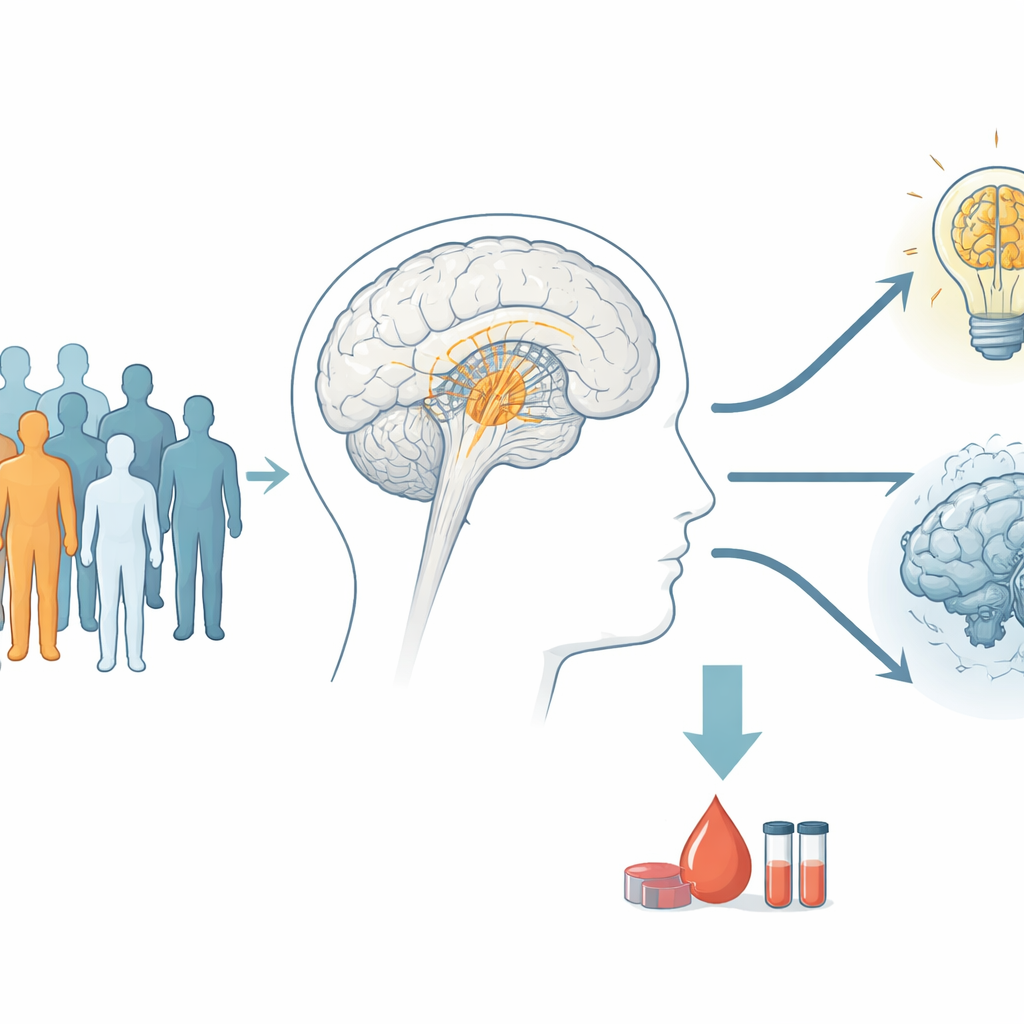
Following people with Parkinson’s over five years
The team analyzed data from the Parkinson’s Progression Markers Initiative, an international project that tracks people with Parkinson’s from the time of diagnosis. They studied 112 drug‑naïve patients who had normal thinking at the start, along with 100 healthy volunteers. Everyone underwent brain scans that measured free water in several basal ganglia regions, including the putamen, caudate, and both inner and outer parts of the globus pallidus. Participants also completed a detailed set of thinking tests and provided samples for spinal fluid and blood markers related to nerve damage and Alzheimer‑type changes.
A warning signal for future thinking problems
Over five years, 30 of the Parkinson’s participants developed mild cognitive impairment, while 82 maintained normal thinking. Those who later declined already showed higher free water in the external and internal globus pallidus at the beginning of the study, even though standard MRI diffusion measures looked normal. When the researchers used statistical models that considered age, disease severity, mood, sleep, smell, dopamine scan results, and Alzheimer‑related spinal fluid markers, only three factors independently predicted who would develop thinking problems: worse non‑motor symptom scores, lower Alzheimer‑type marker ratio, and higher free water in the external globus pallidus. Patients whose free‑water value in this region exceeded a specific threshold had almost five times the risk of developing mild cognitive impairment within five years.
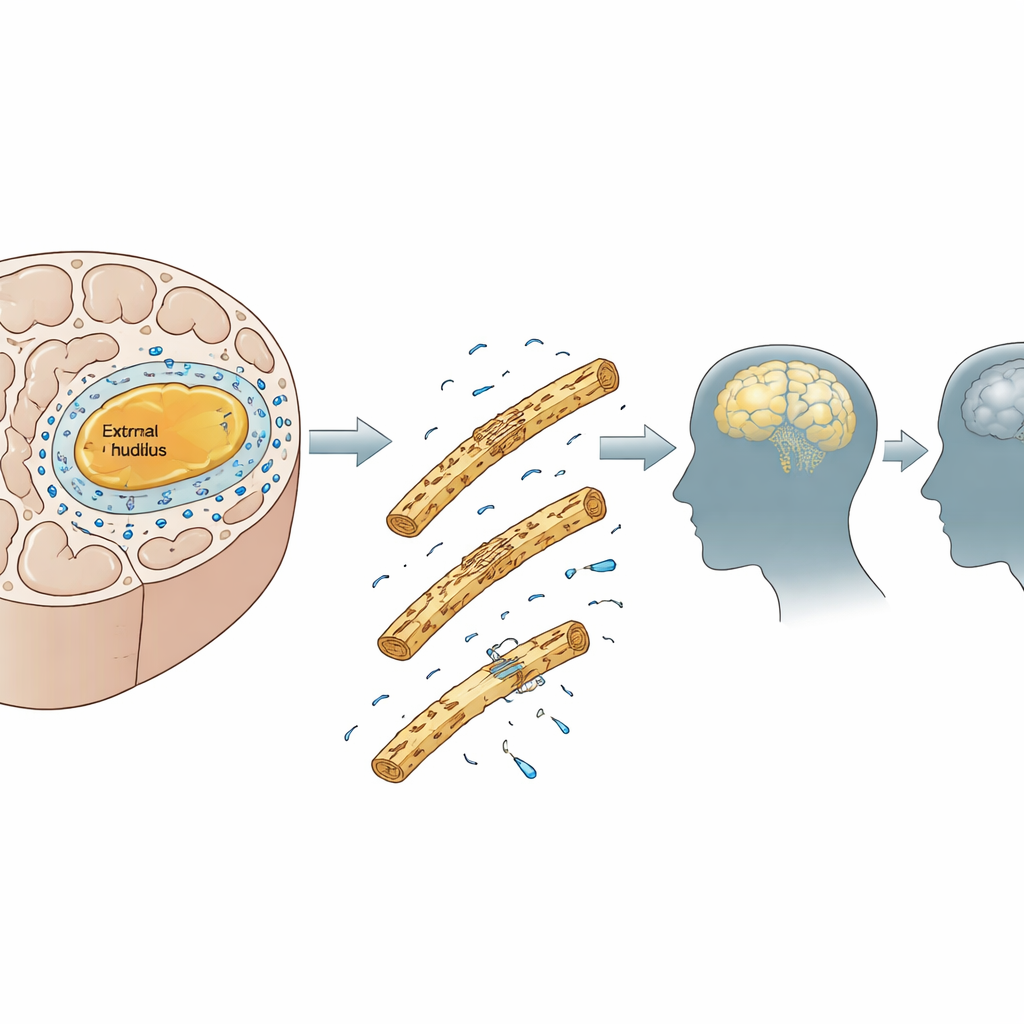
Links to mental speed and nerve injury in the body
The study also examined how this early brain change related to different aspects of thinking and to blood markers. In people with Parkinson’s, higher free water in the external globus pallidus went hand‑in‑hand with poorer performance on tests of mental processing speed and working memory—skills often first affected in Parkinson‑related cognitive decline. These links did not appear in healthy volunteers, suggesting that the relationship is specific to the disease. In addition, higher free water in this brain region matched higher levels of a blood protein called neurofilament light chain, which is released when nerve fibers are injured. Across the five‑year follow‑up, people who developed mild cognitive impairment showed persistently higher neurofilament levels than those who did not, reinforcing the idea that both the scan measure and the blood test are capturing ongoing nerve damage.
What this could mean for future care
Together, these findings point to free water in the external globus pallidus as a sensitive early warning sign that a person with Parkinson’s is on a path toward thinking problems. Because this measure is detectable before clear cognitive decline and is tied to both slowed mental performance and a blood marker of nerve injury, it may offer a practical way to select patients for clinical trials and to test brain‑targeted treatments. While more work is needed in larger and more diverse groups, and to see how this marker behaves in Parkinson’s dementia and related disorders, the study suggests that a tiny deep‑brain region—visible with modern MRI—could help doctors look years into the future of a patient’s cognitive health.
Citation: Chen, H., Liu, H., Kou, W. et al. Free water in the external globus pallidus predicts mild cognitive impairment in Parkinson’s disease and is associated with serum neurofilament light chain levels. npj Parkinsons Dis. 12, 71 (2026). https://doi.org/10.1038/s41531-026-01291-1
Keywords: Parkinson’s disease, mild cognitive impairment, brain MRI, basal ganglia, neurodegeneration