Clear Sky Science · en
Genetic co-regulation of neopterin and Parkinson’s disease
Why this research matters to everyday life
Parkinson’s disease is best known for causing tremors and movement problems, but long before those symptoms appear, subtle changes are happening in the brain and immune system. This study investigates a small immune-related molecule called neopterin, found in urine, and asks whether our genes link it to the risk of developing Parkinson’s. By tracing how a single gene can influence both inflammation and brain chemistry, the work points toward new ways to track and possibly ease the disease.
Getting to know a quiet immune signal
Neopterin is a compound released by immune cells whenever the body mounts an inflammatory response, whether against infections, autoimmune attacks, or ongoing low-grade inflammation in aging. The researchers measured neopterin in urine from 999 adults in Sardinia, aged 18 to 92, and compared it with dozens of blood markers and brain-related proteins circulating in the body. They found that neopterin levels rise steadily with age and are higher in women than in men. Higher neopterin was also linked to markers of inflammation in the blood and to proteins associated with nerve cell damage, suggesting that this small molecule is a sensitive barometer of the body’s inflammatory and neurodegenerative state. 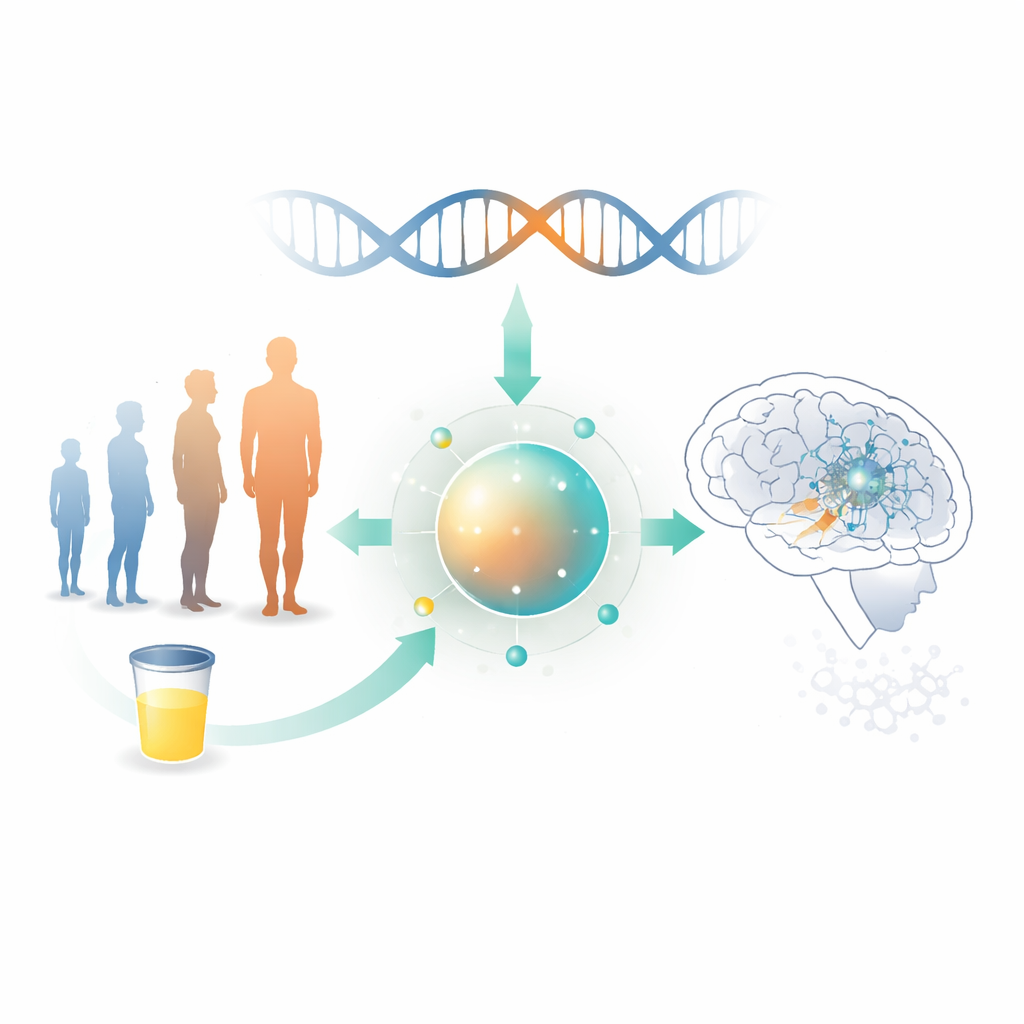
Genes behind the signal
Because people vary widely in their neopterin levels, the team asked how much of this difference is written in our DNA. Using family relationships and genetic data from the Sardinian cohort, they estimated that about one third of the variation in neopterin is heritable. They then scanned the entire genome to find regions associated with neopterin levels and identified a key hotspot in a gene called GCH1. This gene makes an enzyme that sits at a crossroads: it helps produce neopterin in immune cells and also generates a chemical helper needed to make brain messengers like dopamine and serotonin. Two distinct genetic “signals” in the GCH1 region were tied to differences in urinary neopterin, hinting that changes in this one gene can ripple through both the immune system and the brain.
From one gene to brain chemistry
Digging deeper, the scientists combined their data with large international genetic studies of Parkinson’s disease. One of the GCH1 signals overlapped with known genetic risk variants for Parkinson’s, as well as with changes in how the GCH1 gene is spliced into different RNA messages. Detailed analysis of white blood cells from over 600 people showed that the Parkinson’s-linked variant shifts the balance of GCH1 toward a shorter version of the enzyme. Computer simulations suggested that when this short form mixes with the full-length version, the resulting enzyme complexes become less stable. Because these complexes help make both neopterin and the dopamine-building cofactor, subtle genetic nudges in their structure could push the system toward more inflammation and less dopamine support over time. 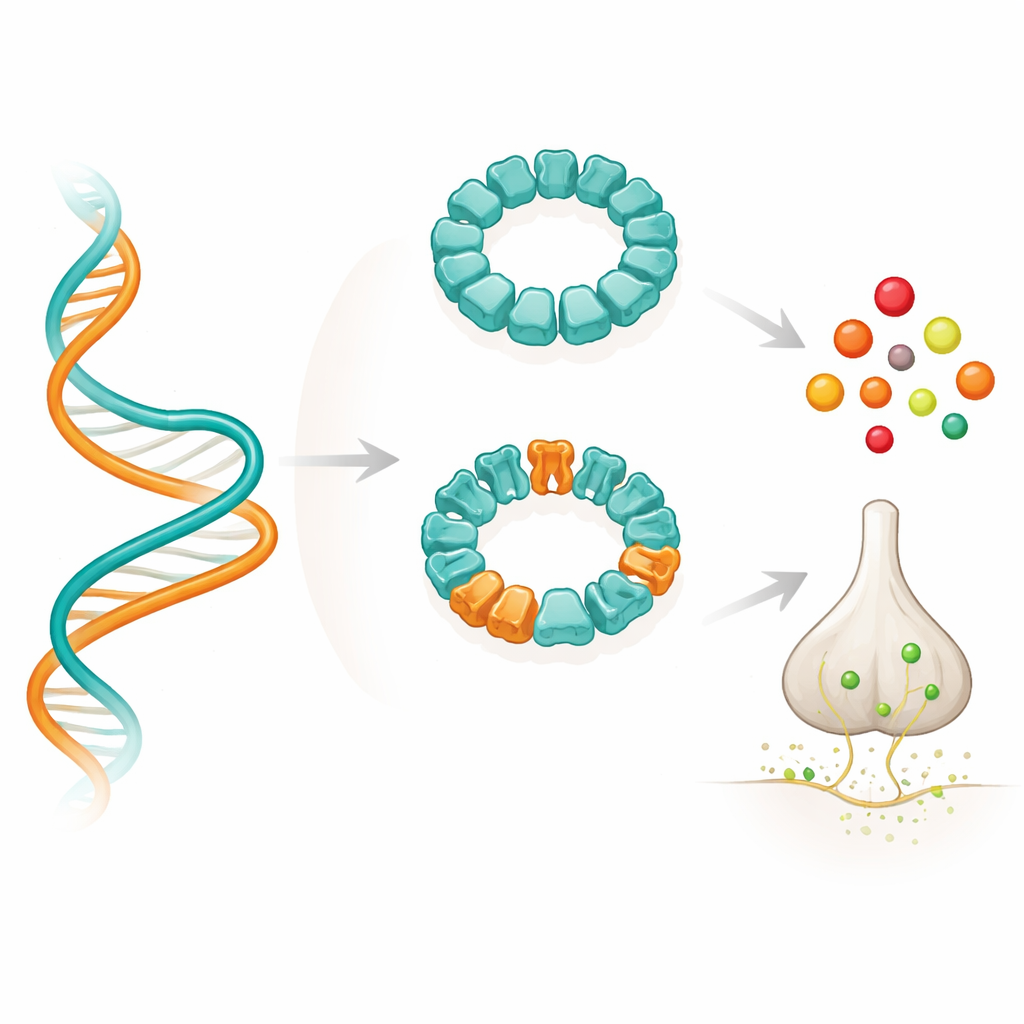
Connecting inflammation, aging, and Parkinson’s
The study also fits neopterin into a broader story of “inflammaging,” the chronic, low-level inflammation that accompanies getting older. As people age, neopterin rises along with inflammatory markers and neurodegeneration-related proteins, while other protective blood components tend to fall. The authors propose that in individuals carrying certain GCH1 variants, this age-related inflammatory background may more strongly divert the shared chemical precursor toward immune defenses and away from dopamine production in neurons. In the brain, that could mean less support for dopamine-producing cells, which are crucial for smooth movement and are selectively lost in Parkinson’s disease.
What this could mean for future care
To a non-specialist, the key message is that a single gene, GCH1, appears to jointly influence an immune alarm signal in urine and the brain’s vulnerability to Parkinson’s disease. The work does not prove that neopterin causes Parkinson’s, but it shows that both are tied to the same genetic levers. This opens the door to future studies that track neopterin, related brain chemicals, and GCH1 activity together in large groups of people. Ultimately, such insights could guide new strategies—such as adjusting GCH1 activity or its splice forms—to better preserve dopamine in the brain while keeping necessary immune responses in check.
Citation: Orrù, V., Marongiu, M., Steri, M. et al. Genetic co-regulation of neopterin and Parkinson’s disease. npj Parkinsons Dis. 12, 69 (2026). https://doi.org/10.1038/s41531-026-01279-x
Keywords: neopterin, Parkinson’s disease, GCH1 gene, inflammation, dopamine