Clear Sky Science · en
Evaluation of c-Abl inhibitor vodobatinib in subjects with early Parkinson’s disease: a phase 2, randomized, double-blind, placebo-controlled study
Why This Drug Trial Matters
People with Parkinson’s disease and their families urgently want treatments that do more than soften symptoms—they want medicines that actually slow or stop the disease. Recent lab work suggested that blocking a protein called c-Abl might protect brain cells and keep movement problems from getting worse. This study tested one of the most promising of these drugs, vodobatinib, in hundreds of people with very early Parkinson’s disease to see whether that promise holds up in real patients.
A New Hope Put to the Test
Parkinson’s disease gradually damages nerve cells that make dopamine, a chemical crucial for smooth, controlled movement. Clumps of a protein called alpha‑synuclein inside brain cells are a hallmark of the disease. In animal experiments, turning off c-Abl—a protein that becomes overactive when alpha‑synuclein misfolds—reduced these clumps, protected dopamine-producing neurons, and improved movement. Vodobatinib is a pill designed to reach the brain in much higher amounts than older c-Abl drugs, raising hopes that it could genuinely slow Parkinson’s progression rather than just mask symptoms.
How the Study Was Run
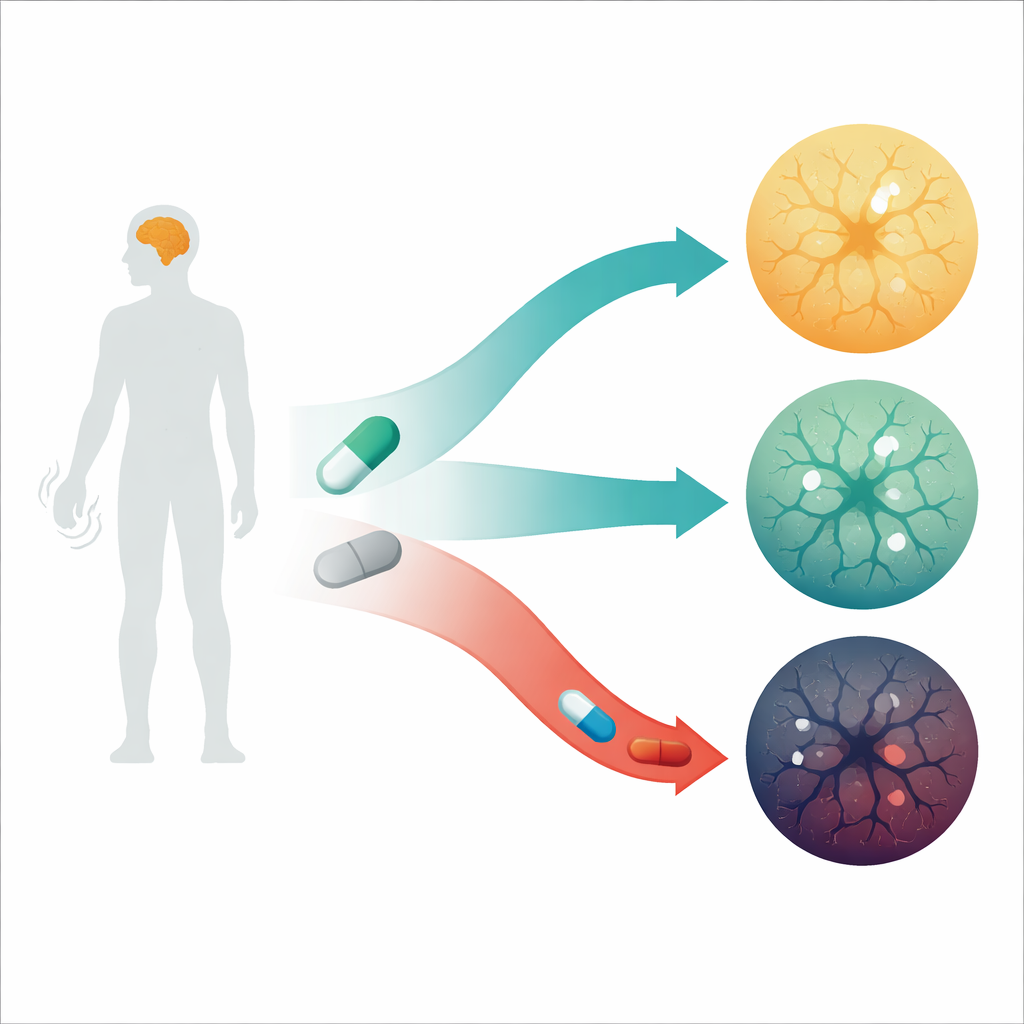
The PROSEEK trial enrolled 513 people from six countries who had been diagnosed with Parkinson’s disease within the past three years. All had relatively mild disease, with symptoms mostly on one or both sides of the body but without serious balance problems, and most were not yet taking standard dopamine-based medications. Participants were randomly assigned to one of three daily treatments for 40 weeks: a high dose of vodobatinib, a low dose, or a placebo pill. Neither patients nor doctors knew which pill each person received. The main yardstick was change in a standard motor score that measures tremor, stiffness, and slowness of movement.
What Actually Happened
Instead of slowing the disease, vodobatinib-treated participants tended to do worse than those on placebo. By week 40, people in the placebo group, on average, had slightly better movement scores than at the start of the study, hinting at a placebo benefit or slower-than-expected progression. In contrast, both vodobatinib groups showed small but consistent worsening of movement scores, whether researchers looked at motor tests alone or combined movement and daily living symptoms. More people on vodobatinib reached a point defined as “significant worsening,” needed to start standard Parkinson’s drugs, or left the study because their Parkinson’s symptoms progressed.
Signals from the Brain and the Body
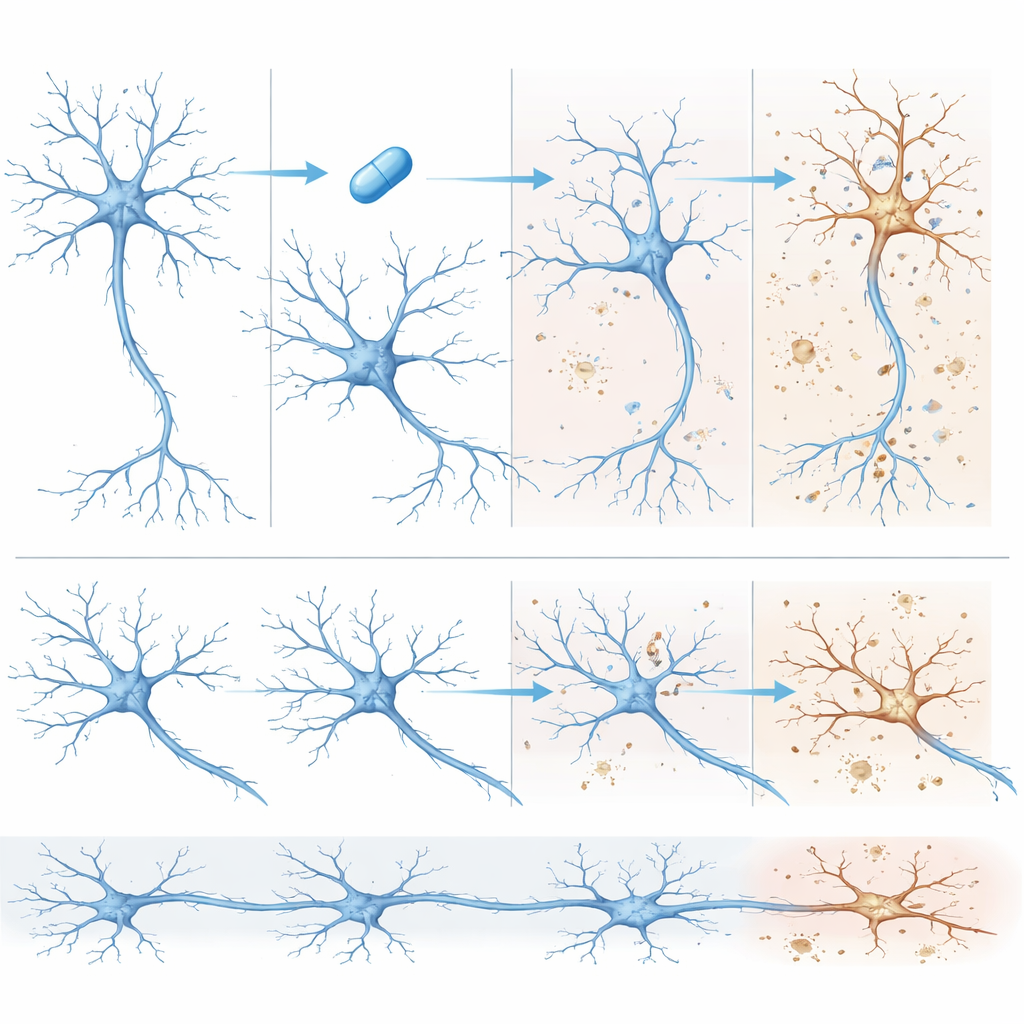
To understand what was happening inside the nervous system, the team also measured a blood marker called neurofilament light chain, which tends to rise when nerve fibers are injured. Over 40 weeks, this marker increased only slightly in the placebo group but rose more in both vodobatinib groups, especially at the higher dose. At the same time, drug measurements in blood and spinal fluid showed that vodobatinib did reach the brain at levels expected to strongly block c-Abl. Together, these findings suggest that the drug was hitting its intended target but still failed to protect neurons—and may even have contributed to more nerve damage.
Why the Results Are a Wake-Up Call
The study had some complications, including a high dropout rate in the high-dose group, mostly because of side effects such as stomach upset and rashes or because Parkinson’s symptoms worsened. Another surprise was that patients who stayed on placebo did not show the typical steady decline seen in earlier trials that delayed standard treatment, making it harder to detect any benefit of the new drug. Even after careful re-analysis to account for these issues, however, the overall picture stayed the same: vodobatinib did not slow Parkinson’s disease and may have made outcomes worse.
What This Means for Patients and Research
For people living with Parkinson’s disease, this trial is disappointing news: a drug that looked protective in animals did not help—and may have harmed—real patients, despite clearly reaching the brain. The results cast serious doubt on blocking c-Abl as a useful strategy for slowing Parkinson’s and highlight a larger problem in brain research: treatments that look promising in animal models often fail in human trials. The authors argue that the field needs better models that more closely mirror the human disease, so that future experimental drugs have a higher chance of becoming genuinely disease-slowing therapies.
Citation: Sarva, H., Pahwa, R., Hernandez-Vara, J. et al. Evaluation of c-Abl inhibitor vodobatinib in subjects with early Parkinson’s disease: a phase 2, randomized, double-blind, placebo-controlled study. npj Parkinsons Dis. 12, 62 (2026). https://doi.org/10.1038/s41531-026-01275-1
Keywords: Parkinson’s disease, clinical trial, vodobatinib, neuroprotection, biomarkers