Clear Sky Science · en
Mould susceptibility of bio-based insulation materials in modern construction
Why Home Insulation and Hidden Mould Matter
Most people think of insulation only as a way to keep homes warm and energy bills low. But the materials stuffed into our walls and roofs can also become hidden food for mould. As we switch from fossil‑fuel‑based products to greener, plant‑based options like hemp, straw and cork, a key question arises: are these eco‑friendly materials more likely to harbour mould that can damage buildings and affect our health?
Warm, Damp Homes and Unwanted Houseguests
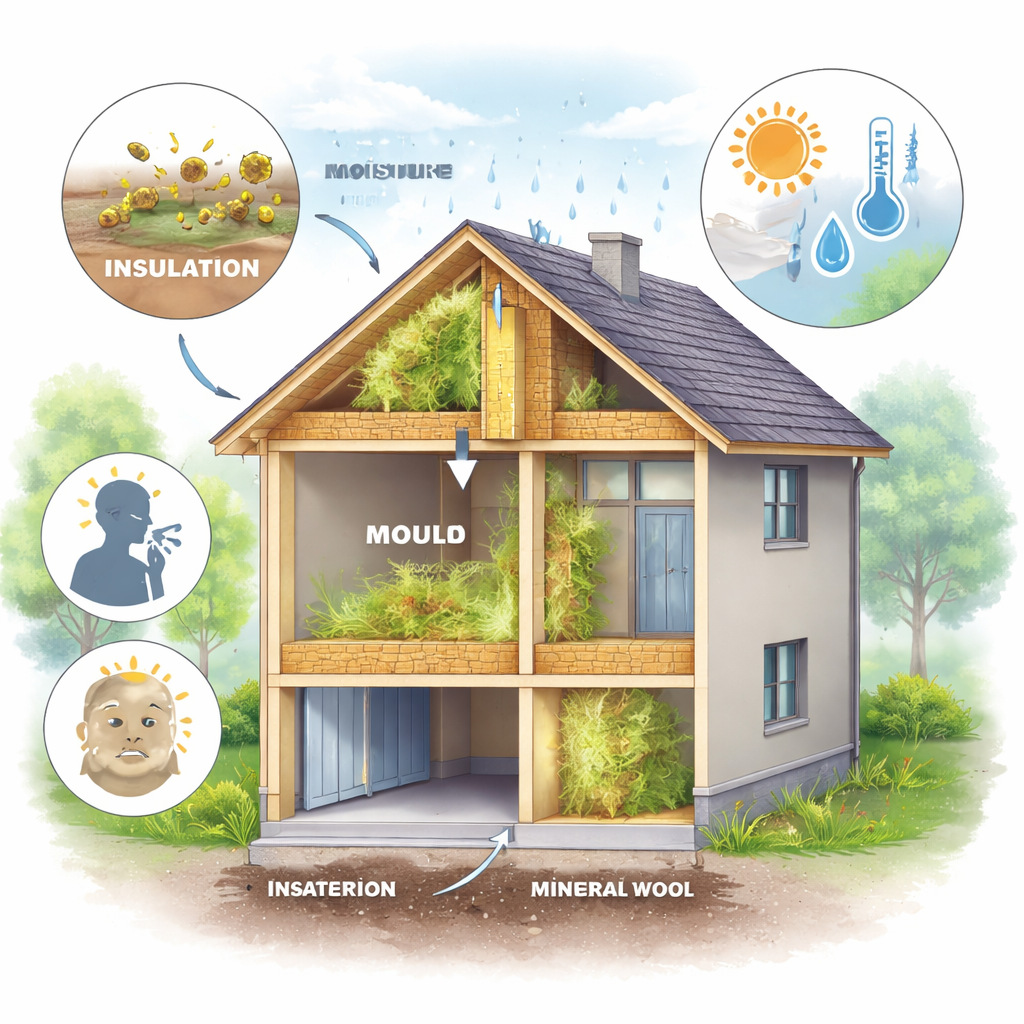
Mould is simply the visible form of certain fungi that grow as fine threads and release clouds of tiny spores. Indoors, those spores land on surfaces and, if they find enough moisture and something to feed on, they quickly form fuzzy patches. The review explains that modern homes, made more airtight to save energy, can accidentally trap moisture in wall cavities, roofs and floors. These hidden pockets can stay warm and damp for long periods—exactly the conditions mould needs to thrive on insulation and other materials.
What Fuels Mould Behind the Walls
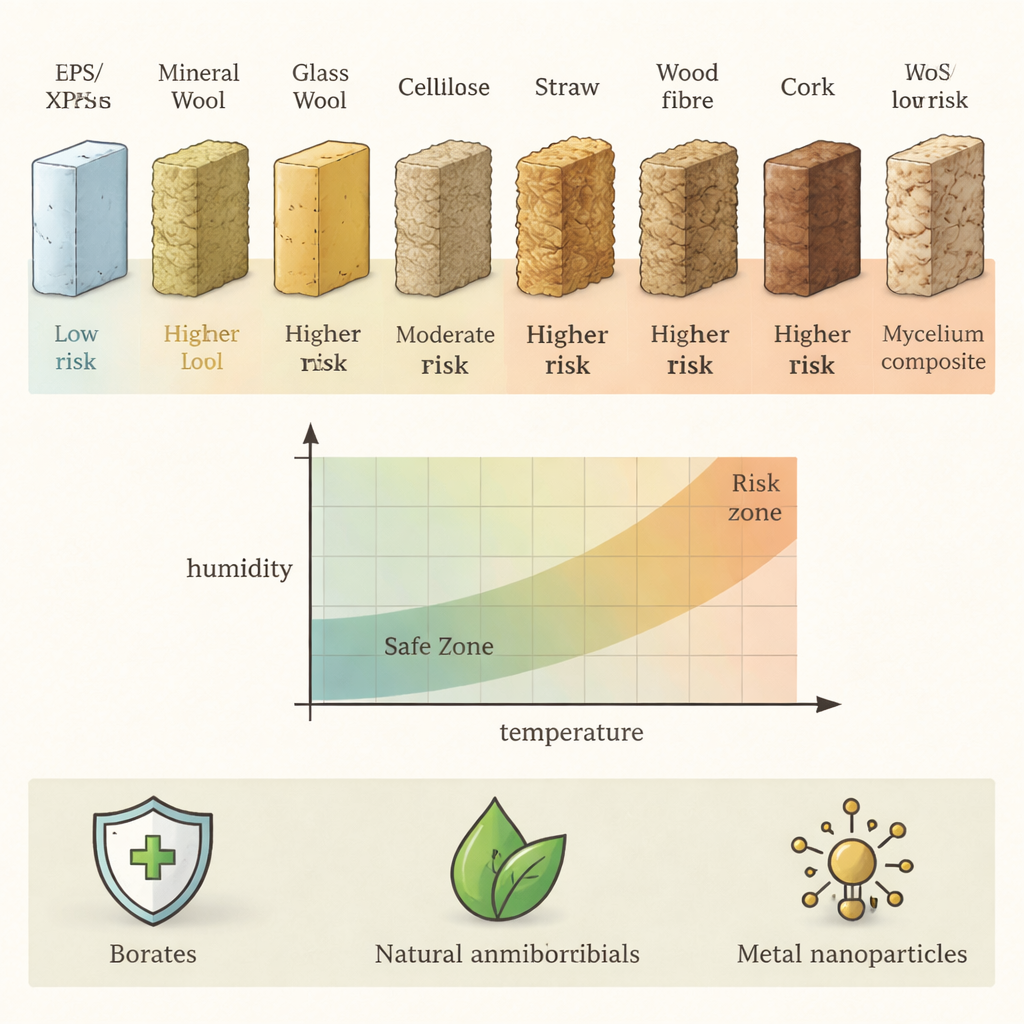
For mould to grow, several ingredients must come together: moisture, suitable temperature and a source of nutrients. The paper describes how high humidity or leaks allow water to soak into porous materials. Many common indoor moulds grow best in the same temperature range we find comfortable—around 20–30 °C—so heating our homes does not automatically keep them at bay. Bio‑based insulations made from plant fibres (such as cellulose, hemp, straw and wood fibre) naturally contain carbohydrates and other nutrients that fungi can digest. In contrast, conventional foam and mineral fibre insulations are chemically inert and contain far less “food.” Still, even these can support some mould growth if dust and dirt accumulate on their surfaces.
How Scientists Test Insulation for Mould Risk
To compare materials, researchers put insulation samples in controlled boxes where humidity, temperature and mould spores can be adjusted. International test standards usually involve three basic steps: preparing and sterilising samples, exposing them to a mix of common indoor moulds under warm, humid conditions, and then scoring any growth by eye or microscope. The review points out that different standards use different mould species, climate conditions, test durations and scoring systems. Some tests give only a simple pass/fail answer, while others provide more detail. Because the methods are not harmonised, it is hard to line up results from different studies and say with confidence that one insulation type is safer than another.
Which Insulations Hold Up Best, and Which Need Care
Across many studies, synthetic foams such as expanded and extruded polystyrene, along with mineral and glass wools, generally showed the highest resistance: mould growth was absent or stayed very limited even at high humidity. By contrast, plant‑based insulations tended to support more mould under damp conditions, though there were big differences between materials and even between products made from the same raw ingredient. Cellulose, straw, wood fibre, hemp‑based composites, cork and mycelium‑based panels all showed substantial growth when kept very humid or wet for long periods. Sheep’s wool usually fared better than plant fibres but still grew mould when it became waterlogged. The review also notes that real buildings introduce extra complications, such as dust, intermittent leaks, temperature swings and stagnant air, which laboratory tests do not fully capture.
Making Greener Insulation Safer
Rather than abandoning bio‑based insulations, the authors argue for smarter design and better protection. They describe existing and emerging treatments that can be built into materials to slow or prevent mould. These include traditional additives such as boron compounds, as well as experimental options like plant‑derived essential oils, natural polymers such as chitosan and tiny metal particles that disrupt fungal cells. Good building practice remains essential: keeping humidity low, avoiding thermal bridges and leaks, and ensuring adequate ventilation all reduce the chances that any insulation will become mouldy, whatever it is made from.
What This Means for Homeowners and Builders
The central message is that mould risk depends on both the material and the way a building is designed, built and maintained. Synthetic insulations are generally less inviting to mould but come with environmental drawbacks. Bio‑based options can cut carbon and support a circular economy, but they are more vulnerable if they get wet and stay damp. The authors call for clearer, standardised testing and honest reporting on product data sheets so that architects, builders and homeowners can balance energy savings, climate impact, durability and health when choosing how to insulate their homes.
Citation: Wildman, J., Shea, A., Cascione, V. et al. Mould susceptibility of bio-based insulation materials in modern construction. npj Mater Degrad 10, 29 (2026). https://doi.org/10.1038/s41529-026-00742-7
Keywords: building insulation, mould growth, bio-based materials, indoor air quality, sustainable construction