Clear Sky Science · en
Directional permeation-driven microfiber composite hydrogel towards rapid sweat uptaking and hydration monitoring
Why Tracking Sweat Matters
Staying properly hydrated is crucial for health, athletic performance, and everyday comfort, but most of us still rely on vague cues like thirst or guesswork. This study introduces a small wearable patch that can quickly capture tiny amounts of sweat, measure how fast you are sweating and how salty that sweat is, and send the results wirelessly to a phone. By speeding up how fast a sensor can grab and analyze sweat, the technology moves us closer to real-time, personalized hydration guidance during exercise or in hot environments. 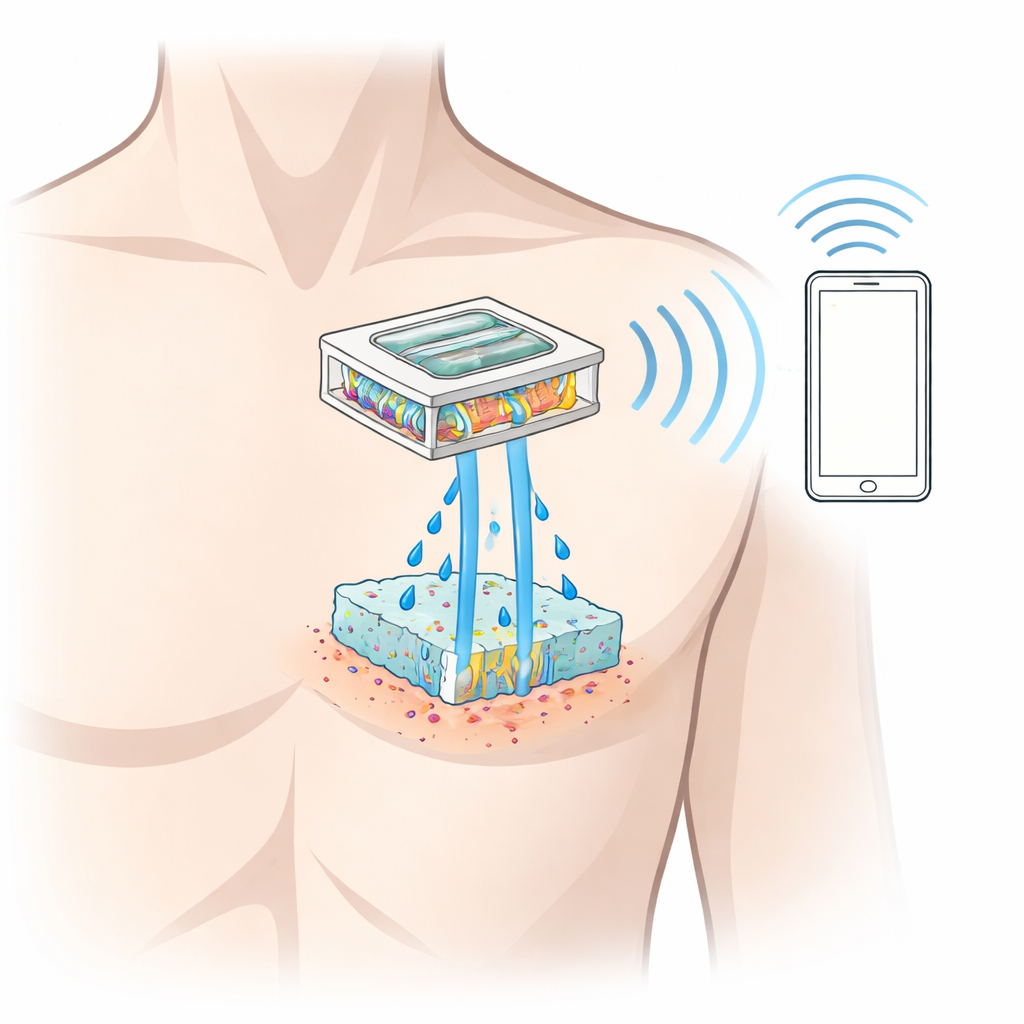
A New Way to Soak Up Sweat
At the heart of the device is a specially engineered sponge-like layer called a microfiber composite hydrogel. It is made from two common polymers—polyvinyl alcohol and polyurethane—combined into a fibrous mat. Unlike ordinary absorbent pads or gels, this layer is built to pull sweat mainly in one direction: from the skin upward into tiny channels in the sensor. The researchers carefully tuned the structure so that pores within the mat are partially filled, narrowing the pathways just enough to pull liquid upward without letting it spread sideways. This design lowers the pressure needed for sweat to break through the layer, so even very small amounts of sweat can be captured quickly.
Guiding Sweat Along a One-Way Path
To test how well this new material moves fluid, the team compared it with common absorbent papers and standard plastic films. In those conventional materials, liquid tends to spread out in all directions, like a spill soaking across a paper towel, before any of it moves into a channel. In contrast, the new microfiber hydrogel kept the fluid mostly confined and drove it vertically, allowing the sensor’s microchannels to start filling before the sponge was fully saturated. Experiments using colored liquids showed that this directional transport cut the time needed to deliver fluid into the channels and increased the amount of liquid that could be driven through a given area. The best performance came from a specific recipe: a scaffold containing 25 percent polyurethane and 3 percent polyvinyl alcohol by weight, which balanced porosity and strength.
Turning Sweat into Live Data
On top of the sweat-collecting layer, the researchers built a flexible microfluidic network—thin winding channels etched into soft plastic—decorated with tiny metal electrodes. As sweat flows through these channels, it changes how easily electrical current passes between the electrodes. By tracking these changes, the system can extract two important pieces of information. First, the total salt content in the sweat can be inferred from the overall level of electrical conductance. Second, the speed at which the sweat front passes from one electrode pair to the next reveals the sweat rate. In tests with salt solutions pumped at controlled flow rates, the sensor produced clean, step-like signals that matched the programmed flow and concentration, proving that the sponge layer did not distort the chemical readings. 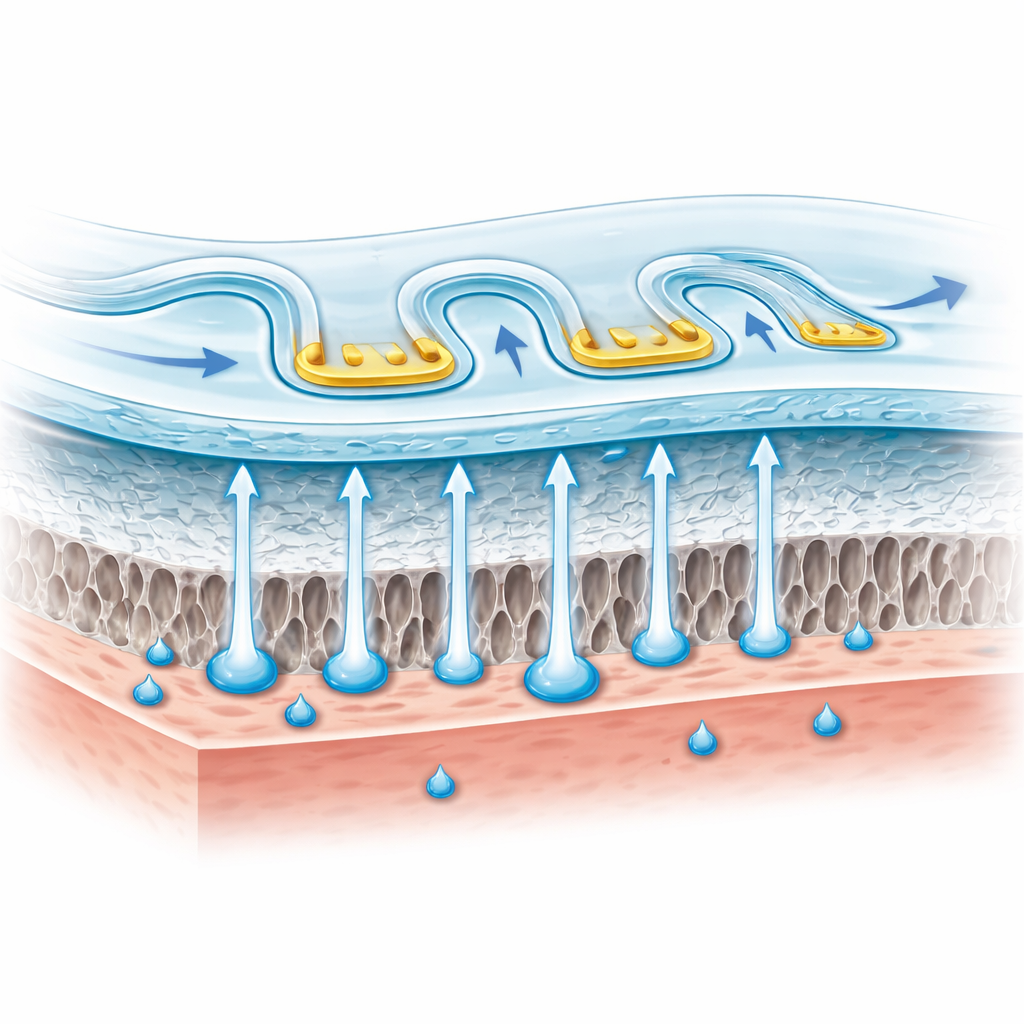
From the Lab to the Cycling Test
The team then integrated the microfluidic sensor with a low-power electronics module that filters the signals, calculates sweat metrics, and sends them wirelessly to a mobile device. Volunteers wore the patch on the chest while riding a stationary bike at different intensities. Compared with an identical sensor that lacked the special hydrogel filler, the new system began reporting useful data more than five minutes earlier, and it collected about half again as much sweat overall. The readings of sweat rate on the chest matched closely with whole-body sweat loss measured by weighing participants before and after exercise, and the patterns agreed with known differences between men and women. Day-to-day tests showed that the device’s measurements were stable over repeated sessions.
What This Could Mean for Everyday Health
Overall, the study shows that shaping how sweat moves through a sensor—specifically, using a directional, low-resistance sponge layer—can dramatically speed up and improve sweat-based measurements. For ordinary users, this could translate into patches that quickly warn of rising dehydration risk, help tailor fluid and salt intake during training, or one day monitor other health markers present in sweat. By making it easier to harvest and analyze just a few microliters of fluid, the technology lays the groundwork for more precise, personalized hydration advice and a new class of wearable tests that use sweat as an accessible window into whole-body health.
Citation: Shen, H., Liu, S., Liu, M. et al. Directional permeation-driven microfiber composite hydrogel towards rapid sweat uptaking and hydration monitoring. npj Flex Electron 10, 33 (2026). https://doi.org/10.1038/s41528-026-00535-7
Keywords: wearable sweat sensors, hydration monitoring, microfluidic patch, flexible electronics, electrolyte balance