Clear Sky Science · en
Linking the microbiome to the complement system in geographic atrophy
Why Your Gut Could Matter to Your Eyes
Geographic atrophy is a late, vision‑robbing stage of age‑related macular degeneration, a leading cause of blindness in older adults. While eye doctors usually focus on the back of the eye, this study asks a striking question: could tiny microbes in our intestines, together with our genes, help drive damage in the retina? By comparing gut and eye‑surface bacteria in people with geographic atrophy and healthy peers, the researchers explore a possible “gut–eye” connection that could open doors to new ways of preventing or slowing vision loss.
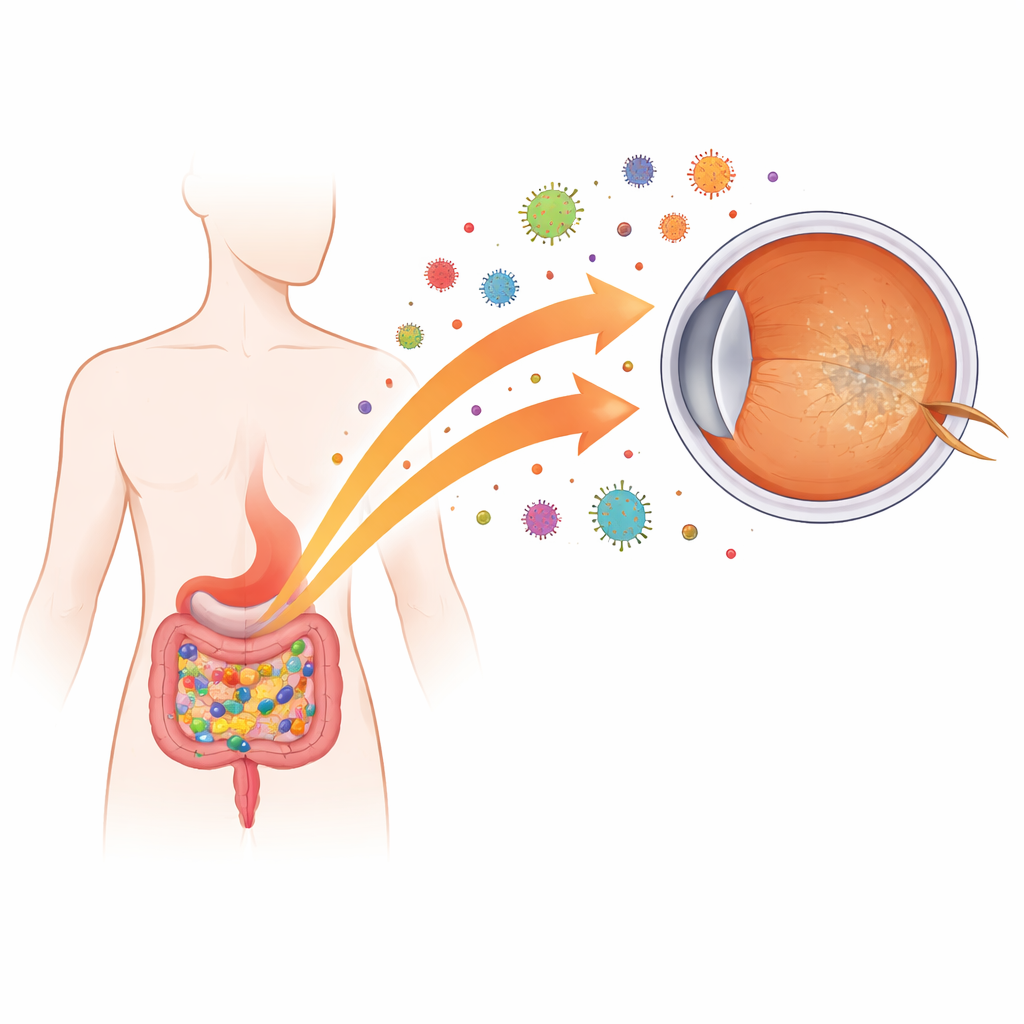
Looking at the Whole Person, Not Just the Eye
The team studied 21 people with geographic atrophy and 21 age‑ and sex‑matched individuals without any signs of macular disease. They collected stool samples to analyze the gut microbiome—the vast community of bacteria and other microbes living in the intestines—and swabs from the eye surface to profile local microbes there. They also tested each participant’s blood for 16 genetic variants previously linked to age‑related macular degeneration, focusing on genes involved in the body’s immune defenses, such as components of the complement system that help clear microbes and damaged cells.
Small Microbial Shifts with Potentially Big Consequences
At first glance, the gut ecosystems of patients and healthy controls looked broadly similar. Both groups shared the same dominant high‑level families of bacteria, and overall diversity—the number and balance of different species—did not differ significantly. But when the researchers zoomed in more closely, subtle yet statistically robust differences emerged. A few specific bacterial groups were more or less common in people with geographic atrophy, including members of the Firmicutes group and individual species previously linked to inflammation and metabolic disorders. These are not sweeping, headline‑grabbing shifts, but they hint that even modest changes in the types of gut microbes present could tweak the body’s inflammatory tone and metabolic state in ways that influence the vulnerable retina.
Metabolism, Stress, and the Immune System
Beyond cataloging which microbes were present, the researchers examined what those microbes are capable of doing—namely, which biochemical pathways they carry. Here the differences were clearer. In people with geographic atrophy, certain pathways involved in breaking down a molecule called inosine monophosphate were more active, while multiple pathways tied to energy production, recycling of the vital cofactor NAD, and handling of cellular fuels were less active. These shifts point to altered energy balance and higher oxidative stress—chemical wear‑and‑tear that can damage cells. Because the retina has extremely high energy demands, even small changes in how the gut community processes nutrients and fuels might feed into systemic inflammation and the complement system, amplifying damage in the macula over time.
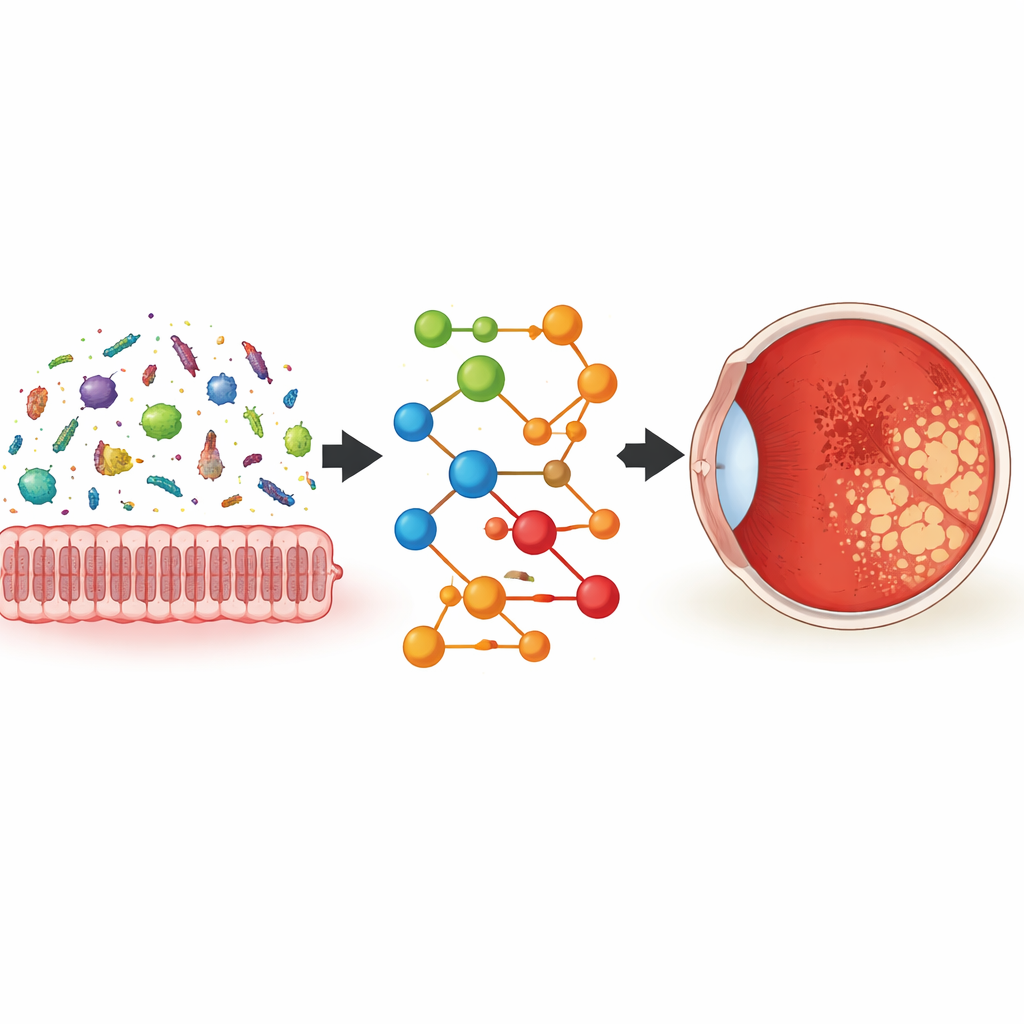
Genes, Bacteria, and a Gut–Eye Link
The genetic analysis reinforced this picture. One particular variant in the complement factor H gene—long known as a strong risk factor for age‑related macular degeneration—was more common in people with geographic atrophy than in healthy controls, nearly tripling the odds of having the disease. Interestingly, this same variant was associated with differences in specific gut bacteria, suggesting that a person’s genetic makeup could shape their microbiome, which in turn may influence immune activity and inflammation throughout the body, including in the eye. By contrast, the microbiome on the eye’s surface looked surprisingly similar between patients and controls, and only a handful of metabolic pathways could be detected there, underscoring how sparse and difficult to study this tiny ecosystem is.
What This Means for Protecting Sight
For a layperson, the bottom line is that this study supports the idea of a gut–eye axis: microbes in the intestines, together with inherited immune‑system genes, may nudge the body toward or away from vision‑threatening damage in the retina. The changes found are subtle and do not yet translate into direct treatments, but they highlight promising avenues—such as targeting specific microbial pathways or modulating the complement system more precisely. In the long run, better understanding of how diet, gut bacteria, and genes interact could lead to new strategies to prevent or slow geographic atrophy, complementing existing eye‑focused therapies with whole‑body approaches to preserving sight.
Citation: Spörri, L., Studer, J.M., Kreuzer, M. et al. Linking the microbiome to the complement system in geographic atrophy. npj Genom. Med. 11, 14 (2026). https://doi.org/10.1038/s41525-026-00550-7
Keywords: geographic atrophy, gut microbiome, age-related macular degeneration, complement system, retinal degeneration