Clear Sky Science · en
The landscape of the intestinal microbiome among patients with newly diagnosed invasive breast cancer and ductal carcinoma in situ (DCIS)
Why tiny gut residents matter for breast cancer
Most of us think of breast cancer as a disease of the breast alone, but this study suggests that the trillions of microbes living in our intestines may hold important clues about how the disease behaves. By looking closely at the mix of bacteria in stool samples from women with early breast cancer or a pre-cancerous condition called ductal carcinoma in situ (DCIS), researchers asked whether certain microbial patterns track with cancer stage or type. If so, gut microbes might someday help doctors predict risk, tailor treatment, or even become targets for new therapies.
Who was studied and what the team measured
The researchers analyzed stool from 278 women treated at major cancer centers before they had surgery or systemic treatments like chemotherapy. Thirty-six had DCIS, a pre-invasive growth confined to the milk ducts, and 242 had stage I–III invasive breast cancer. The team used whole-genome metagenomic sequencing, a high-resolution method that reads the genetic material of all microbes present, allowing them to catalog which bacterial species were there and what metabolic pathways those microbes were capable of carrying out. They then compared overall microbial diversity and the presence or abundance of specific species and functions across cancer stages and biologic subtypes.
How DCIS compares with invasive breast cancer
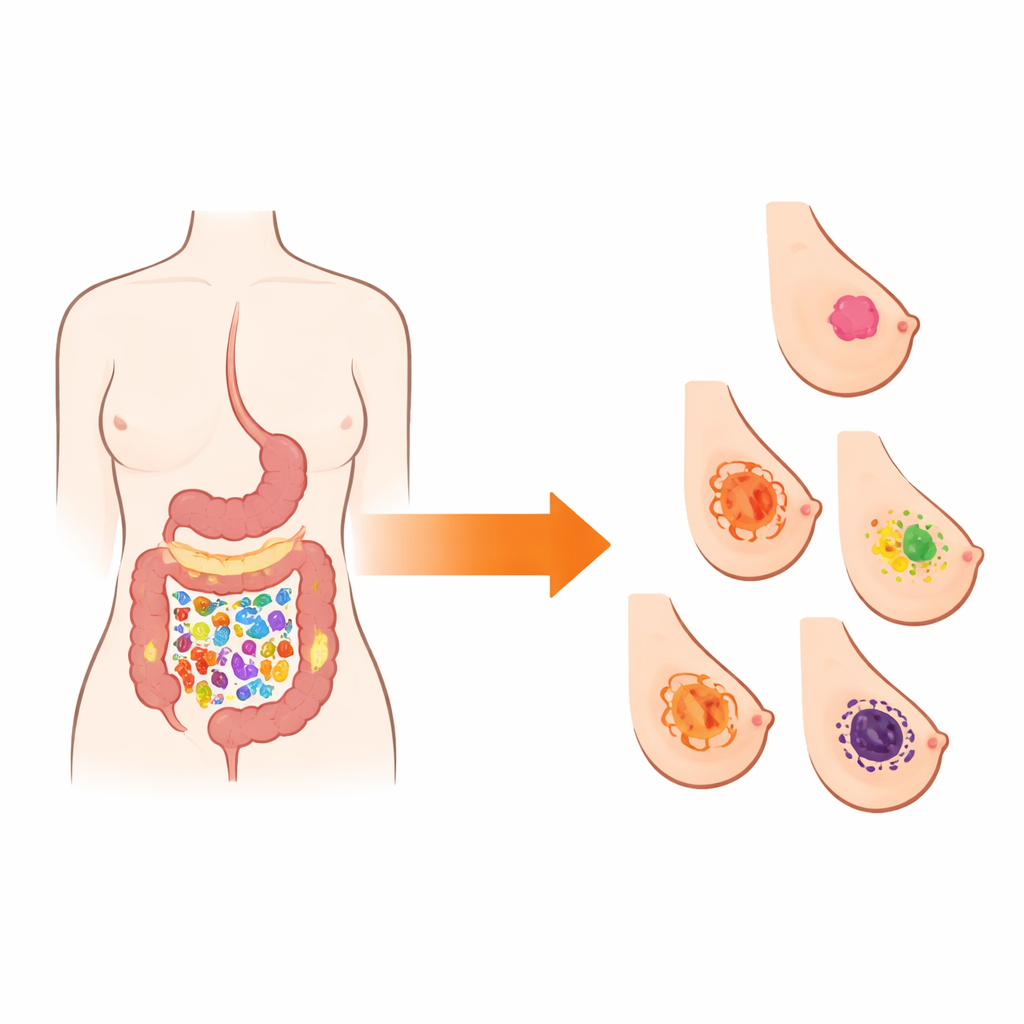
One key question was whether the gut environment already looks different when a woman has DCIS versus when the disease has broken through the duct walls and become invasive cancer. Surprisingly, the overall microbial landscape looked very similar between these groups. Standard measures of diversity—how many types of microbes are present and how evenly they are represented—did not differ meaningfully. Nor did the researchers find individual bacterial species or metabolic pathways that clearly separated DCIS from invasive disease. In both groups, familiar “healthy gut” residents such as Faecalibacterium and various Bacteroides and Ruminococcus species dominated.
Links between gut microbes, cancer stage, and tumor type
When the team focused only on women with invasive breast cancer, more subtle patterns emerged. They observed that the overall community structure of gut microbes differed according to certain tumor features. Women with a particular tumor subtype that is both hormone-receptor positive and HER2 positive showed a distinct gut microbial profile compared with other subtypes, even though basic diversity measures were similar. The study also examined age, body mass index, and cancer stage. While these factors did not strongly shift broad diversity measures, they did relate to the abundance of specific species. Notably, one bacterium, Bacteroides ovatus, was more abundant in women with stage III disease than in those with stage I, hinting that some microbes may track with more advanced cancer.
Metabolic clues hidden in microbial activity
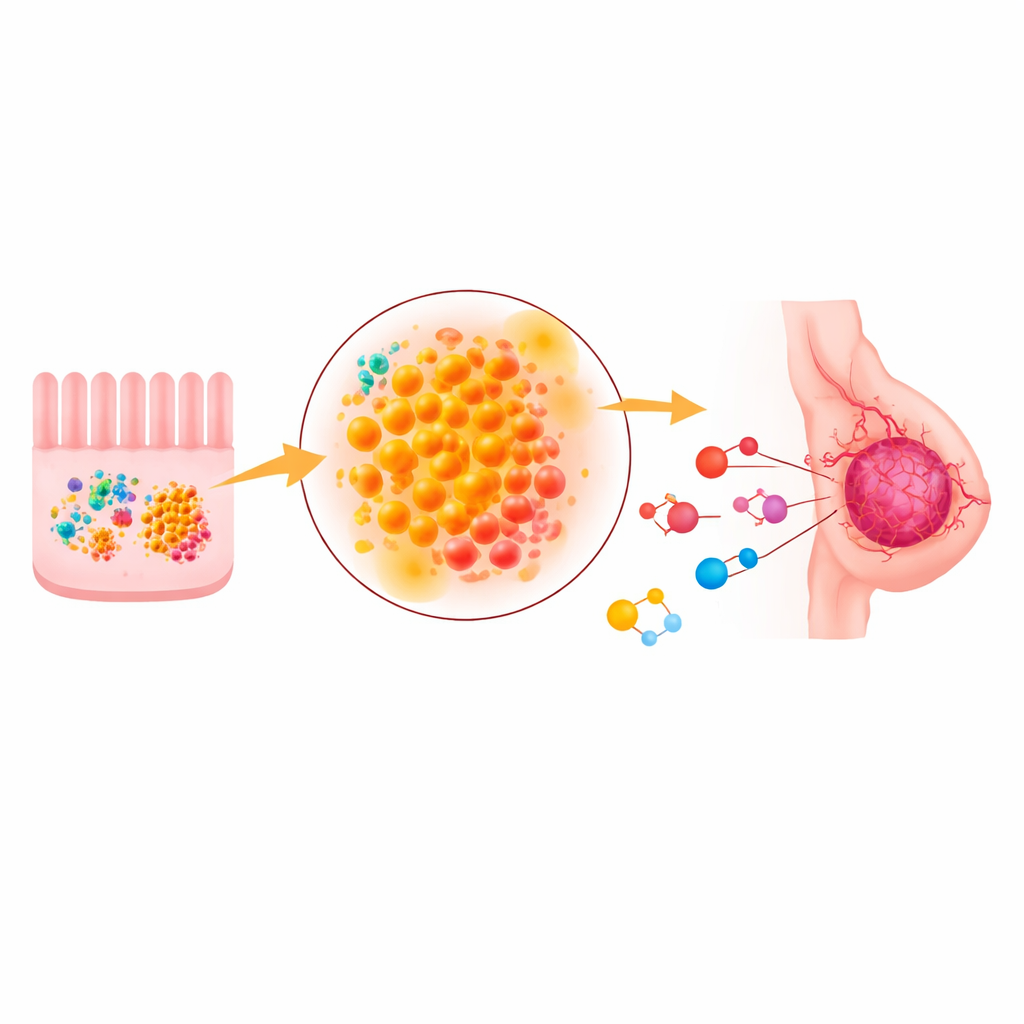
Beyond which microbes were present, the investigators asked what those communities might be doing. Using a tool called HUMAnN3, they inferred microbial metabolic pathways and compared them across stages of invasive cancer. They found that later stages, especially stage III, were enriched for pathways involved in making certain amino acids and nucleotide-related compounds. These are building blocks for proteins and DNA that rapidly dividing cells, including cancer cells, require. The authors propose that as tumors grow and change the body’s internal environment, the gut microbiome may shift toward communities that excel at producing these metabolites, potentially feeding into cancer progression—though the current data cannot prove cause and effect.
What it means and what comes next
This study suggests that while the gut microbiome does not sharply distinguish pre-invasive from early invasive breast disease, it does show more nuanced differences linked to tumor subtype and stage, as well as shifts in microbial metabolic capabilities. These findings are limited by the modest number of DCIS cases, the lack of repeated sampling over time, and missing information on factors like diet, medications, and probiotic use, all of which can shape gut microbes. Still, the work adds to growing evidence that our intestinal inhabitants carry signatures of cancer biology. In the future, larger and longer-term studies could reveal whether gut microbial profiles help predict who will respond best to specific treatments or face a higher risk of recurrence—and whether changing the microbiome could become part of breast cancer care.
Citation: Sammons, S.L., Kuntz, T.M., DiLullo, M. et al. The landscape of the intestinal microbiome among patients with newly diagnosed invasive breast cancer and ductal carcinoma in situ (DCIS). npj Breast Cancer 12, 54 (2026). https://doi.org/10.1038/s41523-026-00922-3
Keywords: gut microbiome, breast cancer, ductal carcinoma in situ, Bacteroides ovatus, cancer metabolism