Clear Sky Science · en
Validation of the HER2DX genomic test in first-line advanced HER2-positive breast cancer treated with trastuzumab, pertuzumab, and taxane
Why this research matters to patients
For people living with advanced HER2-positive breast cancer, today’s treatments can work remarkably well for some, while others see their cancer return quickly. This study asks a question that matters to every patient in that situation: can a genomic test run on a piece of the tumor help doctors predict who will enjoy long-lasting benefit from standard therapy and who might need a different, stronger plan from the start?
A closer look at a common first treatment
For more than a decade, a three-drug combination—trastuzumab, pertuzumab, and a chemotherapy drug called a taxane (often shortened to THP)—has been the usual first treatment for advanced HER2-positive breast cancer. Large clinical trials showed that THP can keep cancer in check for well over a year on average, and some patients do well for many years. Yet many others see their disease worsen much sooner. With new drugs arriving, including powerful antibody–drug combinations and targeted pills, clinicians urgently need better tools to decide who can safely stay with THP and who should be offered intensified or alternative therapy.

What the HER2DX test measures
The HER2DX test is a laboratory assay that reads activity levels of 27 genes in a tumor sample and combines this with some basic clinical information. From these data it produces several scores. One key measure examined in this paper is the ERBB2 score, which reflects how strongly the HER2 gene is switched on in the cancer cells. The researchers also built an expanded “metastatic prognostic score” that blends ERBB2 with signals of how fast tumor cells divide and how similar they are to hormone-sensitive breast cells. The idea is to move beyond what pathologists see under the microscope and use a richer molecular portrait to forecast how a tumor will behave under treatment.
Studying real patients in two countries
The team analyzed stored tumor tissue from 122 women in Poland who had received THP as their first treatment for advanced disease. They combined these data with an earlier Spanish group of 93 patients, ending with 215 people treated in routine practice. For each patient, they calculated HER2DX scores and then followed how long they lived without their cancer worsening and how long they survived overall. Because these were not clinical trial volunteers but real-world patients, the findings reflect what actually happens in everyday oncology clinics.
High scores, longer control of cancer
Across both countries, people whose tumors had high ERBB2 scores did substantially better on THP than those with medium or low scores. Their cancers stayed controlled roughly twice as long, and more of them responded to treatment. These results held up even after accounting for other important factors such as how many organs the cancer had reached or whether the disease involved the brain. The benefit was especially striking in patients with a lower overall tumor burden (fewer than three metastatic sites), where high ERBB2 tumors often remained controlled for more than four years. When the researchers applied the broader metastatic prognostic score, it separated patients into low-, medium-, and high-risk groups even more clearly, suggesting that combining several genomic signals can sharpen predictions.
How this could guide tomorrow’s choices
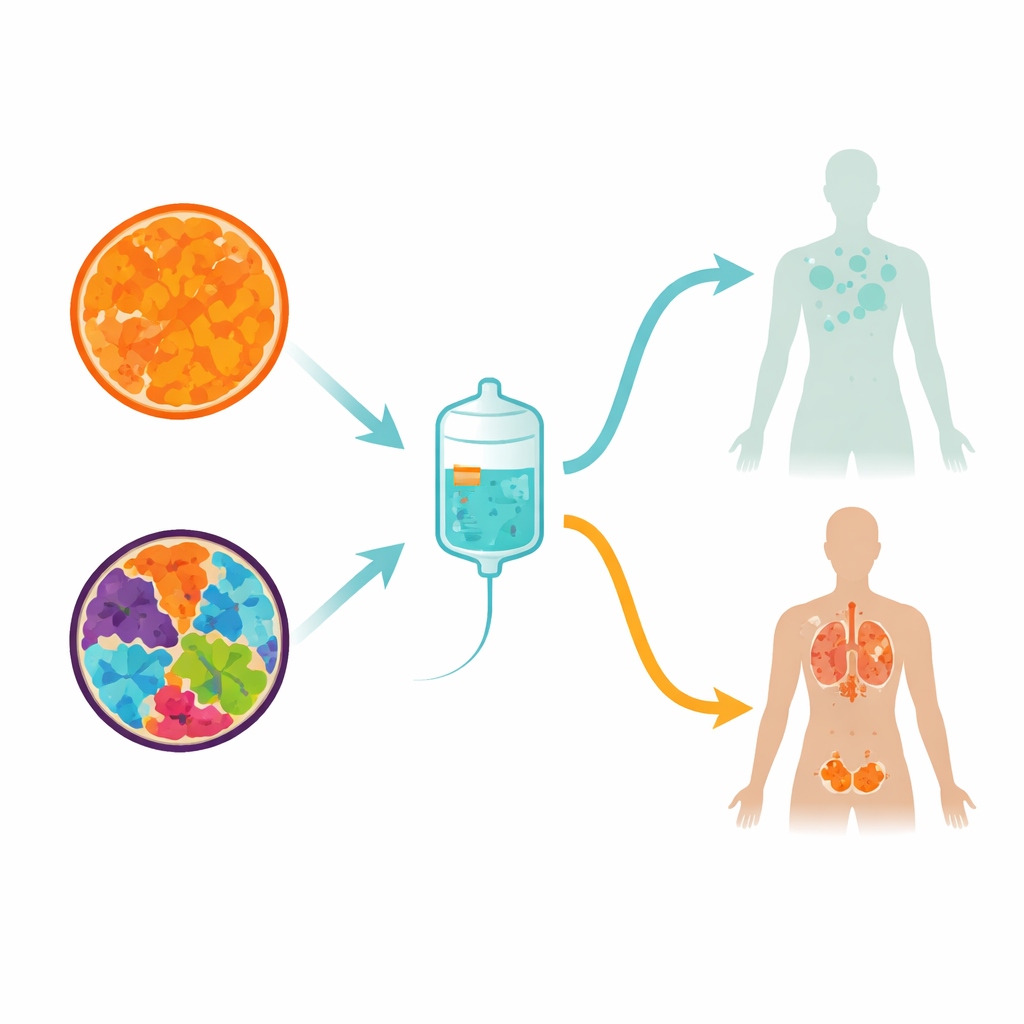
The study’s message is that not all HER2-positive cancers are alike, even when they look similar in standard tests. Some, marked by high ERBB2 and favorable genomic features, appear highly sensitive to current THP therapy and may not need immediate escalation to newer, more intensive regimens. Others, with less favorable scores, might benefit from being prioritized for stronger or earlier use of novel drugs. While the work is retrospective and needs confirmation in future prospective trials, it shows that a single genomic test performed on a routine tumor sample could help personalize first-line treatment, giving more patients the right intensity of therapy for their particular cancer biology.
Citation: Kubeczko, M., Cobo, S., Sanchez-Bayona, R. et al. Validation of the HER2DX genomic test in first-line advanced HER2-positive breast cancer treated with trastuzumab, pertuzumab, and taxane. npj Breast Cancer 12, 43 (2026). https://doi.org/10.1038/s41523-026-00909-0
Keywords: HER2-positive breast cancer, genomic testing, treatment personalization, ERBB2 expression, trastuzumab pertuzumab taxane