Clear Sky Science · en
Impact of estrogen receptor expression levels on chemo-responsiveness and prognosis of breast cancer patients treated with neoadjuvant chemotherapy
Why this matters for people facing breast cancer
When someone is told they have breast cancer, one of the first lab results they hear about is whether their tumor "uses" the hormone estrogen to grow. This study asks a crucial follow‑up question: does the exact amount of estrogen sensitivity matter for how well chemotherapy works and how long patients stay cancer‑free? The answers could change how doctors interpret routine test results and tailor treatment, especially for people whose tumors fall into a gray zone between clearly negative and clearly positive.
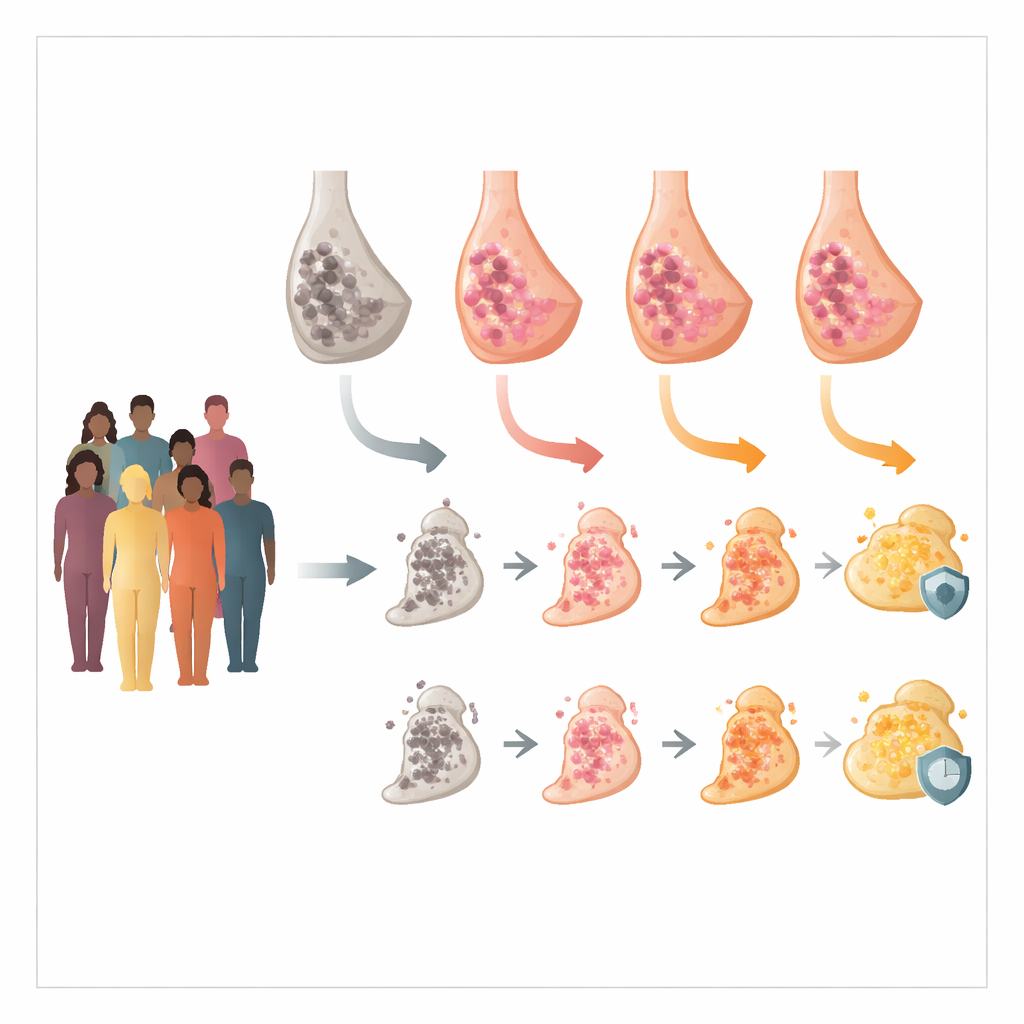
Different shades of hormone sensitivity
The researchers examined 1,365 women with invasive breast cancer treated at a single hospital in Korea. All received chemotherapy before surgery, a strategy known as neoadjuvant chemotherapy that allows doctors to see how well the tumor shrinks. Instead of lumping tumors into a simple "estrogen receptor (ER) positive" or "ER negative" label, the team divided them into four groups based on what fraction of cancer cells carried the receptor: almost none (under 1%), low (1–10%), intermediate (11–50%), and high (more than half the cells). This finer breakdown mirrors how pathologists actually view tumor samples under the microscope.
Who has which kind of tumor?
Nearly half of the tumors were ER‑negative and almost half were strongly ER‑positive; only about 7% fell into the low or intermediate middle ground. As ER levels rose, tumors tended to look less aggressive under the microscope and were more likely to carry another hormone marker called the progesterone receptor. Women with higher ER levels were also more likely to receive—and to complete—long‑term hormone‑blocking pills after surgery. Importantly, the so‑called ER‑low and ER‑intermediate tumors looked more like ER‑negative tumors than like strongly positive ones when the team compared features such as growth rate and cell appearance.
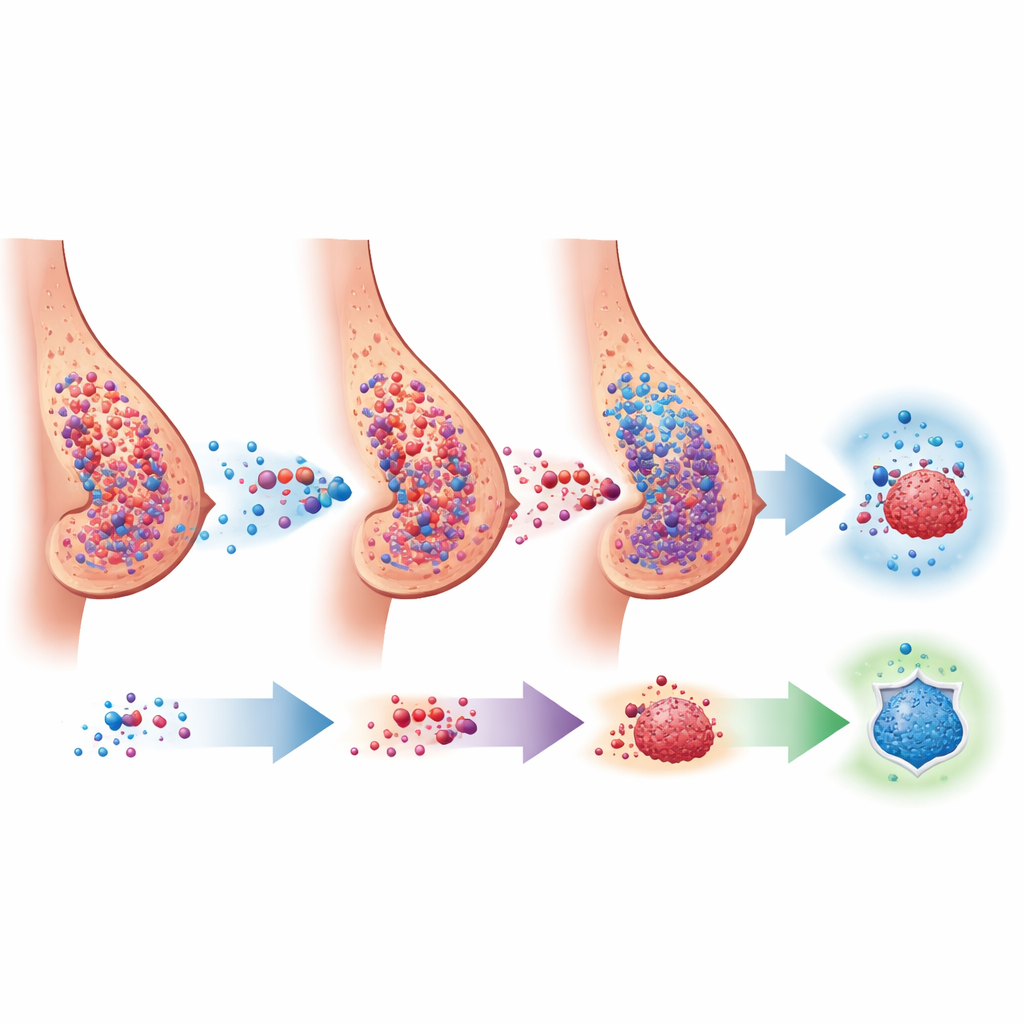
How chemo response differs by ER level
Because every patient received chemotherapy before surgery, the scientists could measure how completely the cancer disappeared from the breast and lymph nodes. Overall, about three out of ten women had no remaining invasive cancer at the time of surgery. Tumors with little or no estrogen receptor were far more likely to have this complete response than strongly ER‑positive tumors. ER‑low cancers behaved almost identically to ER‑negative cancers: both groups shrank dramatically with chemo. In contrast, ER‑intermediate tumors were noticeably less responsive than ER‑negative tumors and were similar to strongly ER‑positive cancers in how much disease remained after treatment. When the researchers regrouped tumors simply as below 10% ER or 10% and above, the lower‑ER group consistently showed better chemo sensitivity, suggesting that 10% may be a practical dividing line for predicting response.
Shifting signals and long‑term outlook
The team also tracked what happened to ER levels after chemotherapy in the 913 patients whose tumors did not vanish entirely. Most clearly negative or clearly high‑positive tumors stayed in the same category. By contrast, ER‑low and ER‑intermediate tumors frequently shifted category, reinforcing the idea that these gray‑zone cancers are biologically unstable. When the researchers followed patients for nearly six years on average, those with strongly ER‑positive tumors who still had some cancer after chemo generally lived longer without recurrence than those with low or no ER. Yet among the three groups with none, low, or intermediate ER, survival differences were small, again pointing to their similarity. Completing a full course of hormone‑blocking pills was linked to better outcomes in patients with low, intermediate, and high ER levels, highlighting the value of sticking with this long‑term treatment when it is prescribed.
What this means for patients and doctors
For people facing breast cancer, this work suggests that not all "ER‑positive" tumors behave the same. Cancers with only a small fraction of estrogen‑sensitive cells tend to respond to chemotherapy much like ER‑negative tumors and do not clearly enjoy the long‑term protection seen in strongly ER‑positive disease, although finishing hormone‑blocking therapy still appears helpful. Tumors with intermediate ER levels sit between the two extremes, with mixed features and more frequent shifts in ER status after treatment. Together, these findings support reporting more detail on ER levels, rethinking how gray‑zone tumors are grouped for treatment decisions, and pursuing further studies to refine the percentage cutoffs that best guide care.
Citation: Bai, K., Sung, HJ., Chung, Y.R. et al. Impact of estrogen receptor expression levels on chemo-responsiveness and prognosis of breast cancer patients treated with neoadjuvant chemotherapy. npj Breast Cancer 12, 37 (2026). https://doi.org/10.1038/s41523-026-00907-2
Keywords: breast cancer, estrogen receptor, neoadjuvant chemotherapy, endocrine therapy, treatment response