Clear Sky Science · en
Constitutional BRCA1 Methylation is associated with high level of tumoral BRCA1 methylation and homologous recombination deficiency in triple-negative breast cancer
Why this research matters
Triple-negative breast cancer is one of the most aggressive forms of breast cancer and often affects younger women. Unlike other breast cancers, it lacks common targets for hormone or HER2‑directed drugs, so doctors urgently need better ways to predict which patients might respond to modern treatments that damage cancer DNA. This study looks at a subtle chemical mark on a key DNA repair gene, BRCA1, and asks whether a trace of this mark in blood may set the stage for a stronger mark in tumors—and in turn for a particular kind of DNA repair weakness that doctors can exploit.
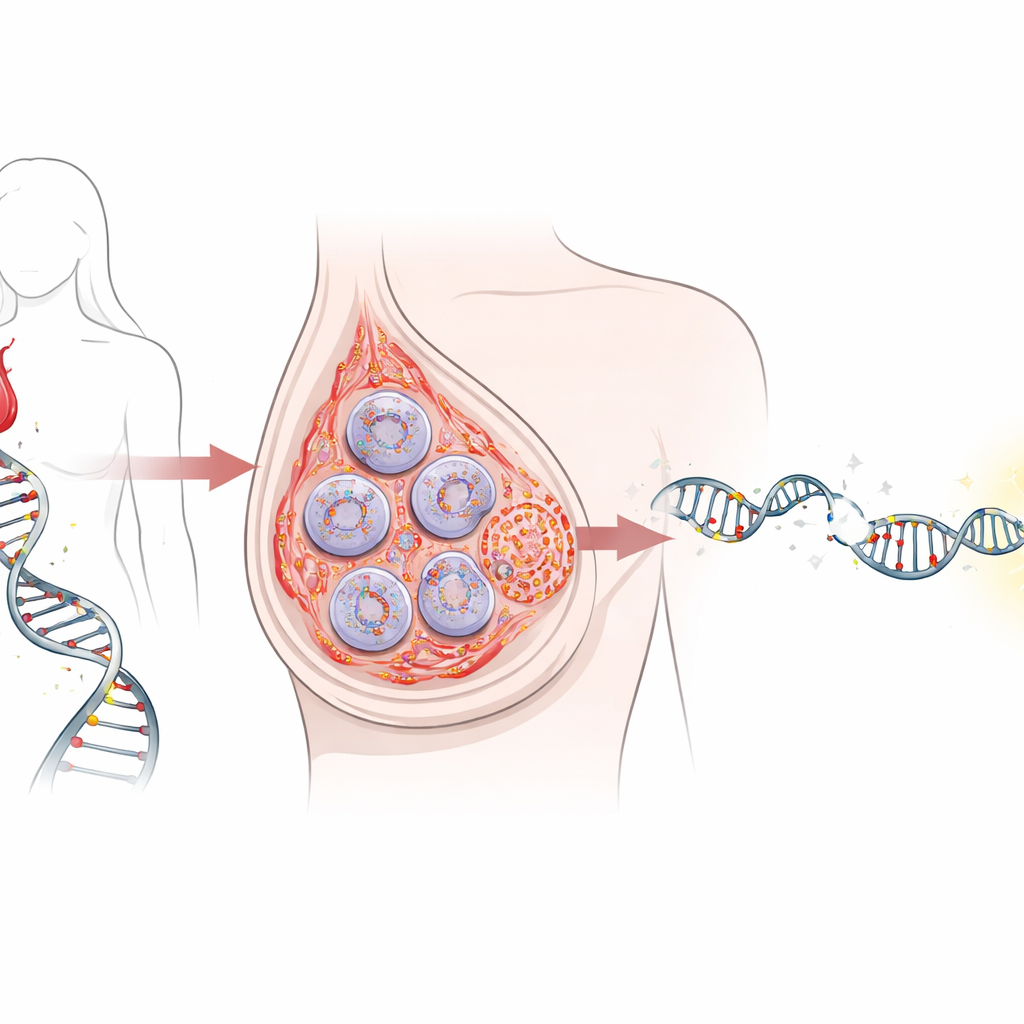
A chemical tag on a cancer‑linked gene
BRCA1 is best known for inherited mutations that sharply raise breast and ovarian cancer risk. But this gene can also be switched off in another way: by adding small chemical tags, called methyl groups, to its on–off switch region. The authors distinguished two situations. “Constitutional” methylation is present in normal blood cells and likely across the body from early life. “Tumoral” methylation appears in the cancer tissue itself. When methylation is seen only in the tumor and not in blood, they call it “somatic‑only.” All of these patterns can reduce BRCA1 activity and may leave cells with a crippled ability to fix broken DNA accurately.
Tracking methylation from blood to tumor
The team analyzed matched blood and tumor samples from 136 people with triple‑negative breast cancer treated at a single cancer center. They measured how much of each person’s BRCA1 promoter—its control region—was methylated, grouping values from none to very high. About one in five patients had constitutional BRCA1 methylation in blood, in line with earlier reports that this hidden risk factor is surprisingly common. In tumors, methylation was even more frequent: roughly one in three cancers showed BRCA1 promoter methylation, and more than a quarter had very high levels. Tumors from people who already had methylation in blood almost always showed a sharp jump to high methylation in the cancer, often together with loss of the remaining normal BRCA1 copy. This pattern suggests a two‑step process in which a mild, body‑wide epigenetic change helps pave the way for a stronger “second hit” as the tumor forms.
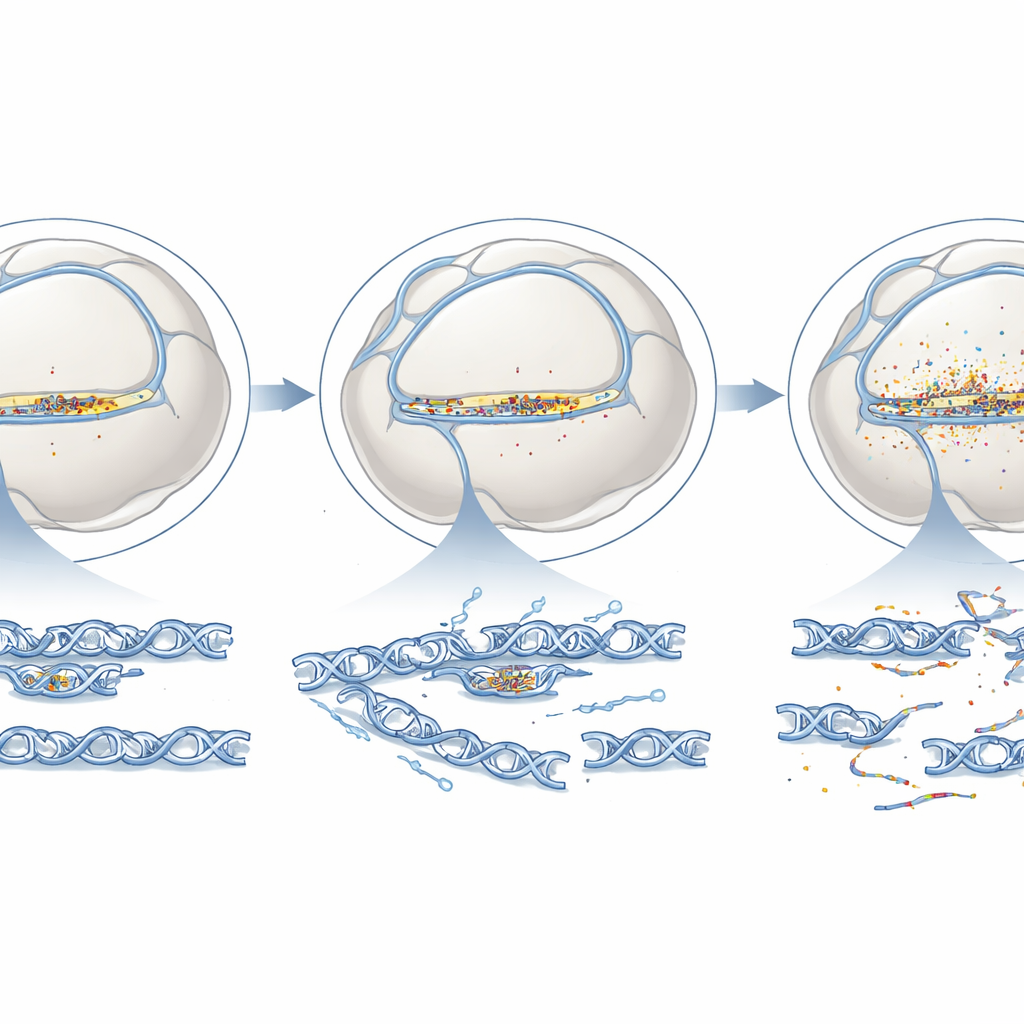
Linking methylation to broken DNA repair
Next, the researchers examined whether BRCA1 methylation lined up with a broader signature of faulty DNA repair called homologous recombination deficiency, or HRD. They calculated HRD scores from tumor DNA and also checked for harmful mutations in a set of other repair genes. Around two thirds of tumors were HRD‑positive. Nearly all cancers with any form of BRCA1 promoter methylation—constitutional, tumoral, or somatic‑only—showed high HRD scores, similar to tumors carrying classic mutations in repair genes like BRCA2 or PALB2. By contrast, tumors lacking both BRCA1 methylation and repair‑gene mutations were usually HRD‑negative. Very few cancers had both a repair‑gene mutation and BRCA1 methylation, pointing to two alternative, almost mutually exclusive routes to the same weakness in DNA repair.
What this means for patients
Clinically, the study did not find large, statistically firm differences in survival when simply comparing people with and without BRCA1 methylation. There was, however, a pattern worth noting. Patients with constitutional methylation tended to have better disease‑free survival than those without it, while those whose tumors had somatic‑only methylation trended toward worse outcomes, despite sharing similar HRD scores. Somatic‑only methylation was more common in patients aged 50 or younger, hinting that this route may mark a particularly aggressive disease in some younger individuals. Independently of methylation, tumors classified as HRD‑positive overall were linked to better outcomes than HRD‑negative tumors, reinforcing HRD as a useful prognostic marker.
Looking ahead to more tailored care
In everyday terms, this work shows that a subtle, inherited‑like chemical tweak to BRCA1 in normal cells often foreshadows a much stronger shut‑down of the same gene in triple‑negative breast cancers, producing a distinctive pattern of DNA repair weakness. Importantly, this epigenetic change behaves much like a true BRCA‑style mutation in how it destabilizes tumor DNA. The authors argue that tests for BRCA1 promoter methylation—both in blood and in tumor samples—should be folded into broader assessments of DNA repair status, alongside genetic tests. Doing so could help doctors more precisely identify which patients are most likely to benefit from drugs that target HRD, such as platinum chemotherapies and PARP inhibitors, opening an epigenetic path toward more personalized treatment of triple‑negative breast cancer.
Citation: Pasanisi, J., Lamy, C., Lecompte, L. et al. Constitutional BRCA1 Methylation is associated with high level of tumoral BRCA1 methylation and homologous recombination deficiency in triple-negative breast cancer. npj Breast Cancer 12, 39 (2026). https://doi.org/10.1038/s41523-026-00906-3
Keywords: triple-negative breast cancer, BRCA1 methylation, homologous recombination deficiency, epigenetics, PARP inhibitor sensitivity