Clear Sky Science · en
pH regulates gut bacterial tryptophan metabolism
Why gut chemistry matters for whole-body health
The human gut is home to trillions of microbes that help break down our food and release a host of chemicals. Some of these microbial products support health, while others can harm organs like the kidneys and heart. This study asks a simple but powerful question: can the gut’s acidity—measured as pH—tilt gut bacteria toward making more helpful or more harmful molecules from the amino acid tryptophan? The answer could open new, food-based ways to protect people with chronic kidney disease and other conditions.
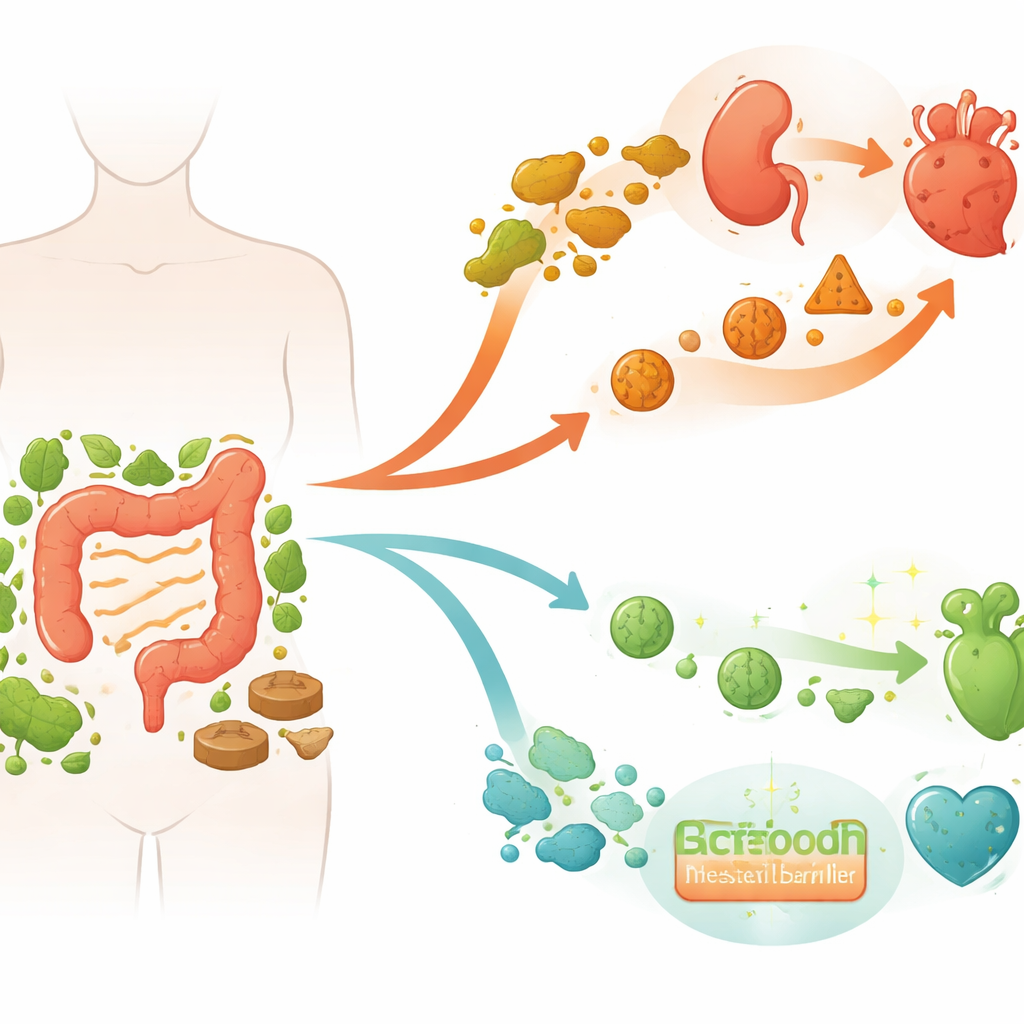
A fork in the road for a single amino acid
Tryptophan, best known as a building block of protein, also feeds gut bacteria. Only a small fraction of what we eat reaches the colon, where microbes transform it into a family of “indole” compounds. One branch of this chemistry produces indole, which our liver converts into indoxyl sulfate, a toxin that builds up in people with poor kidney function and worsens heart and kidney disease. Other branches produce molecules such as indolelactic acid and indolepropionic acid that strengthen the intestinal barrier, calm inflammation, and have been linked to lower risk of type 2 diabetes and cardiovascular disease. The central puzzle is why some guts favor the harmful route while others favor the beneficial one.
Clues from people: when the gut runs more alkaline
The researchers first examined stool and urine samples from two human studies. In more than 100 adults, they measured fecal pH alongside tryptophan-derived metabolites. People with a higher fecal pH tended to have more indole in their stool and more indoxyl sulfate and a related compound in their urine. At the same time, higher pH was linked to lower levels of the potentially beneficial molecules indolelactic acid, indoleacetic acid and indolepropionic acid. Interestingly, this pattern was not explained simply by how many bacteria carried the key indole-producing gene, suggesting that the chemical environment itself—rather than just which species are present—controls how microbes use tryptophan.
Clues from lab cultures: how acidity reshapes microbial choices
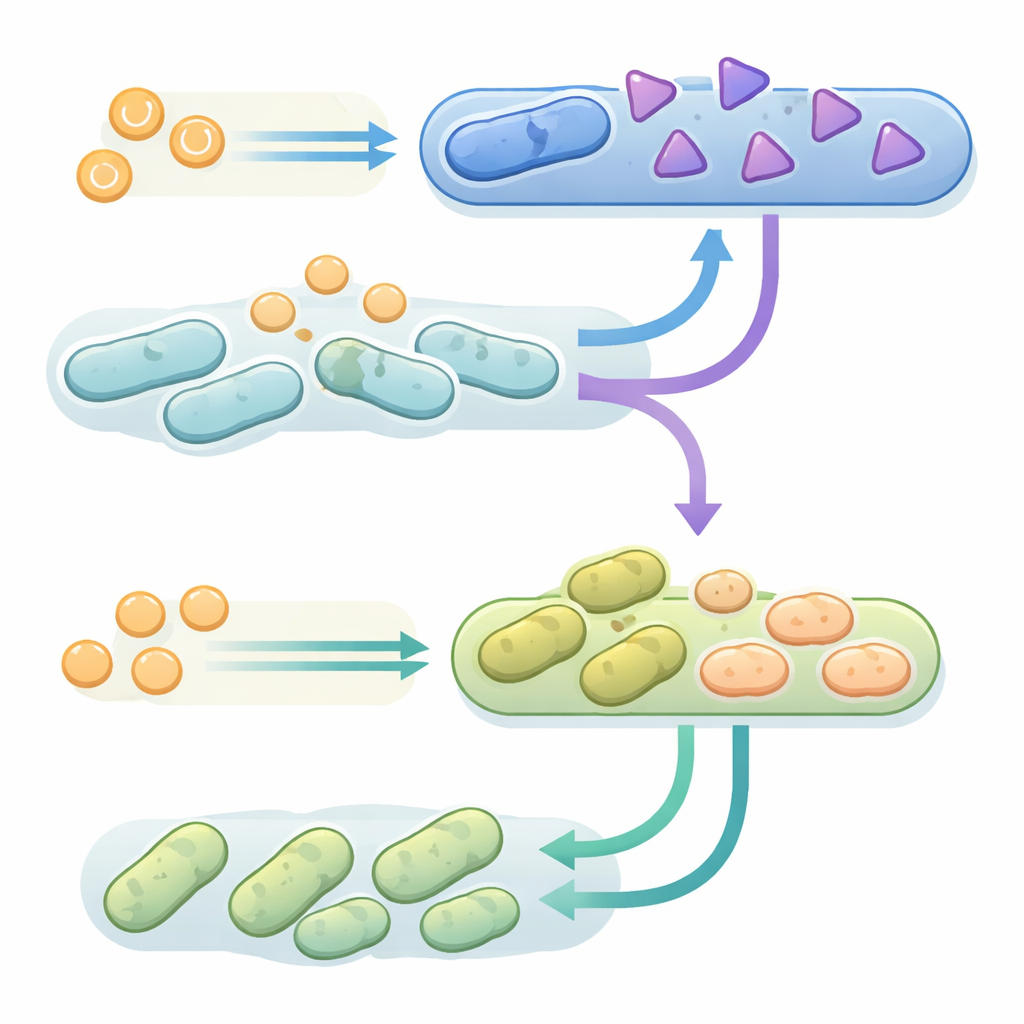
To probe cause and effect, the team grew key gut bacteria under tightly controlled conditions. When Escherichia coli, a major indole producer, was cultured at a mildly acidic pH of 5.5, it made very little indole and consumed far less tryptophan than at neutral or slightly alkaline pH. Gene-expression tests showed that low pH strongly dialed down the activity of its indole-making enzyme. By contrast, Clostridium sporogenes, a bacterium that converts tryptophan into beneficial indolepropionic acid and related compounds, was largely indifferent to pH in single-species cultures. But when both bacteria were grown together, acidity changed the balance: at low pH, E. coli made little indole and more tryptophan was available for C. sporogenes to turn into protective metabolites; at higher pH, E. coli dominated tryptophan use and indolepropionic acid production fell.
Complex gut communities and the role of diet-like conditions
The investigators then moved to continuous cultures seeded with whole human fecal communities. They grew three different microbiotas in a fiber-free medium at either low or high pH for three days. Across all communities, low pH consistently slowed the depletion of tryptophan and cut indole levels by more than half, while higher pH drove complete tryptophan use and much greater indole production. Shifts in pH also reshaped which bacterial groups thrived; for example, certain indole-producing Bacteroides species tended to prefer higher pH, and their gene for the indole-making enzyme showed signs of repression under more acidic conditions. Production of beneficial metabolites such as indolepropionic acid depended not only on pH but also on whether the necessary producer species were present in each community.
What this means for everyday choices
Taken together, the findings show that even mild changes in gut acidity can redirect microbial chemistry: lower pH steers tryptophan away from indole and toward more protective compounds, while higher pH does the opposite. Because colonic pH is strongly shaped by diet—especially fermentable fiber that microbes turn into acids—this work suggests that food choices could help limit harmful toxins like indoxyl sulfate and boost helpful indole derivatives, particularly in people with kidney disease. Although real human guts are more complex than any lab model, this study highlights gut pH as a promising, and potentially modifiable, lever for shifting our internal chemistry toward better health.
Citation: Brinck, J.E., Laursen, M.F., Pedersen, M. et al. pH regulates gut bacterial tryptophan metabolism. npj Biofilms Microbiomes 12, 72 (2026). https://doi.org/10.1038/s41522-026-00935-7
Keywords: gut microbiome, tryptophan metabolism, intestinal pH, indolepropionic acid, chronic kidney disease