Clear Sky Science · en
From association to intervention: Muribaculaceae driven SCFAs production enhances boar semen quality via inflammation alleviation
Why a Healthy Gut Matters for Farm Fertility
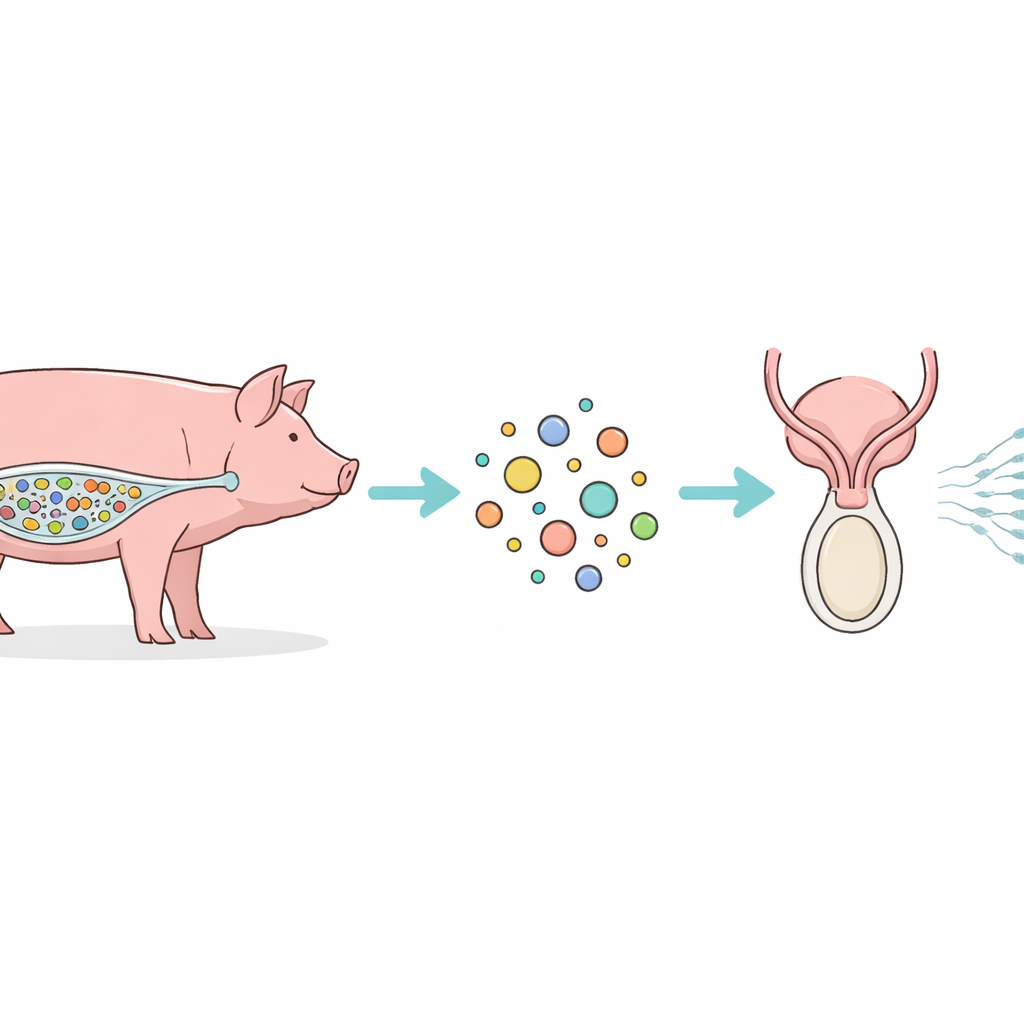
For pig farmers, a single breeding male can father thousands of piglets, so anything that affects his fertility has big economic consequences. This study explores a surprising player in boar reproductive health: the bacteria living in the gut. The researchers show that certain gut microbes help produce beneficial fatty acids, calm inflammation, and ultimately improve semen quality. Their findings hint at simple feed changes that could boost fertility in livestock—and may even hold clues for male reproductive health more broadly.
Different Pig Breeds, Different Inner Ecosystems
The team began by examining 556 boars from three common commercial breeds raised under the same conditions. They measured semen traits such as volume, sperm concentration, movement, and deformity rate, and also analyzed the mix of bacteria in the animals’ feces. The gut communities differed clearly by breed: Yorkshire boars hosted richer, more diverse bacterial populations than Duroc boars. These differences were not just cosmetic. Breeds whose guts were better equipped for fermenting dietary fiber also tended to have higher levels of small, energy-rich molecules known as short-chain fatty acids in their feces.
Tiny Fatty Acids Linking Gut and Sperm
Short-chain fatty acids are produced when gut bacteria break down fiber that the animal itself cannot digest. In this study, three such compounds—acetate, propionate, and butyrate—stood out. Yorkshire boars had more of these molecules, especially propionate and butyrate, than Duroc boars. When the researchers compared many bacterial groups, fatty acid levels, and semen traits, one bacterial family, Muribaculaceae, emerged as a key player. Boars with more Muribaculaceae had higher fatty acid levels, better sperm movement, and fewer misshapen sperm. Statistical tests suggested that Muribaculaceae improved sperm quality mainly by boosting propionate and butyrate production.
A Helpful Bacterium Shows Its Power in Mice
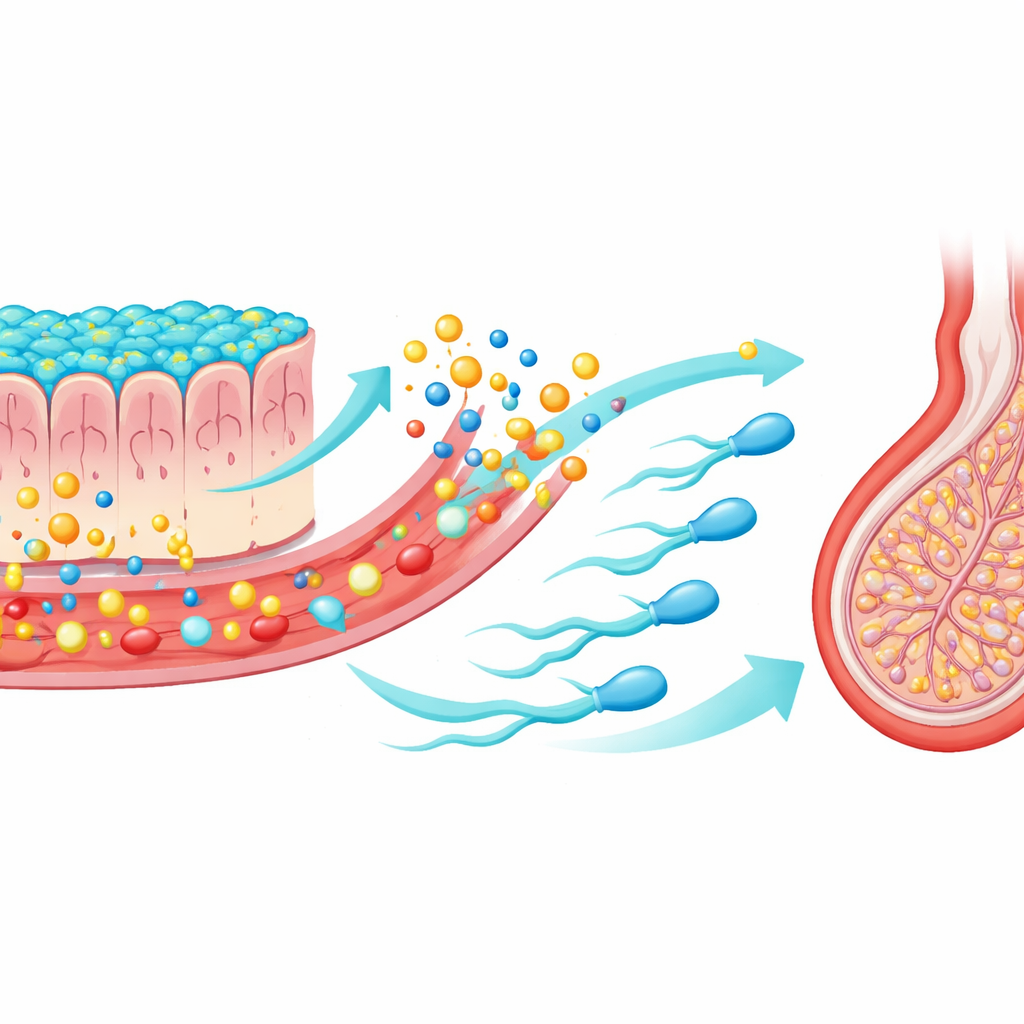
To move from association to cause, the scientists transferred gut microbes from Yorkshire boars into male mice. One donor group came from boars rich in Muribaculaceae; another from boars with low levels of the same bacteria. Mice receiving the Muribaculaceae-rich transplants produced more short-chain fatty acids in their intestines, had higher testosterone levels, and showed better sperm movement with fewer abnormalities. Their intestinal tissues also looked healthier under the microscope, with tighter gut barriers and fewer inflammatory cells. In contrast, mice given low-Muribaculaceae microbes showed leaky, inflamed intestines and inflamed reproductive tissues, a state linked to poorer sperm quality.
Designing a Fiber-Rich Menu for Better Sperm
Because Muribaculaceae are especially good at digesting complex carbohydrates, the researchers tested whether specific fibers could feed these microbes. In laboratory bottles seeded with boar feces, they compared resistant starch, inulin, and a custom “functional fiber” blend. The blend did the best job of promoting Muribaculaceae, raising short-chain fatty acid levels, and lowering the abundance of potentially less desirable bacteria. They then fed this functional fiber to mice that had earlier received low-quality boar microbiota. In these animals, Muribaculaceae levels rebounded, fatty acid levels rose, and sperm movement improved while deformities decreased—despite starting with an unfavorable gut community.
From Pen to Feed Trough: What It All Means
Taken together, the work paints a simple chain of events: tailored gut bacteria such as Muribaculaceae thrive on the right kind of fiber, pump out beneficial short-chain fatty acids, tighten the gut barrier, dampen inflammation in both the intestine and reproductive organs, and in turn support healthier, more functional sperm. For livestock producers, this suggests that carefully designed high-fiber diets could become a practical tool to boost boar fertility without drugs or hormones. More broadly, it strengthens the idea that male reproductive health is closely tied to what happens in the gut—and to what animals, and perhaps people, eat every day.
Citation: Guo, L., Pei, X., Tan, J. et al. From association to intervention: Muribaculaceae driven SCFAs production enhances boar semen quality via inflammation alleviation. npj Biofilms Microbiomes 12, 69 (2026). https://doi.org/10.1038/s41522-026-00933-9
Keywords: gut microbiota, boar fertility, short-chain fatty acids, dietary fiber, Muribaculaceae