Clear Sky Science · en
Diet and environmental factors jointly drive the gut microbiome, resistome, and virulome of urban bats
Why city bats matter for human health
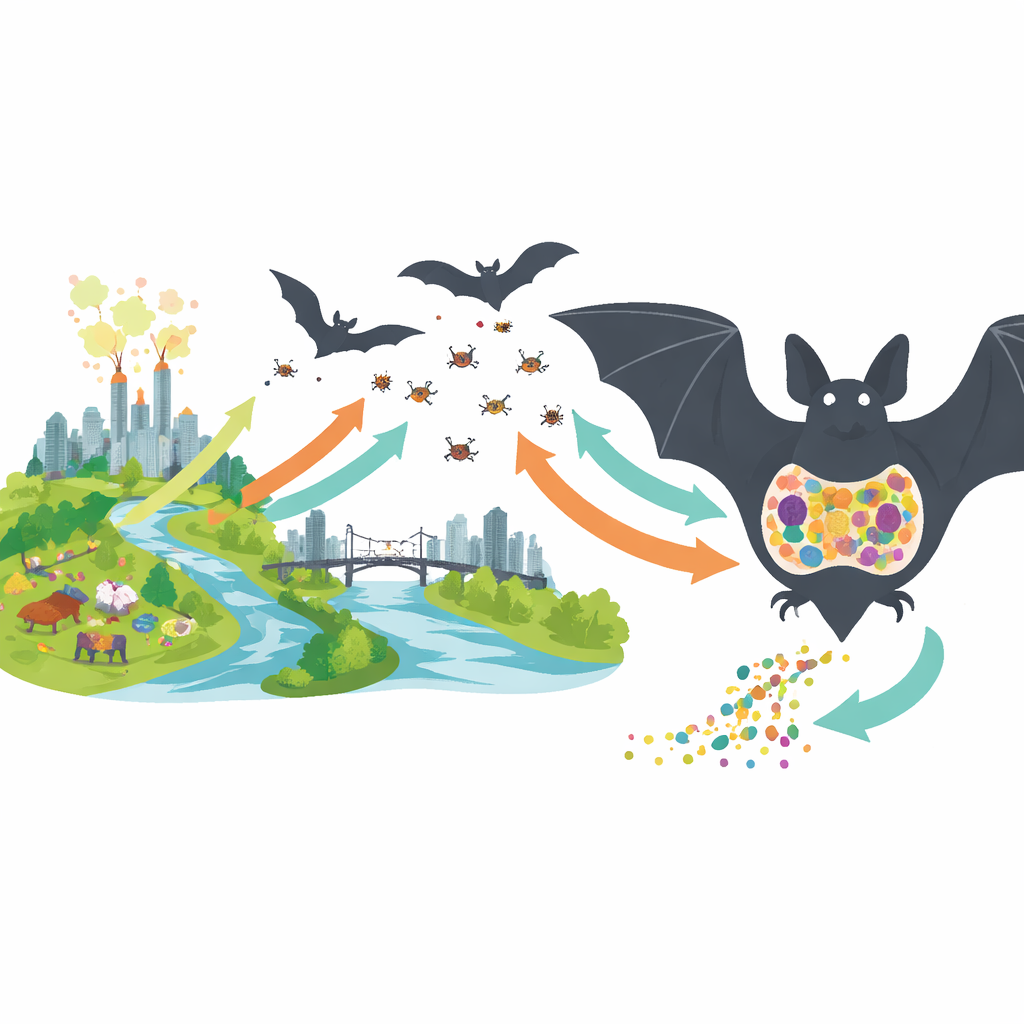
As cities expand, humans are living closer than ever to wildlife. Among our most overlooked neighbors are bats roosting under bridges and in buildings. These animals crisscross urban and rural skies every night, eating insects that may carry traces of farm chemicals and antibiotics. This study asks a timely question: how do city life and diet shape the gut microbes of bats—and the genes that can make bacteria drug-resistant or more harmful—and what might that mean for public health?
What the scientists set out to explore
Researchers in northeastern China focused on the Asian particolored bat, a species that often lives in large maternity colonies on city structures. They collected fecal samples from 60 bats across pregnancy, birth, and lactation, and from nearby rural colonies and subadult bats. Instead of looking for single microbes, they used “meta-omics” approaches—reading all the DNA in the samples—to map three things at once: the gut microbiome (all the bacteria present), the “resistome” (antibiotic resistance genes), and the “virulome” (genes that can make bacteria more capable of causing disease). They also profiled the bats’ diets using insect DNA and measured dozens of antibiotic residues in the feces.
What lives inside a bat’s gut
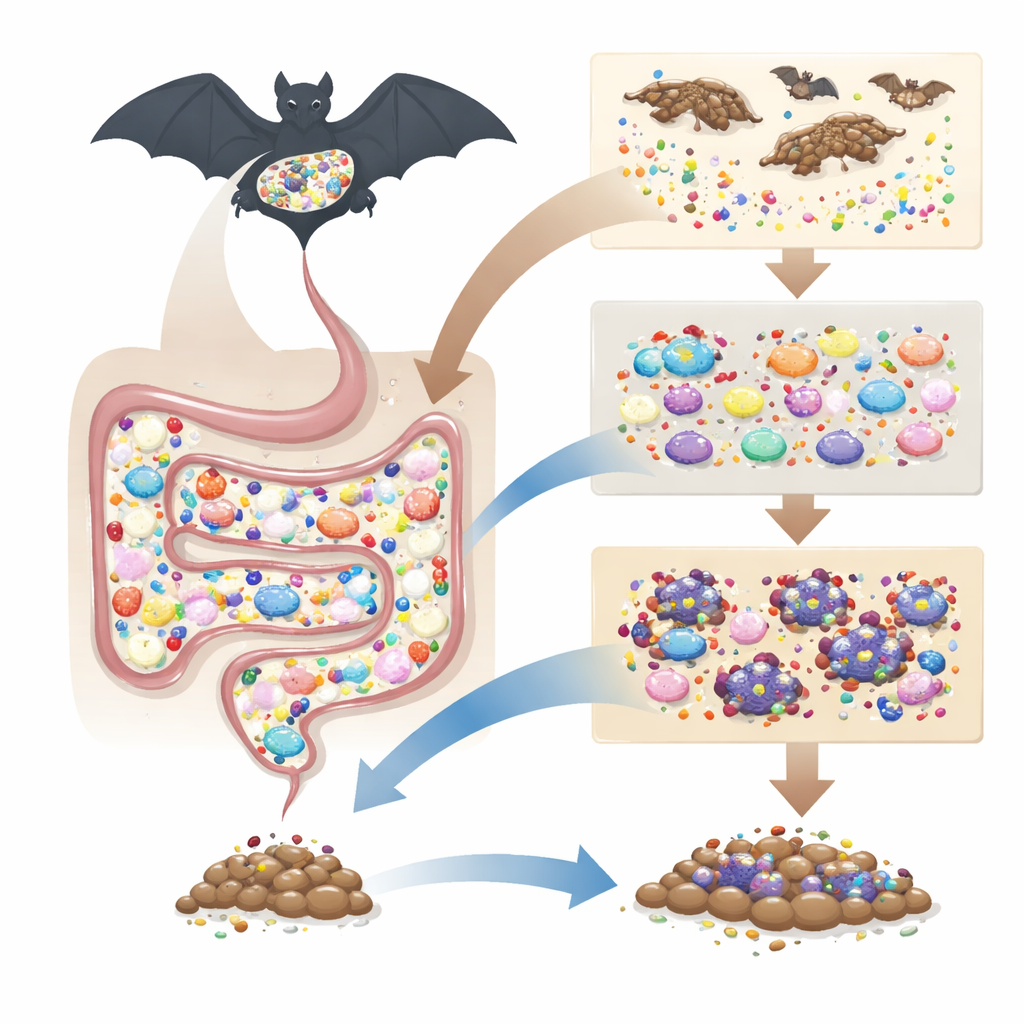
The team found that the guts of these urban bats are packed with diverse bacteria and many resistance and virulence genes, at levels similar to those seen in polluted environments such as wastewater or livestock manure. Most gut bacteria belonged to a few major groups, with genera such as Clostridium, Klebsiella, Enterobacter, Lactococcus, and Escherichia especially common. Resistance genes covered a broad range of drug classes, including multidrug and quinolone resistance, while virulence genes were linked to traits such as sticking to host tissues, moving through the body, and evading the immune system. Yet, when the researchers examined where these genes sit in bacterial genomes, most were located on chromosomes or non-mobile plasmids and rarely linked to mobile genetic elements, suggesting that their ability to jump between bacteria is limited.
City life, place, and time shape the hidden gene pool
The study then compared bats from two rural locations with those from the city. Geography turned out to be important: the three sites differed markedly in bacterial communities as well as in resistance and virulence gene patterns. One rural site actually showed the richest collection of such genes, hinting that local pollution or farming practices there may be more intense than in the nearby city. Over the breeding season—from late pregnancy through weaning—the bat gut community also shifted. Both resistance and virulence genes generally increased over time, tracking changes in key bacterial groups, especially Clostridium. Statistical analyses indicated that these patterns were not random. Instead, they were driven by consistent pressures from the environment, rather than by chance reshuffling.
Diet and antibiotics as quiet drivers
Because these bats are voracious insect-eaters, the researchers examined how food and drug residues intersect with the gut gene pool. DNA barcoding revealed that bats consumed insects from at least 16 orders, dominated by flies and moths. Diet became more varied from pregnancy to lactation, likely reflecting higher energy needs and seasonal changes in insect availability. Chemical analyses showed that the feces contained multiple classes of antibiotics, especially sulfonamides, quinolones, and macrolides, with higher levels in urban bats than in most rural ones. Diet composition strongly matched antibiotic profiles, suggesting that what bats eat exposes them to drug residues. In turn, specific antibiotics correlated with the presence and abundance of matching resistance genes—for instance, aminoglycoside concentrations rose in step with aminoglycoside resistance genes—indicating that dietary antibiotic exposure selects for resistant bacteria in the gut.
What does not seem to matter as much
The team also asked whether individual bat traits—such as sex, age, body size, or reproductive status—changed the gut microbiome or its resistance and virulence gene content. Across their dataset, these host features made little difference. Subadult bats, just weaned and beginning to forage on their own, already carried resistance and virulence gene profiles similar to adults. The authors suggest that shared roosts, broad nightly movements, and common exposure to the same insect prey and environmental pollutants may override subtle differences between individuals.
What this means for people and ecosystems
For a lay reader, the key takeaway is that city-dwelling bats are not just insect controllers: their guts mirror the chemical and microbial pressures in the environments they use. Diet and habitat, more than the bats’ own biology, steer which microbes and resistance or virulence genes thrive inside them. While the genes they carry appear to have limited capacity to jump between bacteria, the findings still highlight bats as sentinels of antibiotic and pollutant spillover from farms, cities, and waterways into wildlife. Monitoring these animals helps us understand how our use of antibiotics and other chemicals reverberates through urban ecosystems—and may ultimately circle back to human health.
Citation: Huang, L., Pu, YT., Zhao, YH. et al. Diet and environmental factors jointly drive the gut microbiome, resistome, and virulome of urban bats. npj Biofilms Microbiomes 12, 61 (2026). https://doi.org/10.1038/s41522-026-00930-y
Keywords: urban bats, gut microbiome, antibiotic resistance genes, environmental pollution, wildlife one health