Clear Sky Science · en
Prucalopride, a serotonin type 4 receptor agonist, induces fast anxiolytic/antidepressant effects and concomitant changes in the gut microbiota
Why This Matters for Mind and Gut
Depression and anxiety touch hundreds of millions of people, yet today’s medicines often take weeks to work and can cause troubling side effects. At the same time, science is revealing deep links between our brains and the trillions of microbes living in our intestines. This study brings those themes together by testing whether a gut-focused drug called prucalopride, already used for chronic constipation, might also quickly ease anxiety- and depression-like symptoms in mice—and whether its benefits are tied to shifts in gut bacteria.
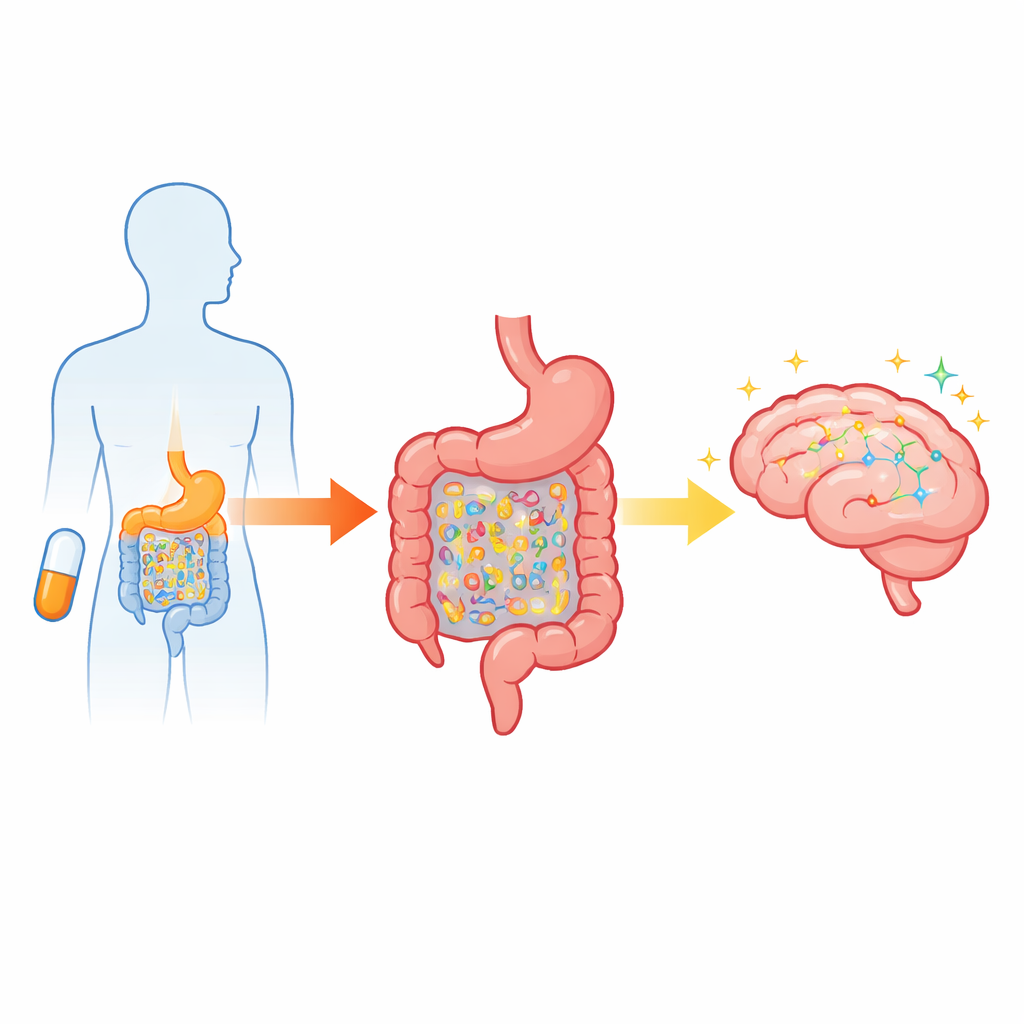
A Different Kind of Brain Drug
Most antidepressants work by boosting levels of chemical messengers such as serotonin throughout the brain. They can help, but often only after a delay of several weeks. Prucalopride acts in a different way: it stimulates a specific type of serotonin receptor, known as 5-HT4, found not only in key emotion centers of the brain but also abundantly along the digestive tract. Previous work with related compounds hinted that switching on this receptor might lift mood faster than standard drugs, but suitable medicines for human use were lacking. Because prucalopride already has regulatory approval for bowel problems and can reach the brain, it is an attractive candidate for “repurposing” as a mental health treatment.
Testing Mood and Behavior in Stressed Mice
To mimic features of depression and anxiety, the researchers used a well-established mouse model in which animals receive the stress hormone corticosterone in their drinking water for several weeks. This chronic exposure raises hormone levels, alters behavior, and is known to disturb the gut microbiota. Mice are then evaluated in tasks that reflect anxiety (such as exploring open arms of an elevated maze) and motivation or self-care (like how readily they groom after being sprinkled with a sweet solution, or how quickly they approach food in a new environment). Compared with a commonly prescribed antidepressant, fluoxetine, prucalopride at two different doses was given for either one week (subchronic) or four weeks (chronic) to see how quickly it could reverse the stress-induced changes.
Faster Relief and a Calmer Emotional Profile
Within just seven days, mice receiving prucalopride showed striking improvements. They spent more time exploring exposed areas of the elevated maze, groomed for longer in the splash test, and hesitated less before eating in a novel setting—all signs of reduced anxiety- and depression-like behavior. These improvements combined into a normalized “emotionality” score after only one week, especially at the lower dose. In contrast, fluoxetine required a full four weeks before reaching similar behavioral benefits. When treatment continued for 28 days, prucalopride’s positive effects were sustained, matching or exceeding those of fluoxetine in most measures. Together, these findings suggest that activating the 5-HT4 receptor can produce a quicker and robust shift toward healthier emotional responses in this model.
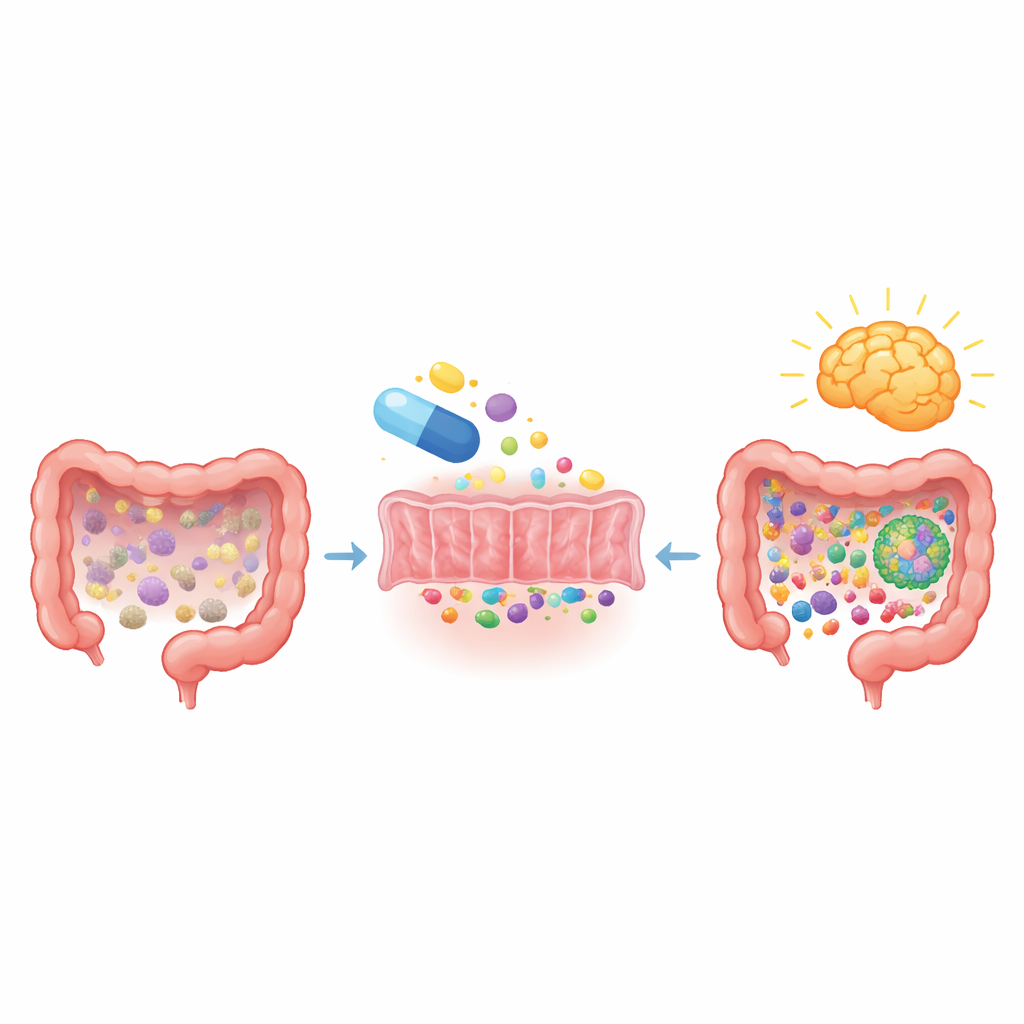
Gut Microbes Shift with Stress and Treatment
The team also examined fecal samples to track how stress and drugs reshaped the gut microbiota. Chronic corticosterone exposure alone reduced certain measures of microbial richness early on and consistently shifted the overall community structure compared with unstressed controls. Several bacterial groups, including a genus called Ruminococcus, were depleted by the stress hormone. After one week of prucalopride or fluoxetine, broad diversity measures were unchanged, but the stressed animals’ microbial communities remained clearly distinct from those of healthy mice, suggesting that early gut changes were mainly driven by the stress model itself rather than the drugs. However, after four weeks, a different picture emerged: while overall diversity still looked similar between groups, the detailed composition diverged depending on treatment. Notably, prucalopride, but not fluoxetine, reliably restored Ruminococcus levels that had been lowered by stress.
What This Could Mean for People
Ruminococcus helps break down complex dietary fibers into nutrients, and several human and animal studies link its depletion to depression and chronic stress. Although the current work cannot prove cause and effect, the consistent recovery of this genus alongside improved behavior hints that certain microbes may participate in prucalopride’s benefits along the gut–brain axis. The authors caution that their analysis is limited to the genus level and that more detailed, strain-level and functional studies are needed, including experiments that directly test whether adding or removing specific microbes changes the drug’s impact. Still, the results point to prucalopride as a promising candidate for fast-acting treatment of anxiety and depression, with a bonus role in nudging gut microbes toward a healthier balance—offering a glimpse of future therapies that improve both mood and digestive well-being at the same time.
Citation: Cussotto, S., Abdennebi, S.R., Etting, I. et al. Prucalopride, a serotonin type 4 receptor agonist, induces fast anxiolytic/antidepressant effects and concomitant changes in the gut microbiota. npj Biofilms Microbiomes 12, 62 (2026). https://doi.org/10.1038/s41522-026-00928-6
Keywords: depression, anxiety, gut microbiome, serotonin, prucalopride