Clear Sky Science · en
Nitrogen starvation induces arbuscular mycorrhizal fungi to optimize resource allocation in sugarcane roots via suppression of basal metabolism
Helping Crops Thrive on Lean Soil
Modern farming depends heavily on nitrogen fertilizer to keep crops productive, but much of that nitrogen is wasted, washing into rivers or evaporating into the air. This study asks a hopeful question: can sugarcane lean on its natural fungal partners to grow well with far less nitrogen? By tracking everything from plant growth to gene activity, the researchers show how a common group of soil fungi help sugarcane rewire its roots to pull more nutrients from poor soil, potentially cutting fertilizer use while maintaining yields.
Underground Partners with a Hidden Job
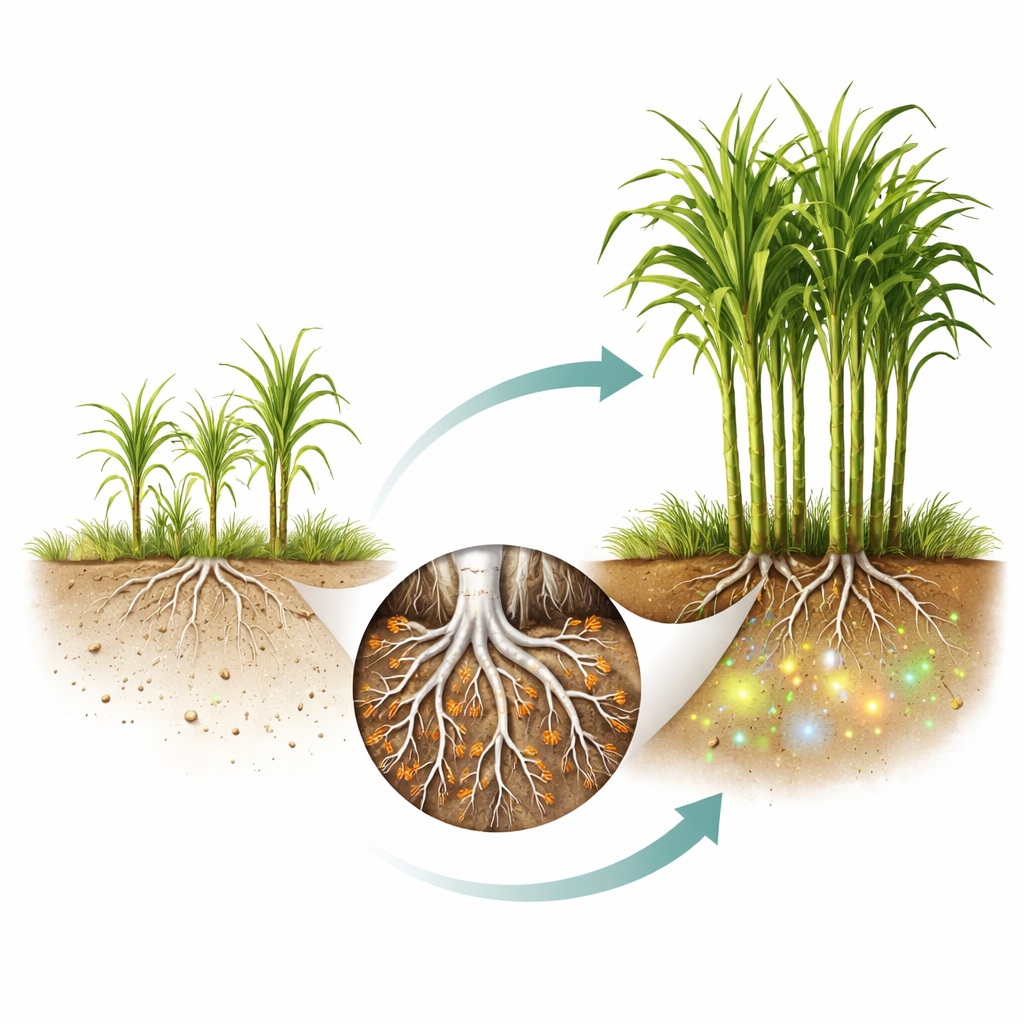
Sugarcane, a major crop for sugar and bioenergy, pays a heavy "fertilizer bill" to reach high yields. In real fields, both too little and too much nitrogen stunt growth and threaten the environment. Many plants, including sugarcane, naturally host arbuscular mycorrhizal fungi—microscopic partners that weave through the soil and into roots. These fungi extend the plant’s reach for nutrients like nitrogen, phosphorus, and potassium, and in return live off plant sugars. The team set up greenhouse pots and real field plots to test how this partnership behaves when nitrogen is scarce versus plentiful, asking not just whether the plants look better, but how their internal chemistry and root biology change.
Stronger Roots and Bigger Harvests Under Stress
When nitrogen was limited, inoculating sugarcane with these fungi clearly paid off. In pots, colonized plants grew taller, with thicker stems and more root biomass than uninoculated plants in the same poor soil. The fungi also boosted the levels of available nitrogen, phosphorus, and potassium in the soil just around the roots, and increased the activity of key soil enzymes that help release nutrients from organic matter. In field trials designed to mimic real farming conditions, the pattern held: under nitrogen stress, mycorrhizal sugarcane developed longer, denser roots and more vigorous shoots. By harvest, these plants produced about 14% more cane and over 10% higher sugar content than non‑inoculated controls, showing that the underground alliance could translate into tangible yield gains.
Roots That Rebudget Energy and Nutrients
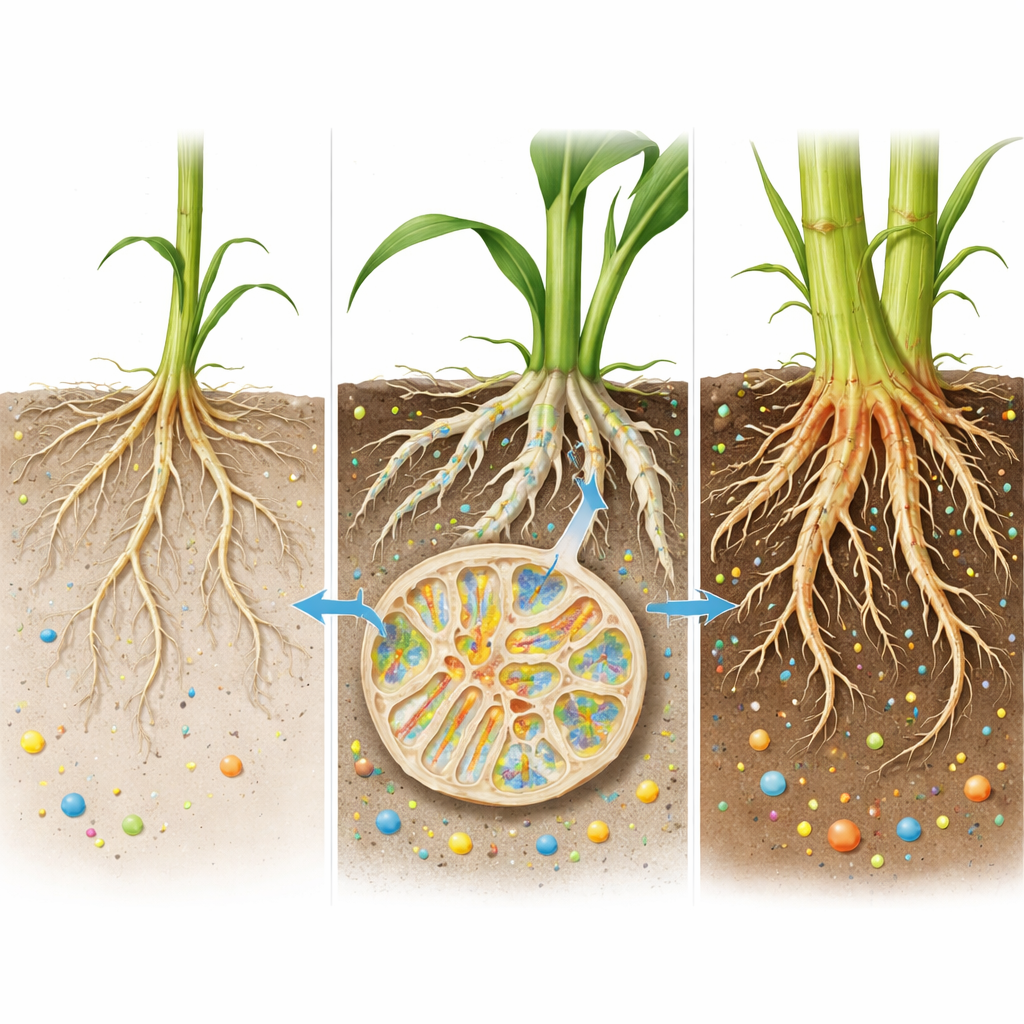
To see what was happening inside the plants, the researchers combined several “omics” tools that measure thousands of genes, proteins, and metabolites at once. Under nitrogen shortage, fungal colonization triggered a major reprogramming in sugarcane roots. Metabolic pathways that process carbohydrates and lipids were switched on, supporting energy production and building blocks for growth, while certain background pathways—such as those tied to butanoate and ascorbate (vitamin C–related) chemistry—were dialed down. This suggests that under stress, the plant and fungi cooperate to cut back on some secondary activities and redirect carbon and energy into nutrient uptake and storage. The team also identified clusters of root genes tightly linked to how much nitrogen, phosphorus, and potassium accumulated in the surrounding soil, hinting at coordinated control systems that tune root behavior to local nutrient conditions.
Long-Term Chemical Signatures of Teamwork
Following sugarcane throughout seedling, rapid growth, and maturation stages, the study found that the fungal partnership leaves a lasting chemical fingerprint. One consistently active route was flavonoid biosynthesis—production of colorful plant compounds best known from fruits and teas. These molecules likely act as both signals that encourage the fungi to colonize roots and defensive compounds that help plants cope with stress and microbes. At the same time, pathways linked to vitamin C–like antioxidants and certain fatty-acid breakdown products stayed suppressed in colonized roots, especially early in development. Together, these shifts paint a picture of roots that are simplifying some defense and housekeeping tasks to free up resources for deeper rooting, nutrient scavenging, and sugar accumulation when nitrogen is scarce.
What This Means for Future Farming
In everyday terms, the work shows that when nitrogen is limited, sugarcane can “tighten its belt” and rely more heavily on friendly soil fungi, which in turn help it forage more efficiently and stash away more sugar. The fungi help the plant grow longer roots, tap otherwise unreachable pockets of nitrogen and phosphorus, and subtly retune its internal chemistry to prioritize nutrient capture over some secondary processes. If harnessed through carefully chosen fungal inoculants and smarter fertilizer regimes, this natural alliance could reduce the need for synthetic nitrogen while keeping yields high—a promising step toward more sustainable sugarcane production on nutrient‑poor soils.
Citation: Liu, Q., Mo, L., Shen, Y. et al. Nitrogen starvation induces arbuscular mycorrhizal fungi to optimize resource allocation in sugarcane roots via suppression of basal metabolism. npj Biofilms Microbiomes 12, 64 (2026). https://doi.org/10.1038/s41522-026-00927-7
Keywords: sugarcane, mycorrhizal fungi, nitrogen stress, root microbiome, sustainable agriculture