Clear Sky Science · en
Modeling diet-gut microbiome interactions and prebiotic responses in Thai adults
Why Thai Food and Gut Bugs Matter
What we eat does more than fill us up—it feeds trillions of microbes living in our intestines. These tiny residents help turn food into molecules that can influence our weight, immunity, and even risk for disease. This study asks a timely question: how does the typical Thai diet, and a specific prebiotic supplement, shape the gut microbes and the helpful substances they produce in Thai adults? By using computer models instead of invasive tests, the researchers explore how daily meals and supplements might be tuned to support better health in a population whose food culture is very different from that of Western countries.
Building a Virtual Thai Diet
To begin, the team first had to define what an “average Thai diet” really looks like. They combined a national food consumption survey of thousands of people with detailed Thai food composition tables and an online nutrition database to translate popular foods—like rice, curries, fermented sauces, snacks, and even insects—into their nutrient building blocks. This diet added up to about 2,300 kilocalories per day, with a balance of carbohydrates, fats, and proteins that generally matched national recommendations, though protein was on the high side. One striking feature was very high salt intake, reflecting the heavy use of salty condiments and fermented products in Thai cooking. 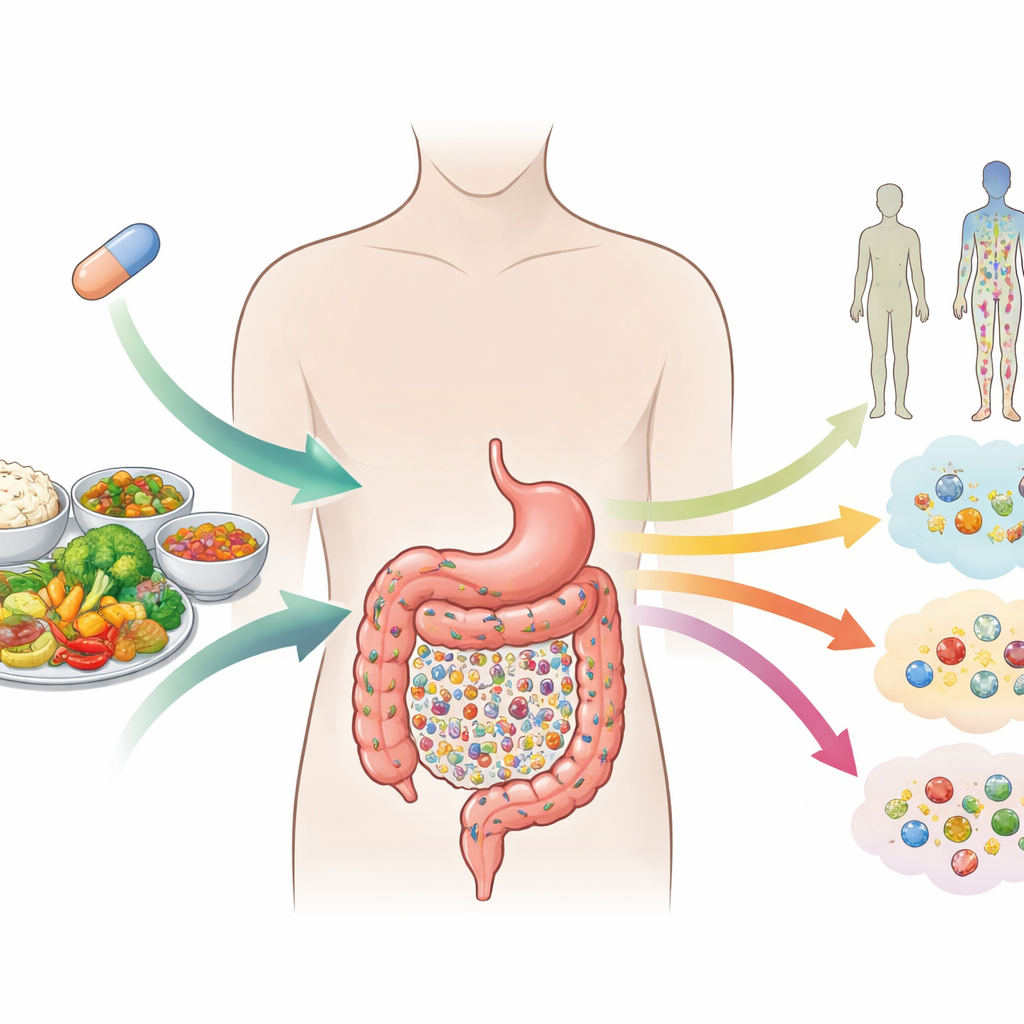
Turning Microbiome Data into Living Models
Next, the researchers gathered gut microbiome profiles from 86 healthy Thai adults. Using metagenomic sequencing, they identified which bacterial species were present and how abundant they were. Instead of stopping at a list of names, they linked each species to a detailed “metabolic blueprint” describing which chemical reactions it can perform. By combining these blueprints according to each person’s microbial makeup, they created community-scale models—a kind of virtual gut for every participant. These models capture how microbes share and trade nutrients and by-products under different diet scenarios, allowing the team to predict what the entire community can collectively produce or consume.
Short-Chain Fatty Acids: Shared and Personal
With the average Thai diet fed into these virtual guts, the team examined how efficiently the microbes could produce short-chain fatty acids (SCFAs)—small molecules like acetate, propionate, butyrate, and isobutyrate that are known to support gut barrier function, energy balance, and immune regulation. The models showed that the first three SCFAs were made quite reliably across people, thanks to overlapping roles among several common gut bacteria, including Faecalibacterium, Agathobacter, Coprococcus, Roseburia, and others. In contrast, isobutyrate, a so-called branched SCFA formed from protein breakdown, varied widely between individuals and was mainly linked to Bacteroides and Phocaeicola. Because branched SCFAs are tied to protein fermentation and can accompany other, more harmful by-products, this strong person-to-person variation suggests that protein-heavy diets may affect people differently depending on which microbes they host.
Prebiotics and the Search for Responders
The study also probed how the Thai gut community responds to a specific prebiotic: manno-oligosaccharides (MOS) derived from copra meal, a coconut-processing by-product abundant in Thailand. Using data from an earlier trial, the researchers simulated two scenarios: an average Thai diet plus placebo, and the same diet plus MOS. They then asked which microbes in the model showed clear uptake of MOS. Eight bacterial groups emerged as responders, but one stood out—Bifidobacterium, a well-known beneficial genus, showed the strongest and most consistent use of MOS across simulated individuals. Other contributors included Faecalibacterium, Agathobacter, Subdoligranulum, Mediterraneibacter, and a few more. 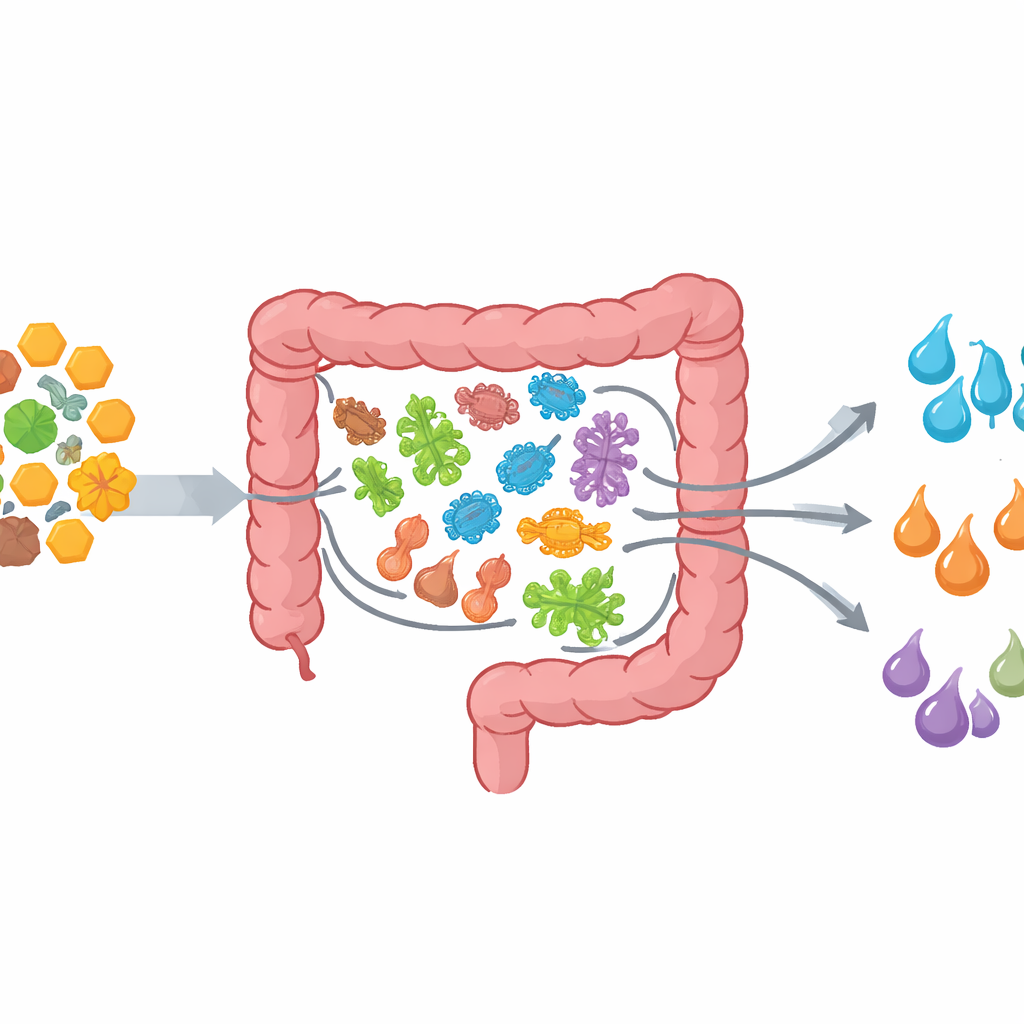
Toward Food Advice Tailored to Thais
For non-specialists, the key message is that computer models can now combine real dietary data and microbiome measurements to “test drive” diet changes in silico before trying them in large, expensive human studies. In this work, that approach reveals both reassuring and cautionary notes: the average Thai diet appears broadly adequate in energy and major nutrients but is high in salt and protein, which, together with a person’s unique microbes, may push some toward more protein fermentation and related risk factors. At the same time, the models point to Bifidobacterium as a prime target for MOS-based prebiotic strategies derived from local food by-products. Although more clinical and lab work is needed, this modeling framework offers a path toward precision nutrition designed specifically for Thai eaters rather than borrowed wholesale from Western studies.
Citation: Raethong, N., Patumcharoenpol, P. & Vongsangnak, W. Modeling diet-gut microbiome interactions and prebiotic responses in Thai adults. npj Biofilms Microbiomes 12, 59 (2026). https://doi.org/10.1038/s41522-026-00921-z
Keywords: gut microbiome, Thai diet, short-chain fatty acids, prebiotics, precision nutrition