Clear Sky Science · en
From leaves to aphid honeydew: the zucchini plants enrich bacterium to recruit natural enemy to resist herbivore attacks
How Plants Call for Help
Gardeners know that pests like aphids can quickly weaken a crop, but fewer people realize that plants have surprisingly clever ways to fight back. This study reveals that zucchini plants do more than just endure attacks from sap-sucking aphids—they subtly reshape the microscopic life on their leaves so that friendly beetles are lured in to hunt the pests. It is a story of plants, insects, and bacteria working together in an unseen alliance that could inspire safer ways to protect our food crops.
A Hidden Drama on Zucchini Leaves
The researchers focused on zucchini plants attacked by the cotton-melon aphid, a common agricultural pest. As aphids feed, they weaken plants and drip sugary waste called honeydew, which can also foster black sooty mold. The team wanted to know whether tiny microbes living in the soil, roots, leaves, aphids, and honeydew might help shape the battle between plants and their insect enemies. Using DNA-based methods, they compared bacterial communities from healthy plants with those from aphid-infested plants, along with the insects and their honeydew.
When Aphids Bite, Bacteria Bloom
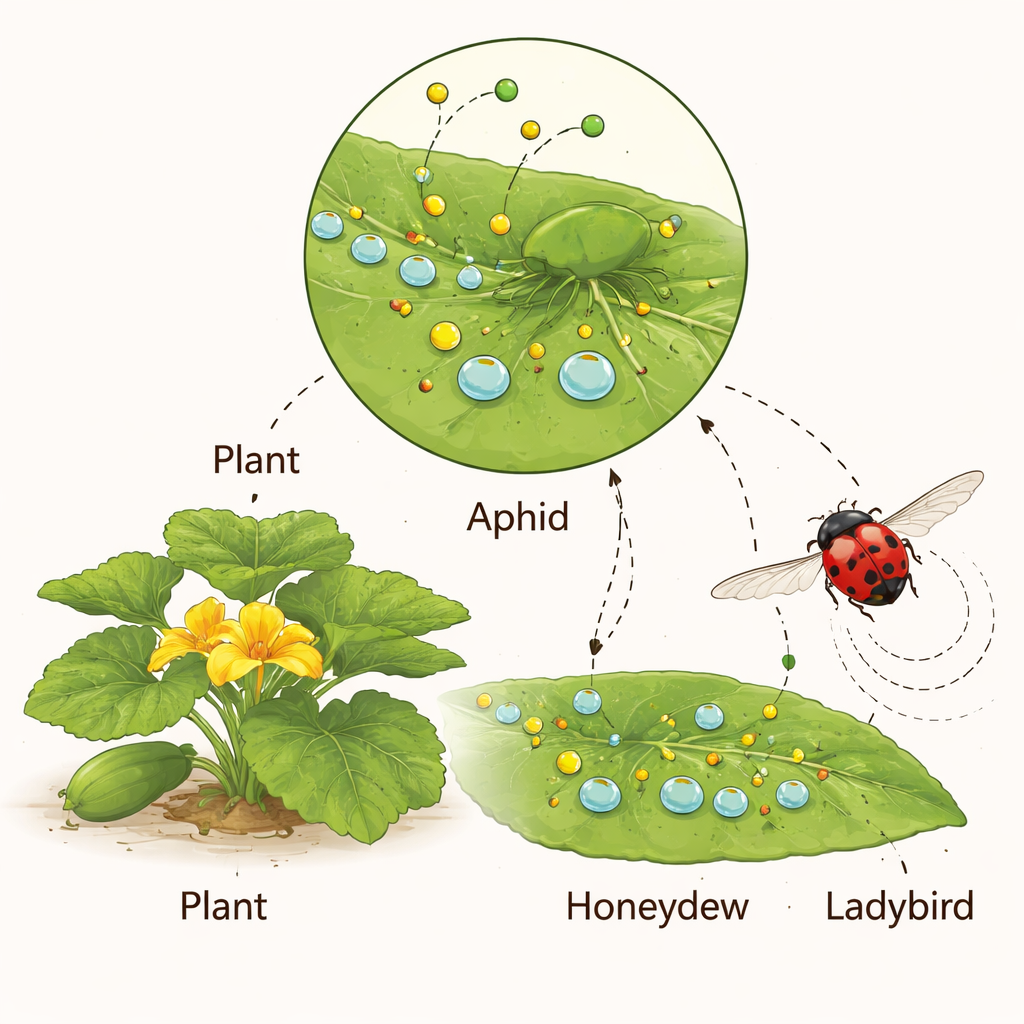
They found that aphid feeding dramatically changed the bacteria living inside zucchini stems and leaves. In healthy plants, many kinds of bacteria shared the space, but once aphids fed for several days, one group—Staphylococcus—became overwhelmingly common in the damaged tissues. These bacteria were scarce in the surrounding soil and roots, suggesting that they were already present in small numbers in the aboveground parts and then multiplied when the plant came under attack. As aphids sucked sap from these enriched tissues, Staphylococcus moved into the insects and then into the honeydew they excreted.
Tracing Tiny Travelers from Leaf to Honeydew
To work out where the honeydew bacteria came from, the scientists used a kind of “microbial fingerprinting” that estimates how much of a microbial community can be traced back to different sources. They discovered that most of the Staphylococcus found inside aphids came from aphid-damaged stems and leaves, not from the soil. In turn, nearly all of the Staphylococcus in the honeydew could be traced back to the aphids themselves. In other words, the pathway ran from plant to aphid to honeydew, with the plant’s altered leaf microbiome seeding bacteria into the insect and then out into its sugary waste.
How Scented Bacteria Guide Helpful Beetles
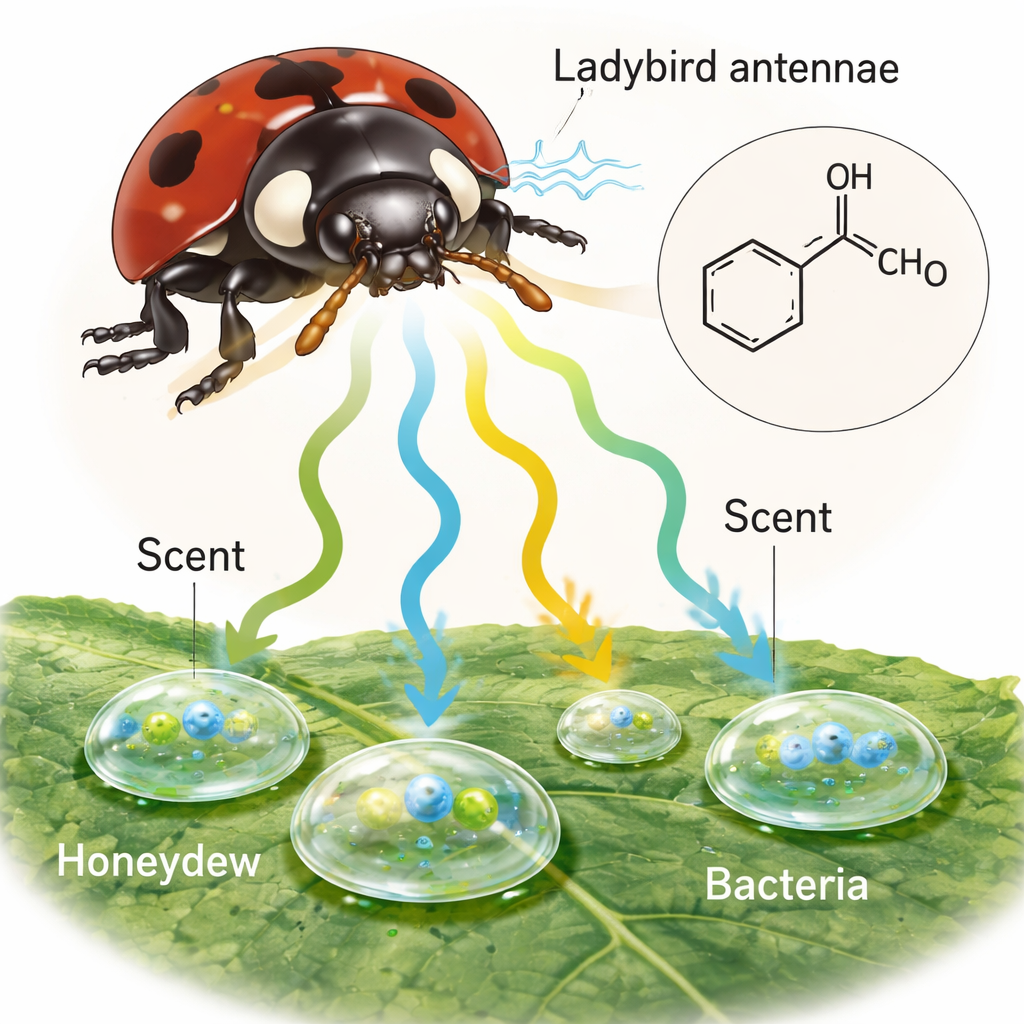
The team then isolated four common bacterial strains from the honeydew and tested whether they influenced the behavior of a beneficial predator, the ladybird beetle Propylea japonica. Only the Staphylococcus strain strongly attracted mated female beetles. Further tests showed why: this bacterium released a specific scented molecule, 4-isopropylbenzyl alcohol, that triggered strong electrical responses in the beetles’ antennae. When given a choice in lab setups and small cages, female ladybirds were drawn toward this scent and laid more eggs near it, placing their hungry larvae close to aphid colonies.
A Natural Pest-Control Signal
Altogether, the study suggests that zucchini plants under attack set off a chain reaction involving microbes. Aphid feeding encourages certain bacteria to thrive in the leaves; these bacteria move into the aphids and their honeydew, where they release a distinctive smell. Ladybird beetles “sniff out” this odor and choose to lay eggs nearby, so their offspring can feast on the aphids. For non-specialists, the key message is that plants do not face pests alone: they can quietly recruit microscopic helpers to send out chemical signals that call in natural enemies. Understanding and harnessing this plant–microbe–insect relay could help farmers reduce reliance on chemical insecticides and move toward more environmentally friendly pest control.
Citation: Liu, Y., Sun, J., Jiao, B. et al. From leaves to aphid honeydew: the zucchini plants enrich bacterium to recruit natural enemy to resist herbivore attacks. npj Biofilms Microbiomes 12, 48 (2026). https://doi.org/10.1038/s41522-026-00914-y
Keywords: plant defense, aphids, beneficial insects, microbiome, biological pest control