Clear Sky Science · en
From wrist data to lifespan: elucidating inflammation-driven biological aging via activity rhythms captured by wearable devices
Why Your Daily Rhythm Matters
Most of us track our steps or sleep with a smartwatch without thinking much about what those numbers really mean. This study suggests that the patterns hidden in those wrist movements may tell a deeper story: how fast we are aging on the inside, how inflamed our bodies are, and even how long we might live. By following more than 62,000 adults with week‑long wrist sensors, researchers show that the regularity and vigor of our daily routines are closely linked to inflammation, a key engine of age‑related disease, and to the risk of dying in the coming years.
How Wrist Data Became an Aging Signal
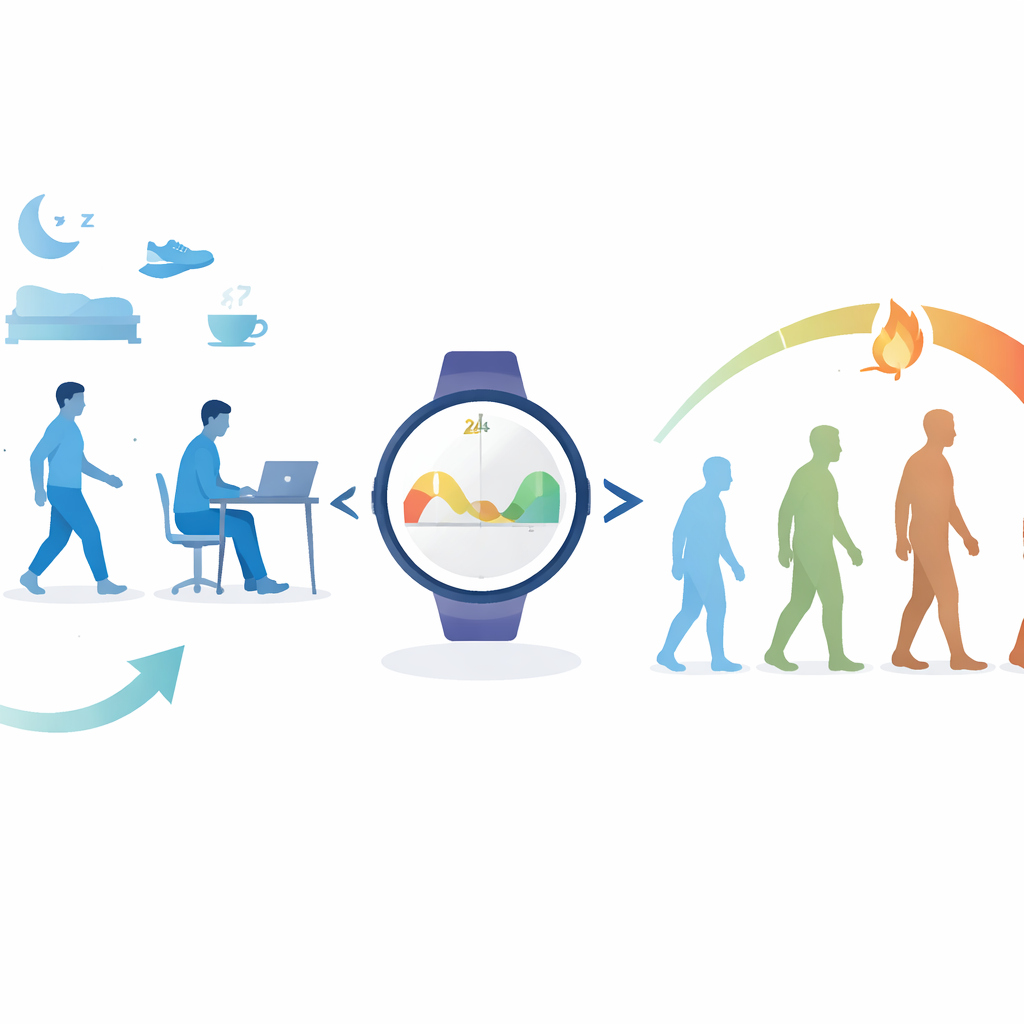
The team started with a huge trove of wrist‑worn accelerometer data from the UK Biobank, where volunteers wore a small motion sensor for seven days. From each person’s 24‑hour movement trace, the researchers extracted dozens of features that describe when people are active, how strongly activity rises and falls across the day, how regular their schedule is from one day to the next, and how much time they spend moving briskly versus sitting. They then used an aging measure called CosinorAge, which translates these daily movement rhythms into a “biological age” based on how strongly they predict five‑year risk of death. People whose movement patterns looked older than their actual age were tagged as “accelerated agers,” while those whose patterns looked younger were “decelerated agers.”
What Predicts Faster Aging in Daily Life
To sift through all the wearable features, the researchers turned to interpretable machine‑learning models. Across several different algorithms, the same themes kept emerging. People with weaker day‑night swings in activity (low rhythm amplitude), more irregular daily schedules, and long stretches of sedentary time were much more likely to have an older biological age. In contrast, those who routinely did more moderate‑to‑vigorous activity—brisk walking or anything more intense—and who showed stable, repeating daily patterns tended to look biologically younger. Interestingly, classic sleep quality measures beyond total sleep time played a smaller role than how clearly the body was switching between rest and activity across the full 24‑hour cycle.
Linking Rhythms to Inflammation in the Blood
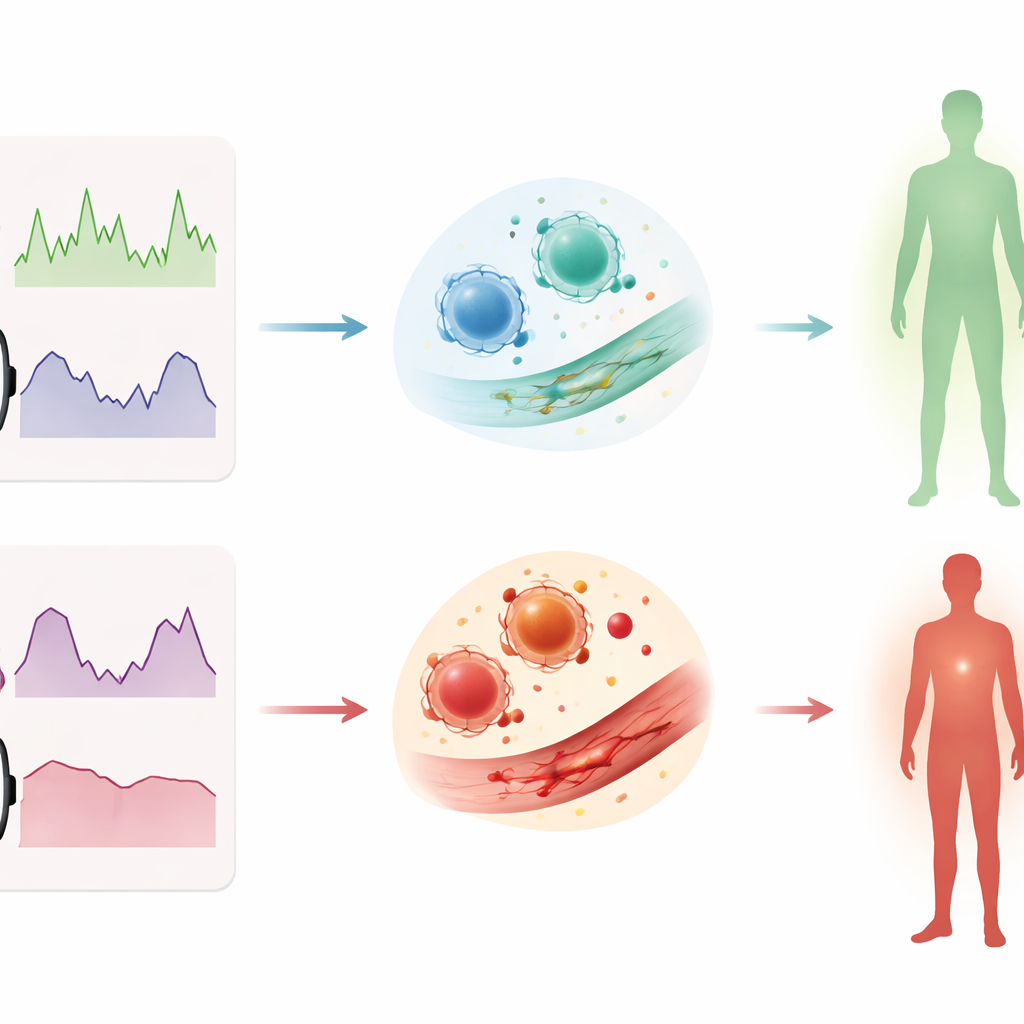
To uncover a possible mechanism, the investigators zoomed in on a subset of 1,521 participants whose doctors had ordered blood tests around the time of the wearable recording. From routine counts of platelets and white blood cells, they calculated the systemic immune‑inflammation index, a composite measure that has been tied to cancer, heart disease, and overall mortality. People with blunted or unstable daily rhythms had higher inflammation scores: those with the weakest rhythms showed about a third of a standard‑deviation increase in inflammatory burden, and those with the most irregular schedules had a notable, though somewhat smaller, rise. Among men, doing too little moderate‑to‑vigorous activity was also linked to clearly higher inflammation, an effect that was not seen in women in this cohort.
When One Healthy Habit Can Cover for Another
The study also probed how these behaviors interact. The worst inflammatory profiles appeared in people who combined irregular daily rhythms with too little exercise, or who had both low rhythm strength and low activity. Yet there were hints of good news: maintaining at least one healthy pattern seemed to blunt the problem. Participants with weak rhythms but enough daily moderate‑to‑vigorous activity had inflammation levels similar to those with stronger rhythms, suggesting that being active can partially compensate for rhythm disruption. Likewise, people who were relatively inactive but kept highly regular day‑to‑day schedules showed lower inflammation than those who were both inactive and irregular. Heat‑map analyses of hourly movement suggested a “trade‑off”: slower agers either moved more despite irregular schedules, or they maintained very consistent rhythms even if their overall activity was lower.
From Inflammation to Longevity
Finally, the authors asked whether inflammation helps explain why disrupted rhythms and low activity predict earlier death. Over about eight years of follow‑up, more than 2,200 participants died, mostly from age‑related diseases such as cancer and heart disease. In detailed statistical models that separated direct from indirect pathways, inflammation accounted for up to about a quarter of the extra mortality risk linked to low activity and irregular rhythms in men, and a smaller share in women. While these mediation effects did not reach strict statistical certainty, they support the idea that chronic, low‑grade inflammation is one of the channels through which our daily behavior patterns shape long‑term health.
What This Means for Everyday Life
For a layperson, the message is straightforward: it is not only how much you move, but also how predictably your days unfold that matters for healthy aging. Stronger day‑night contrasts, steady timing of waking and winding down, and regular bouts of more vigorous movement are all linked to lower inflammation and a younger biological profile. Wearable devices make it possible to track these patterns continuously and could eventually provide personalized guidance—nudging people toward slightly more consistent schedules or a few extra minutes of brisk activity per day. While this study cannot prove cause and effect, it points toward a future where a simple wrist sensor helps identify who is on a risky aging path, and where small, tailored changes in daily rhythm and activity may help cool chronic inflammation and extend the healthy years of life.
Citation: Shim, J., Bishehsari, F., Mahdavinia, M. et al. From wrist data to lifespan: elucidating inflammation-driven biological aging via activity rhythms captured by wearable devices. npj Aging 12, 49 (2026). https://doi.org/10.1038/s41514-026-00349-x
Keywords: wearable devices, circadian rhythms, systemic inflammation, biological aging, physical activity