Clear Sky Science · en
Frailty phenotype reveals heterogeneity in aging and distinct taurine associations
Why this matters for growing older
As people live longer, it has become clear that not everyone ages in the same way. Some eighty-year-olds stay active and resilient, while others become weak and vulnerable. This study asks whether a small nutrient-like molecule called taurine can help explain these different paths of aging, and argues that looking only at birthdays on a calendar misses key biology. Instead, the authors use a clinical measure called frailty to uncover hidden patterns in how taurine and inflammation change with age.
Different paths of aging, not just different ages
Doctors have long known that two people of the same age can have very different health prospects. Frailty captures this difference by combining signs such as slow walking, weak grip, exhaustion, low activity, and weight loss. People can be classified as robust, prefrail, or frail. Taurine, meanwhile, is a natural compound found in muscles, heart, and brain that helps protect cells from stress and inflammation. Earlier animal studies suggested taurine might slow aging, but human studies disagreed about whether blood taurine levels actually track with getting older. The authors suspected that lumping all older adults together, regardless of frailty, was blurring important signals.
What the researchers measured in real people
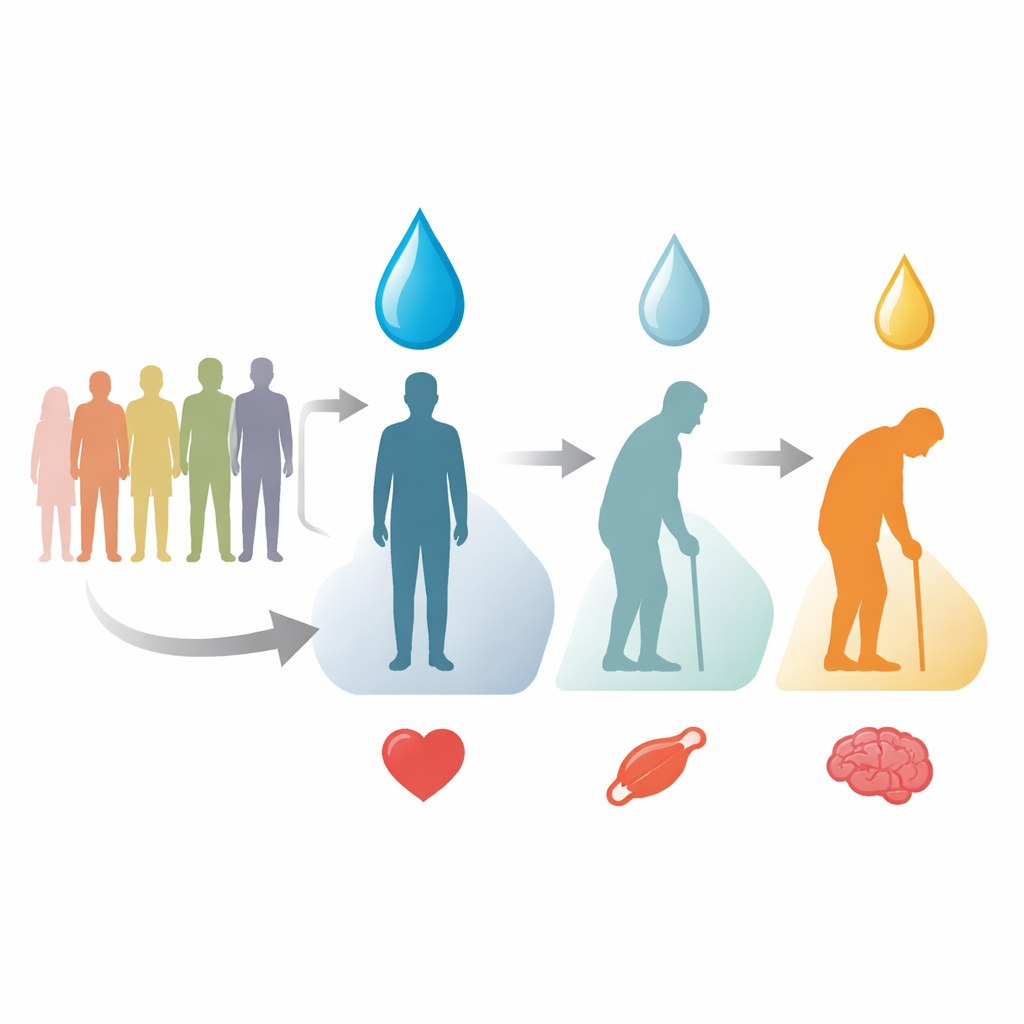
The team studied 146 adults living in Baltimore, from 20 to 97 years old. Among those aged 69 and older, they carefully assessed frailty and placed participants into robust, prefrail, or frail groups. Blood samples were analyzed using advanced chemistry tools to measure taurine and several related substances that feed into its production. The researchers also measured markers of chronic low-grade inflammation, including well-studied molecules linked to age-related diseases. Instead of asking only how taurine changes with age, they compared these measures across the three frailty groups to see whether frailty revealed sharper patterns.
A surprising dip and rebound in taurine
When the authors simply compared younger and older adults, taurine levels were not clearly different, echoing previous work that found no straightforward link to age. But once they focused on frailty, a striking pattern emerged. Among older adults, robust individuals had the highest taurine levels. Prefrail people—the in-between group who are beginning to show decline but are not yet frail—had the lowest taurine levels. Frail individuals showed a partial rebound to intermediate taurine levels. In other words, taurine followed a non-linear curve across frailty states rather than steadily falling with age. Statistical models confirmed that the way taurine changed with age depended strongly on whether someone was robust, prefrail, or frail.
How taurine production changes under stress
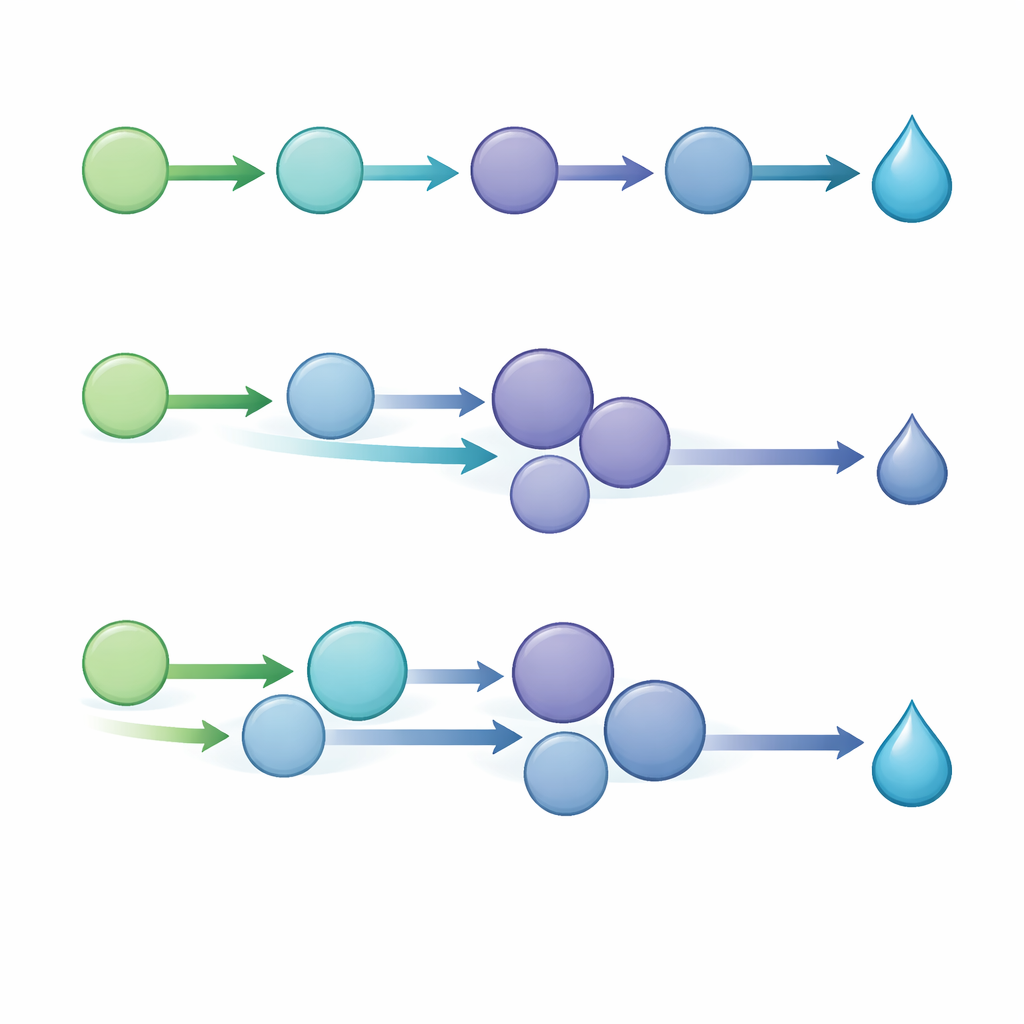
To understand why taurine levels showed this dip and rebound, the researchers looked upstream at the metabolic pathway that makes taurine from sulfur-containing building blocks such as methionine and cysteine. Robust older adults showed a pattern suggesting smooth “traffic flow” through this pathway: low levels of several starting materials but relatively high taurine, implying efficient conversion. Prefrail adults, by contrast, showed evidence of two bottlenecks at once. Starting materials piled up, some key intermediates dropped, and the balance between cysteine and its oxidized form pointed to higher oxidative stress. This combination suggested that the system was struggling to convert ingredients into taurine just when the body may need its protective effects most. In frail adults, pathway problems persisted—upstream compounds were still elevated—but levels of cysteine and related molecules hinted that the body had partially adapted, restoring taurine to middle-of-the-road levels despite ongoing strain.
Links between taurine and chronic inflammation
Because late life is often marked by “inflammaging,” a slow, smoldering rise in inflammatory molecules, the researchers asked whether taurine related differently to inflammation across frailty states. They focused on several blood markers tied to poor outcomes in older adults. One, called TNF-α, stood out. In robust individuals, taurine and TNF-α showed no clear relationship. In prefrail people, however, higher taurine levels went hand-in-hand with lower TNF-α, suggesting a potential protective connection in this vulnerable, transitional group. In frail adults, this link weakened again, even though taurine levels had partially recovered, hinting that the capacity of taurine to buffer inflammation may be lost once frailty is firmly established.
What this means for healthy longevity
This work argues that frailty is more than a clinical label: it marks distinct biological states. Rather than a simple story of taurine steadily draining away with age, the study paints a picture of robust older adults with efficient taurine production, prefrail adults at a metabolic low point where production falters and inflammation rises, and frail adults who reach a new but imperfect balance. For the general reader, the key takeaway is that when we think about potential treatments like taurine supplementation, “who” and “when” may matter as much as “what.” People in the early, prefrail stage—still reversible with the right help—might benefit most from interventions aimed at supporting taurine pathways and calming inflammation, offering a more precise route to preserving strength and independence in later life.
Citation: Kim, A., Keener, R., Omdahl, A. et al. Frailty phenotype reveals heterogeneity in aging and distinct taurine associations. npj Aging 12, 42 (2026). https://doi.org/10.1038/s41514-026-00342-4
Keywords: frailty, taurine, aging, inflammation, metabolism