Clear Sky Science · en
Probiotic Lactiplantibacillus plantarum OL3246 supports healthy aging by enhancing quality of life, reducing inflammation, and modulating gut microbiota: a pilot study
Why Your Gut Matters as You Grow Older
Many people hope not just to live longer, but to stay energetic, clear‑minded, and emotionally steady as the years go by. This study explores whether a specific probiotic—beneficial bacteria taken in capsule form—can help older adults protect their gut health, calm hidden inflammation, and even feel a bit better in their daily lives. By looking at both how volunteers felt and what was happening in their blood and stool, the researchers asked a simple question with big implications: can tuning the microbes in our intestines support healthy aging?
A Tiny Helper Designed for Older Adults
Researchers in Poland ran a small, carefully controlled trial with community‑dwelling adults aged 55 to 85 who were generally healthy and showed no signs of dementia or Parkinson’s disease. Participants were randomly assigned to take either a capsule containing the probiotic strain Lactiplantibacillus plantarum OL3246 or a placebo capsule with no live bacteria, twice a day for three months. Neither the volunteers nor the scientists knew who was in which group until the study ended. The team measured quality of life, mood, markers of inflammation and oxidative stress in the blood, and gut‑related markers and microbes in stool samples. The goal was to see whether this single bacterial strain could nudge several aspects of aging biology in a favorable direction under real‑world living conditions.
Feeling the Difference: Daily Life and Mood
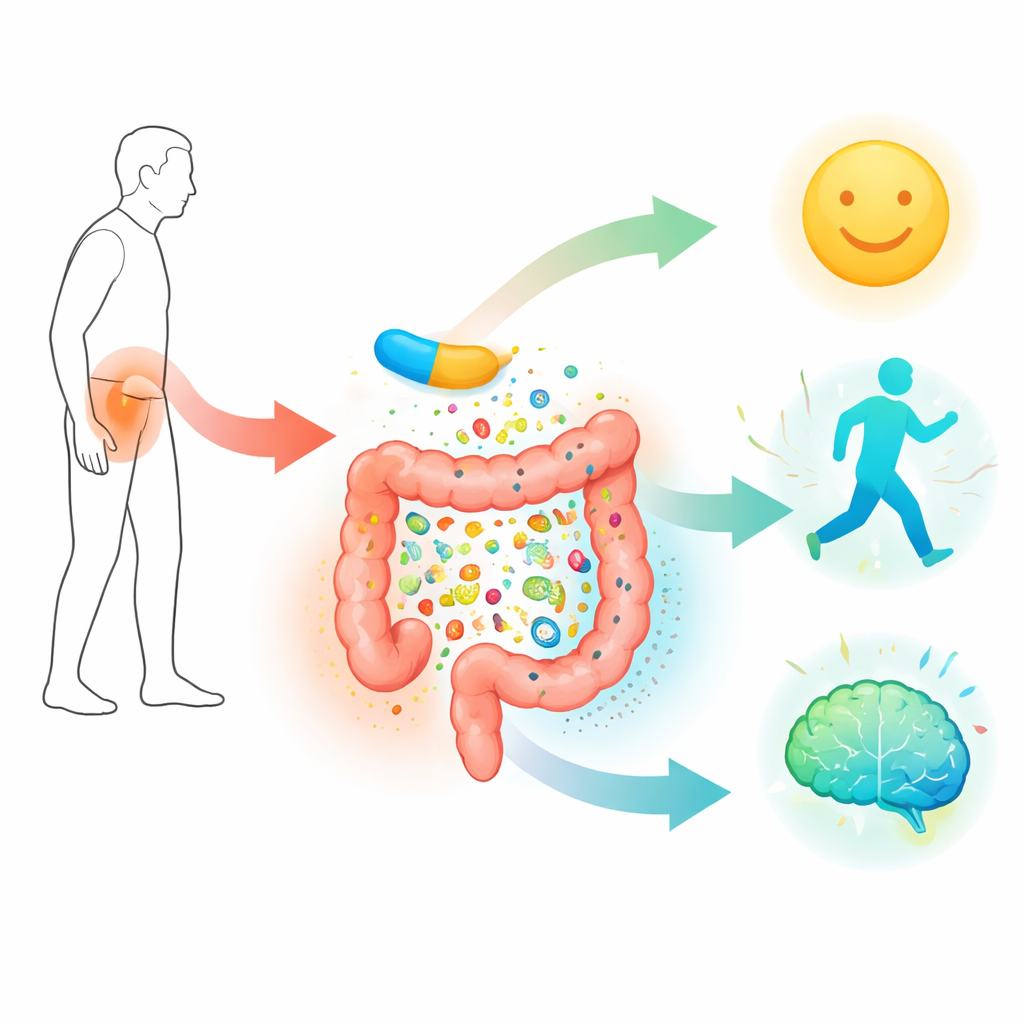
To capture day‑to‑day well‑being, participants filled out standard questionnaires about physical and emotional health and about symptoms of depression. After three months, people taking the probiotic reported better overall quality of life than at the start of the study, while those on placebo did not show meaningful change. Scores related to depressive symptoms also improved modestly but meaningfully in the probiotic group, despite starting at generally low levels. In other words, these were not severely depressed patients, but relatively healthy older adults who nonetheless felt a noticeable lift in mood and daily functioning. Importantly, no safety issues were reported, suggesting that the probiotic was well tolerated.
Quieting Hidden Damage Inside the Body
Aging bodies often face a slow burn of oxidative stress—tiny chemical reactions that nick and warp proteins and other molecules over time. The researchers measured advanced oxidation protein products (AOPP), which reflect protein damage, and an enzyme called superoxide dismutase (SOD), which serves as a first‑line antioxidant defense. In the probiotic group, AOPP levels dropped clearly, hinting at less ongoing damage. SOD levels stayed stable, consistent with a more balanced state, while they rose in the placebo group, likely signaling that those bodies were ramping up defenses against persistent stress. The team also tracked alpha‑synuclein, a protein linked to neurodegenerative disorders. In the placebo group, higher SOD changes went hand‑in‑hand with rising alpha‑synuclein, but in the probiotic group this relationship flipped, suggesting that the probiotic may have helped decouple oxidative pressure from this potentially harmful protein.
Soothing the Gut and Reshaping Its Microbial Community
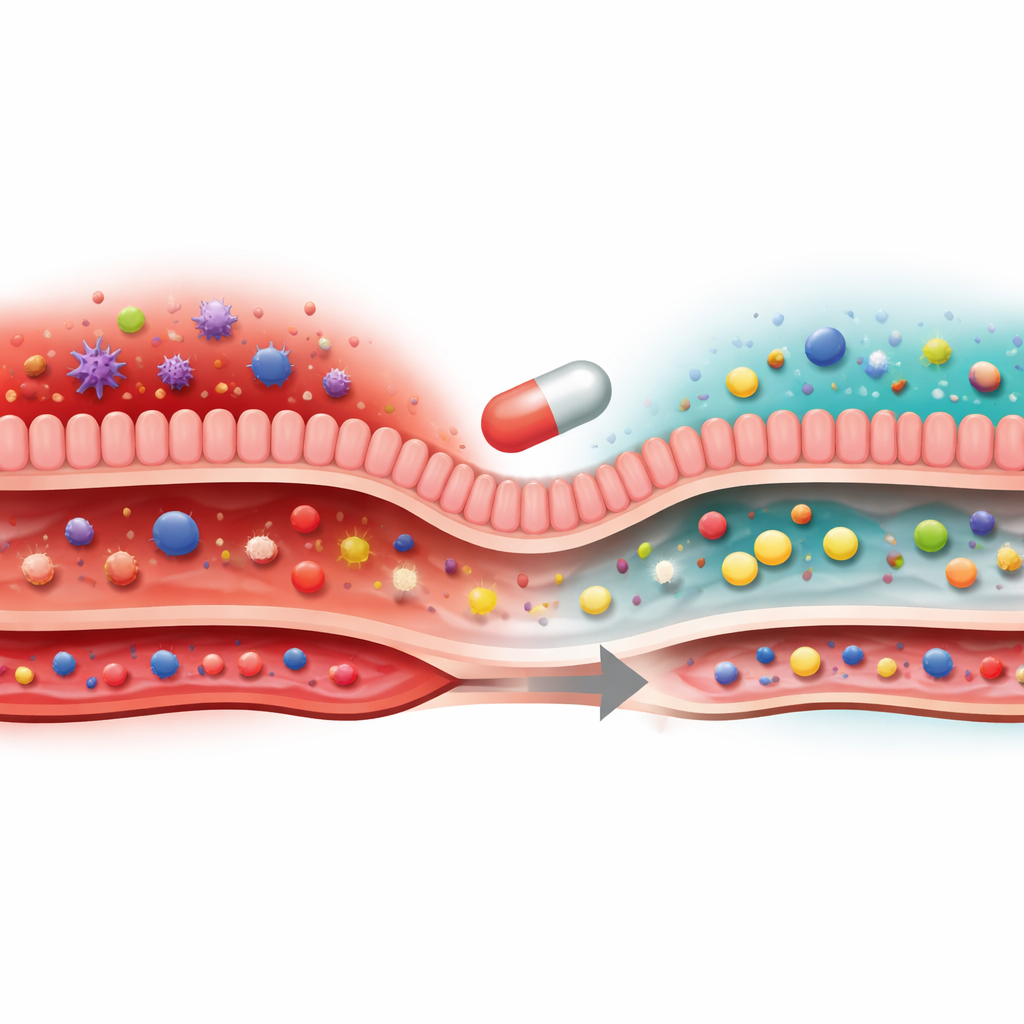
Because the capsules were taken by mouth, the gut was the main stage. One key stool marker, calprotectin, rises when the intestinal lining is irritated. At the end of the study, calprotectin levels were significantly lower in the probiotic group than in the placebo group and sat comfortably within ranges considered normal for younger adults, pointing to a calmer gut environment. Another marker, zonulin, which is linked to “leaky gut,” did not change, suggesting that the biggest impact here was on inflammation more than on barrier tightness—at least over three months. Sequencing the gut microbiome told a similar story: people taking the probiotic showed a distinct microbial pattern, with higher diversity and an enrichment of bacteria associated with health, such as Faecalibacterium prausnitzii and members of the Ruminococcaceae family. These species are known for producing short‑chain fatty acids and vitamins that nourish gut cells and help keep inflammation in check.
What This Could Mean for Healthy Aging
Altogether, this pilot study suggests that the Lactiplantibacillus plantarum OL3246 strain may gently shift the aging body toward a healthier balance. Older adults who took it for three months felt small but important improvements in quality of life and mood, showed signs of reduced protein damage and steadier antioxidant defenses in their blood, and had stool markers and gut microbes that pointed to a calmer, more resilient intestine. Because the study was small and exploratory, the authors stress that larger and more diverse trials are needed before firm recommendations can be made. Still, the findings support a broader idea that targeted probiotics might one day be part of a toolkit—alongside diet, movement, and social engagement—for helping people not only add years to life, but life to years.
Citation: Jastrząb, R., Małecki, A., Kmiecik-Małecka, E. et al. Probiotic Lactiplantibacillus plantarum OL3246 supports healthy aging by enhancing quality of life, reducing inflammation, and modulating gut microbiota: a pilot study. npj Aging 12, 37 (2026). https://doi.org/10.1038/s41514-026-00338-0
Keywords: probiotics, gut microbiome, healthy aging, inflammation, mood