Clear Sky Science · en
Reserpine prolongs lifespan but compromises locomotion and heat-stress resilience in Drosophila melanogaster
Why a blood pressure drug and tiny flies matter
Many people hope for medicines that not only treat disease but also slow aging itself. This study explores an old blood pressure drug called reserpine, testing whether it can extend life in fruit flies and what hidden costs might come with that extra time. Because fruit flies share many basic brain chemicals and aging pathways with humans, the work offers a window into how tweaking brain signaling might lengthen life while also revealing trade‑offs that would matter for real-world health.
A longer life, but not a free upgrade
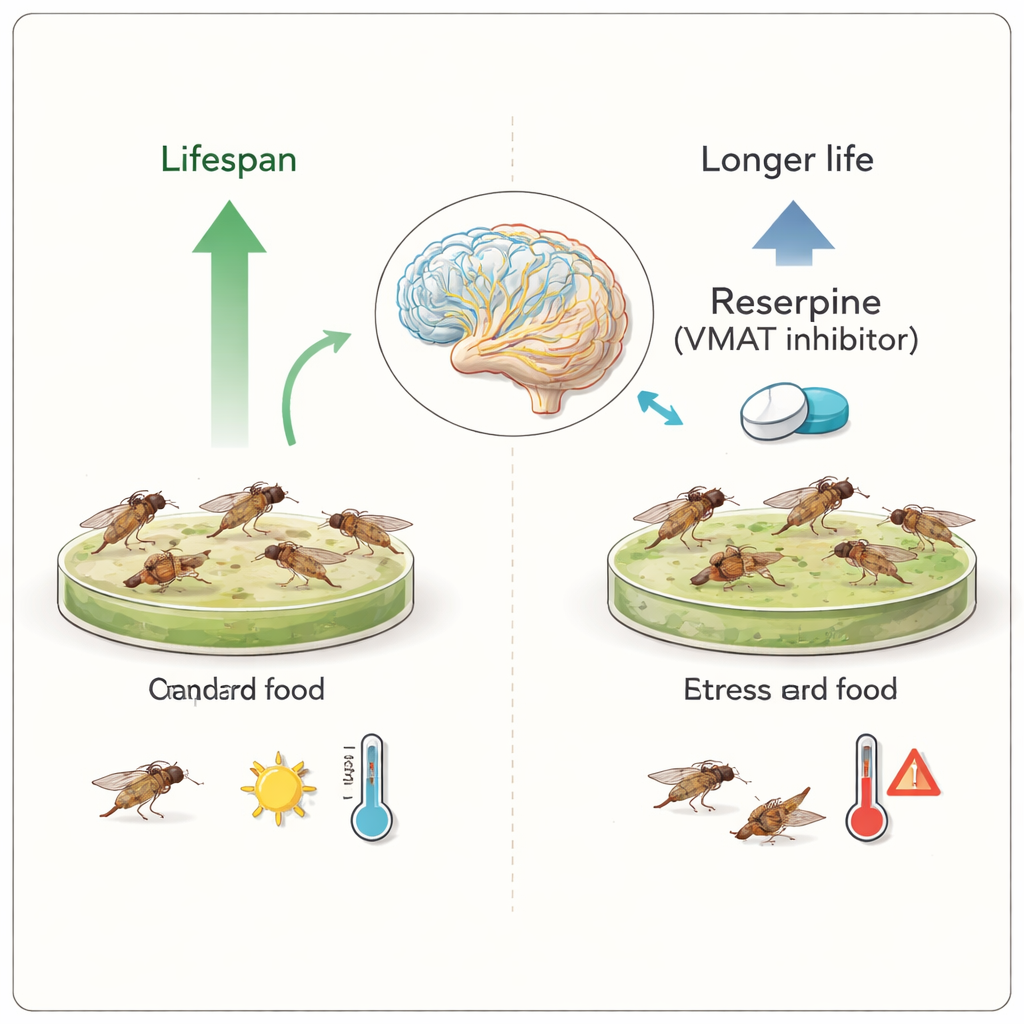
The researchers fed male fruit flies food laced with different doses of reserpine across their lifetimes. Reserpine blocks a transporter called VMAT that normally loads brain messengers like dopamine and serotonin into storage packets in nerve cells. Flies on higher doses of the drug lived several days longer on average, and their maximum lifespan increased by almost two weeks compared with untreated flies. However, this benefit appeared only when treatment began early in life; starting the drug in midlife did not help. This suggests that the way reserpine reshapes the body’s long-term physiology must be established while the animals are still relatively young.
Slower bodies and weaker under heat
Longer-lived flies were not necessarily healthier in all situations. When the team tested the insects’ ability to climb—a simple measure of movement and coordination—reserpine-treated flies performed much worse than their untreated peers, even after less than two weeks on the drug. The scientists then exposed young adult flies to prolonged warmth, a challenge that normally reveals how well an animal can cope with environmental stress. Under this heat-stress, reserpine-fed flies died sooner than controls, and higher doses caused faster deaths. In other words, the same treatment that lengthened life in comfortable conditions made the flies more fragile when temperatures rose, highlighting a trade-off between lifespan and resilience.
A body shifted into low-energy mode
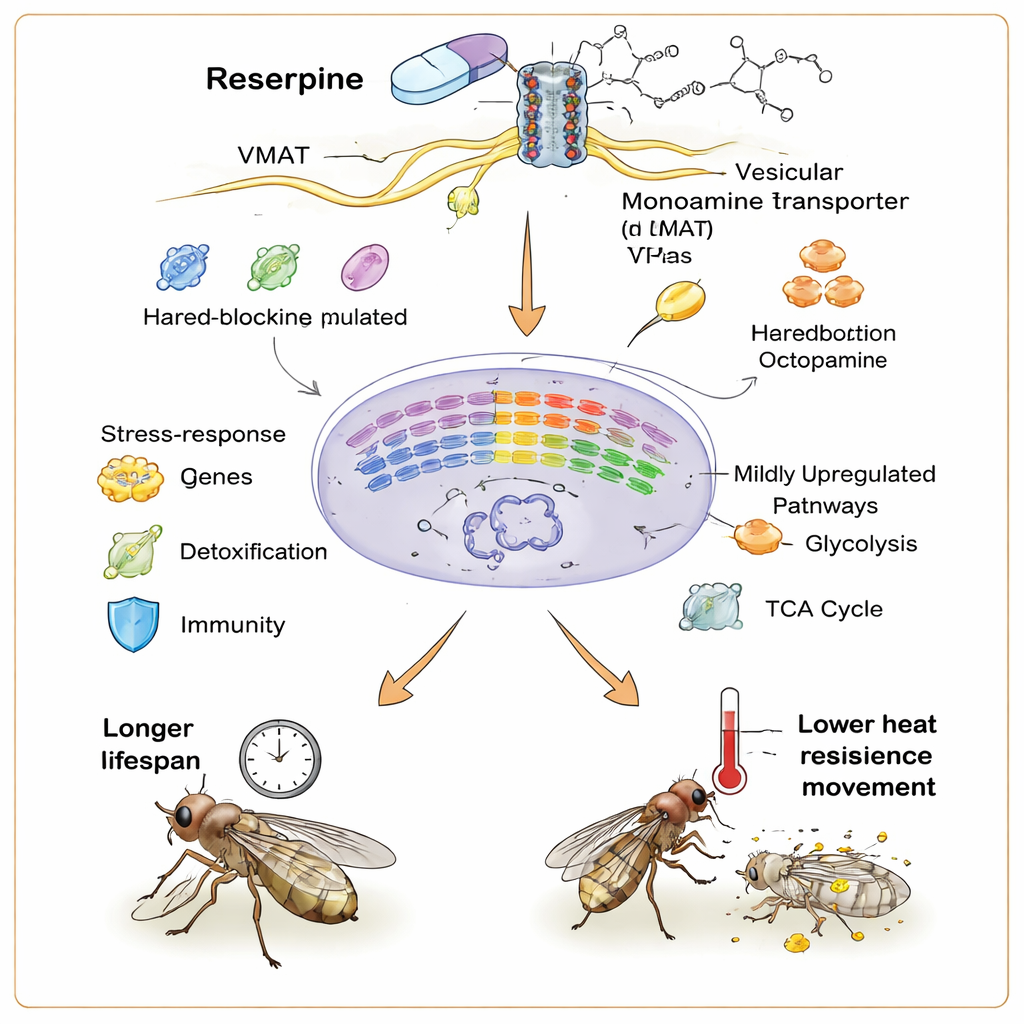
To understand what was happening inside the flies, the researchers compared gene activity in whole animals with and without reserpine using RNA sequencing, a technique that reads out which genes are turned on or off. In older flies, the drug caused a broad shift toward a low-energy, low-defense state. Many genes tied to fat burning, detoxification, immunity, and protein quality control were dialed down. At the same time, some core energy pathways that use sugar, such as glycolysis and the TCA cycle, were modestly boosted, hinting at a rebalancing of how cells fuel themselves. Overall, the gene patterns looked like the flies were conserving resources and reducing certain forms of wear-and-tear, which may help explain their longer lives under mild conditions.
Blunted emergency responses to heat
The team also examined flies placed under heat-stress while on reserpine. Normally, heat triggers a powerful “emergency program” in cells, switching on heat shock proteins that refold damaged proteins and protect against collapse. In reserpine-treated flies, this emergency response was strikingly muted: key heat shock genes and several antioxidant and detoxification genes failed to rise as they should. At the same time, some energy-hungry processes such as making new proteins and running nerve and muscle signaling were actually increased. This mismatch—high energy demand but weak protection—likely leaves cells more vulnerable, helping to explain why the treated flies died sooner in the heat despite living longer at room temperature.
What this means for future anti-aging drugs
For a layperson, the central message is that extending lifespan by tweaking brain chemistry may come at a cost. In fruit flies, reserpine appears to push the body into a slower-burning, more economical state that favors long life when conditions are gentle, but it also dulls the emergency systems needed to survive sudden stress, and it reduces physical vigor. Because reserpine and related drugs are already used in humans, this work underscores the importance of looking not just at how long an intervention can make us live, but also at how it affects our ability to move, cope with heat or illness, and stay robust. Future therapies inspired by this pathway will need to preserve these defenses while capturing the longevity benefit.
Citation: Tiwary, V., Trakooljul, N. & Peleg, S. Reserpine prolongs lifespan but compromises locomotion and heat-stress resilience in Drosophila melanogaster. npj Aging 12, 21 (2026). https://doi.org/10.1038/s41514-026-00329-1
Keywords: reserpine, fruit fly aging, monoamine signaling, stress resilience, lifespan extension