Clear Sky Science · en
MicroRNA profiles in plasma-derived extracellular vesicles across the human lifespan
Why Tiny Messages in Blood May Help Explain Aging
As we grow older, our bodies quietly change long before we feel weaker or slower. This study looked at microscopic "message bubbles" that float in our blood to see whether they carry early signs of aging. By reading the genetic messages inside these bubbles, the researchers hoped to spot patterns linked to muscle strength, body fat, and other measures of healthy aging—potentially offering a simple blood test to track how well we are really aging on the inside.
What Are These Invisible Bubbles?
Every cell in our body can release tiny, membrane-wrapped particles called extracellular vesicles into the bloodstream. Think of them as biological postcards: each vesicle carries a sample of its home cell’s contents and sends signals to other cells. Inside, the researchers focused on microRNAs—very short strands of genetic material that help turn genes up or down. Because these vesicles are stable in blood and come from many tissues at once, they can offer a snapshot of what is happening throughout the body without needing a biopsy. 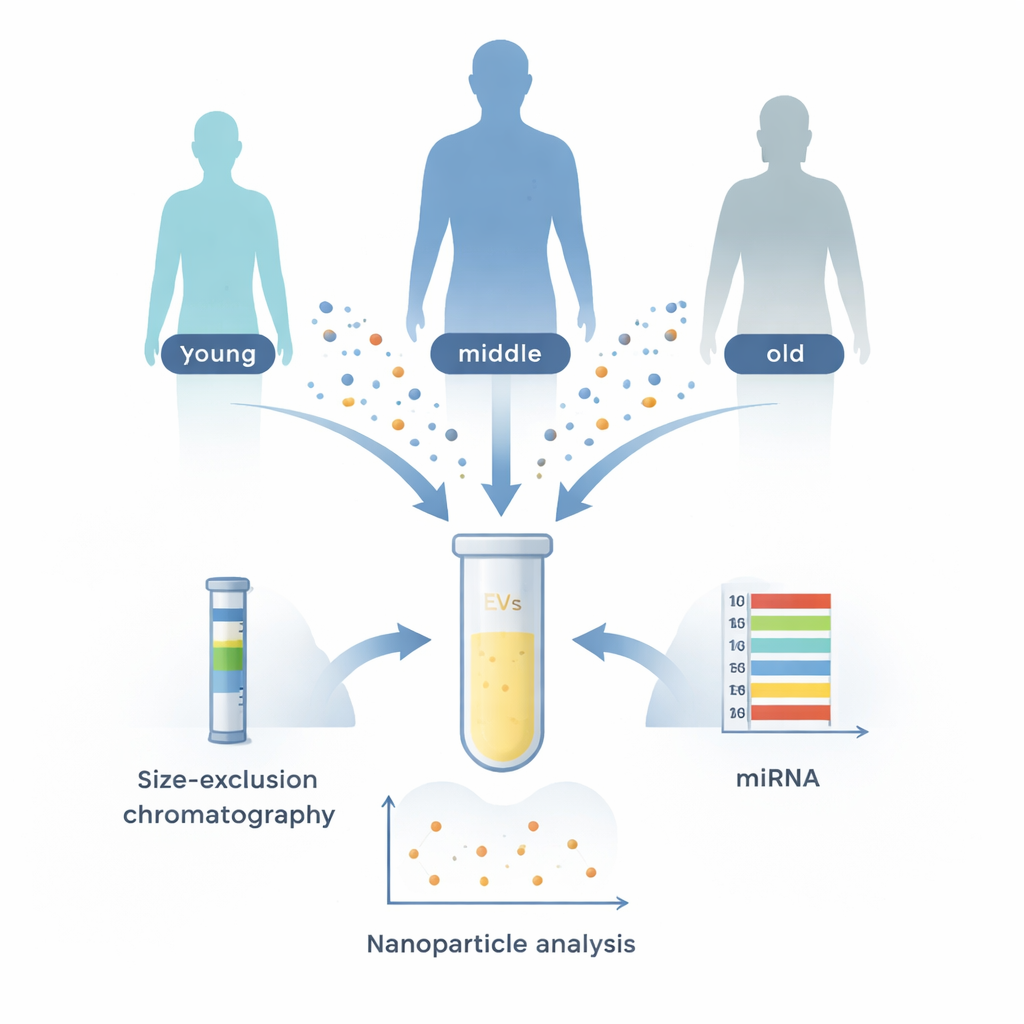
Following These Signals Across a Lifetime
The team studied 39 generally healthy adults from their 20s to their 80s, grouped as young, middle-aged, and old. They carefully purified vesicles from blood samples, measured how many particles were present and how big they were, and then sequenced the small RNAs inside. Surprisingly, vesicle size stayed about the same with age, and the total number of vesicles only showed a modest rise in older adults. However, the proteins decorating the vesicle surface shifted with age in ways that match known changes in the immune system, hinting that different types of cells may be sending more—or fewer—messages as we get older.
Age Leaves a Fingerprint in Genetic Messages
The real differences appeared in the microRNAs carried by the vesicles. Hundreds of distinct microRNAs were detected, but their mix changed noticeably with age, and the biggest shift happened between young adults and everyone else. Older individuals’ vesicles were enriched with several microRNAs tied to muscle and metabolism, such as miR-206, miR-143-3p, miR-122-5p, and miR-20b-3p. These molecules have been linked in other studies to muscle repair, insulin sensitivity, fat handling, and blood vessel health. Another microRNA, miR-6529-5p, which has been associated with protection of brain cells, was also higher in older but still relatively healthy adults, raising the possibility that some of these signals may be part of the body’s efforts to cope with aging rather than simple signs of damage. 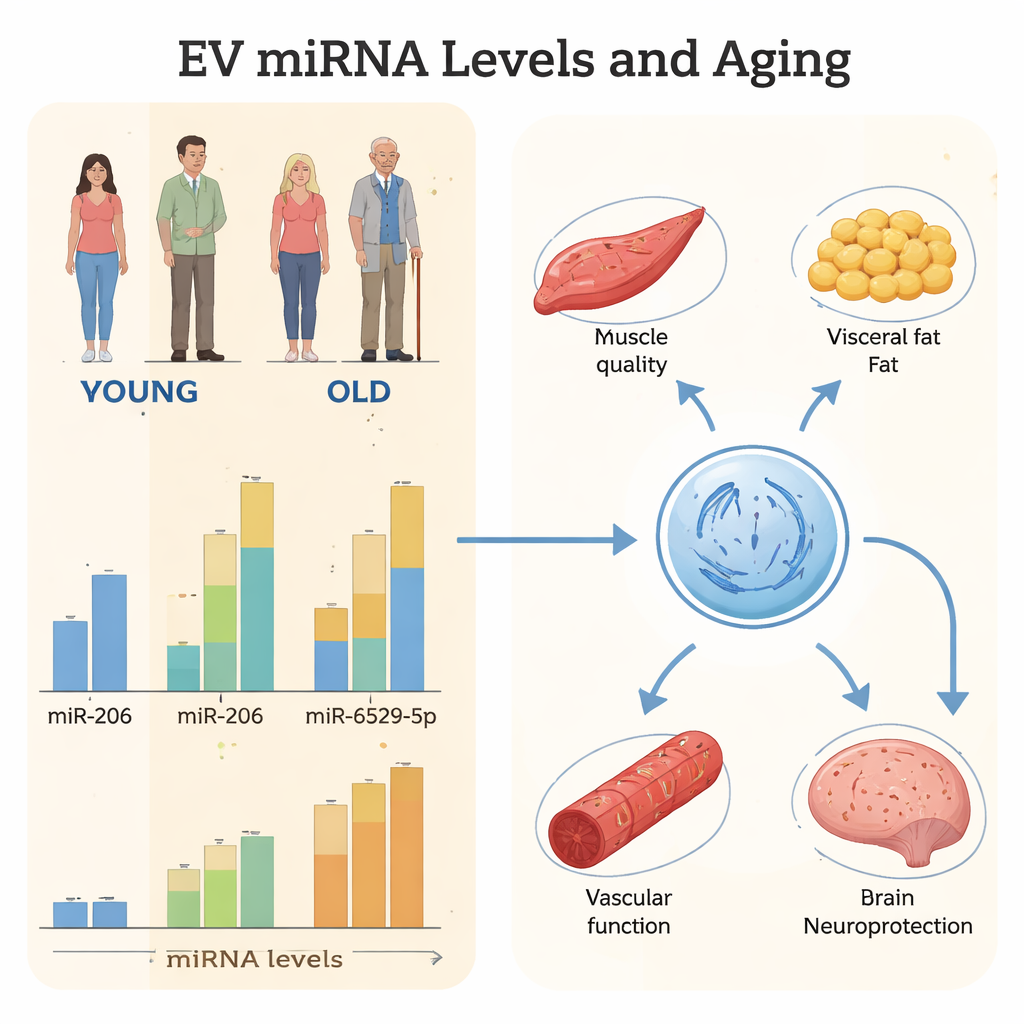
Connecting Blood Signals to Muscle, Fat, and Function
To see whether these vesicle patterns mattered for real-world health, the researchers compared them with measures such as muscle quality, walking speed, grip strength, belly fat, and levels of GDF-15, a blood marker closely tied to biological aging. In general, people with more vesicles and certain microRNA profiles tended to have more visceral fat and poorer muscle quality, especially among men. Specific vesicle microRNAs tracked with how fast participants could walk or rise from a chair, as well as with GDF-15 levels and adherence to a Mediterranean-style diet. These relationships held even after adjusting for chronological age, suggesting that the vesicle signals are capturing how well a person is aging biologically, not just how many birthdays they have had.
What This Could Mean for Healthy Aging
Together, the findings suggest that these tiny blood-borne messages mirror key aspects of musculoskeletal, metabolic, immune, and brain aging. While the study is modest in size and cannot yet prove cause and effect, it points to plasma vesicles and their microRNA cargo as promising, minimally invasive biomarkers of functional decline. One day, a routine blood draw might reveal whether someone’s muscles, metabolism, and blood vessels are aging faster or slower than expected—and help doctors tailor lifestyle or medical interventions to preserve strength, independence, and quality of life for longer.
Citation: Ráez-Meseguer, C., Navas-Enamorado, C., Capó, X. et al. MicroRNA profiles in plasma-derived extracellular vesicles across the human lifespan. npj Aging 12, 30 (2026). https://doi.org/10.1038/s41514-025-00321-1
Keywords: healthy aging, extracellular vesicles, microRNA, muscle health, blood biomarkers