Clear Sky Science · en
Cancer incidence and mortality trends among older adults
Why Cancer in Older Adults Matters to All of Us
Most cancers are diagnosed in people over 65, and as the population ages, almost every family will be touched by cancer in an older loved one. This study examines how often different cancers occur and how often they cause death in older Americans over the last five decades. Understanding these long-term patterns helps explain why some cancers are becoming more common, why fewer people are dying from others, and how health care systems can better prepare for the growing number of older adults living with cancer.
The Big Picture: More Cancer, Fewer Deaths
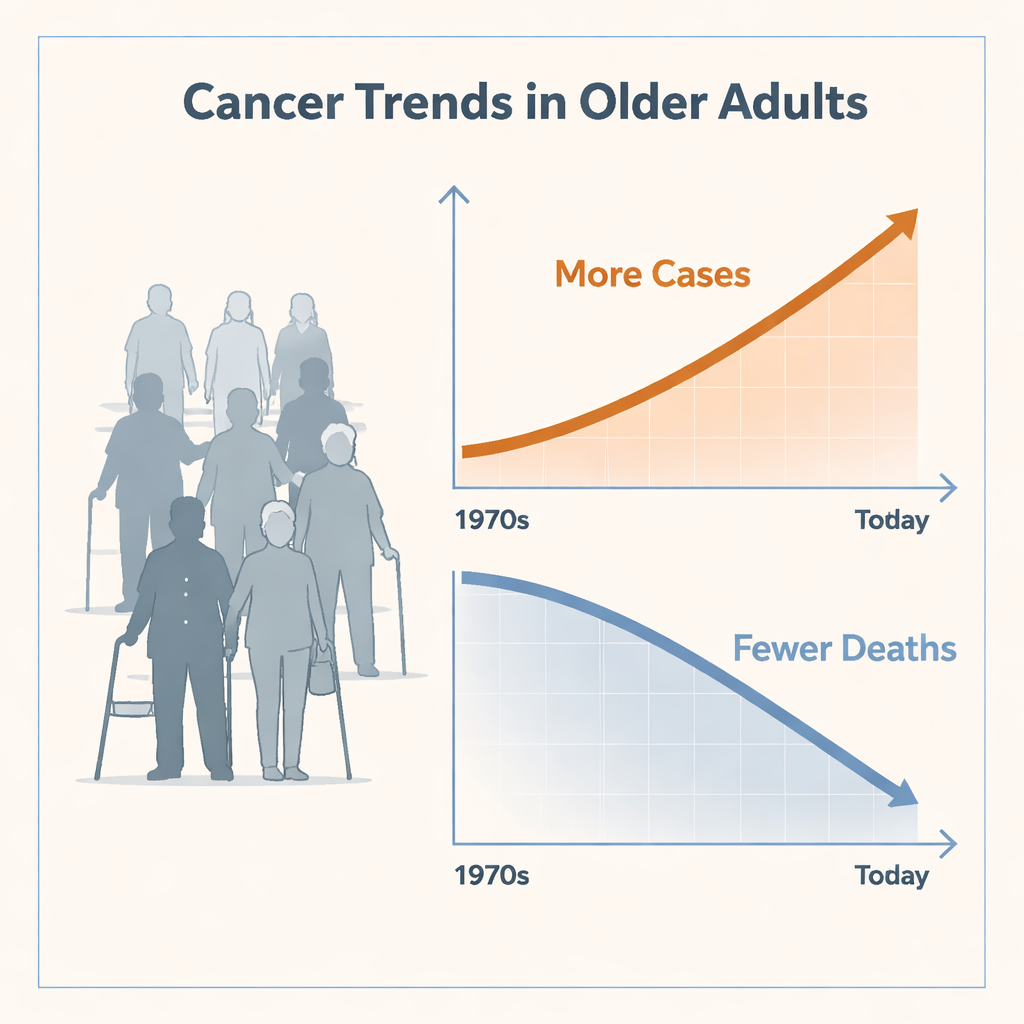
Using data from the U.S. National Cancer Institute’s Surveillance, Epidemiology, and End Results (SEER) program, the researchers tracked cancer diagnoses from 1975 to 2019 and cancer deaths from 1969 to 2019 in adults aged 65 and older. They found that the overall rate of cancer diagnoses in this age group has inched upward, while the overall rate of cancer deaths has steadily declined. In other words, more older adults are being told they have cancer, but a smaller fraction are dying from it. This reflects both an aging population, which is more vulnerable to cancer, and major advances in early detection and treatment.
Which Cancers Older Women Face
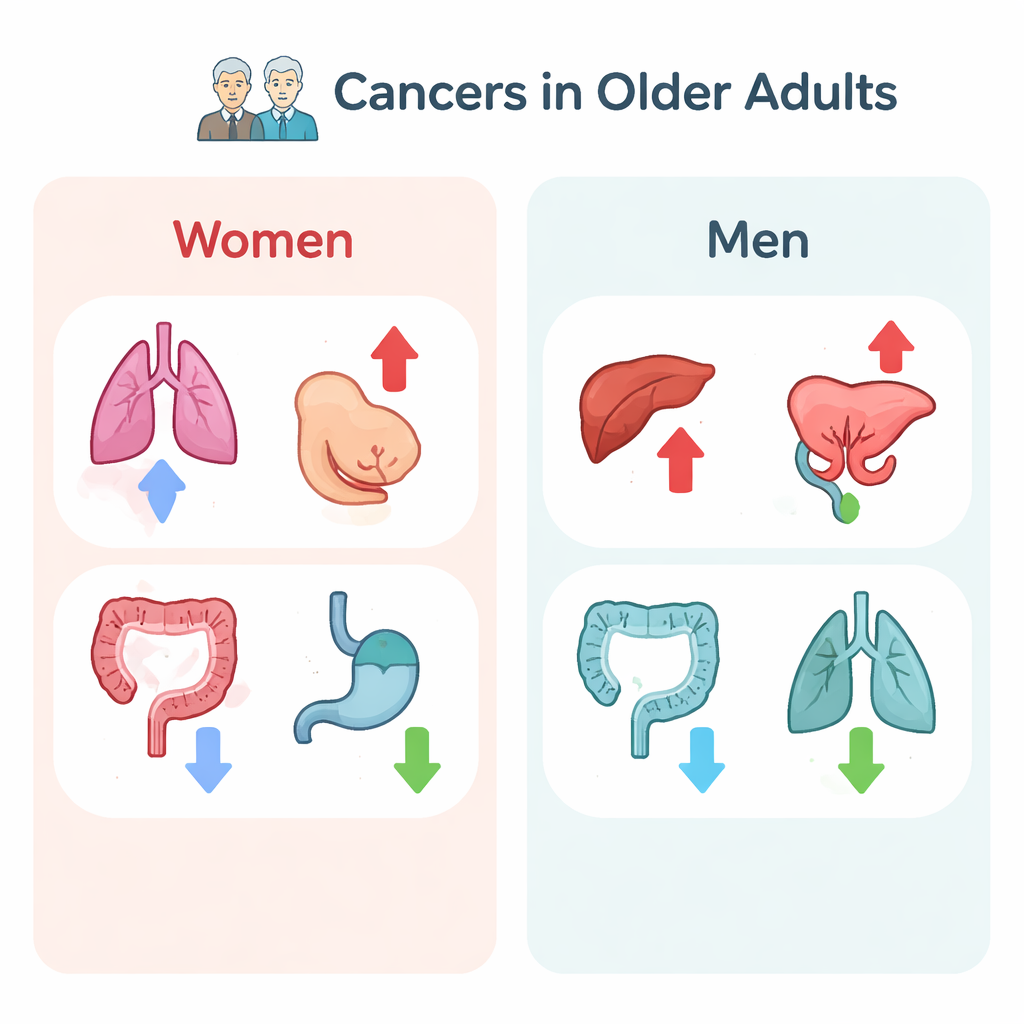
For women over 65, the most commonly diagnosed cancer was breast cancer, followed by lung, colon, uterine, and certain blood cancers like non-Hodgkin lymphoma. Breast cancer dominated in every female age band, although its share of diagnoses shrank among the very oldest women. Over time, diagnoses of skin melanoma, lung cancer, and kidney cancer in older women rose sharply, while cancers of the colon, rectum, and stomach became less common. When it came to deaths, lung cancer was the leading killer of older women overall, with breast and colon cancer close behind. Death rates from stomach and colon cancer fell, but deaths from lung, pancreatic cancer, and myeloma rose, and recent data show a worrying uptick in deaths from uterine cancer.
Which Cancers Older Men Face
Among older men, prostate cancer was by far the most frequently diagnosed, followed by lung, colon, bladder, and skin melanoma. Prostate cancer diagnoses surged in the 1990s when blood testing (PSA screening) became widespread, then dropped after national guidelines recommended against routine screening. Overall cancer diagnosis rates in older men actually edged downward over the study period, largely because of this swing in prostate cancer testing. As in women, colon, rectal, and stomach cancers became less common, while melanoma, kidney cancer, and non-Hodgkin lymphoma became more frequent. For deaths, lung cancer topped the list in older men, followed by prostate, colon, pancreatic cancers, and leukemia. Deaths from stomach, colon, and prostate cancer declined, but deaths from liver cancer, myeloma, and non-Hodgkin lymphoma rose.
Hidden Gaps and Shifting Risks
The study highlights that older adults are not a single, uniform group. Cancer patterns differ by age band, sex, and race. For example, white patients made up most diagnoses, and the share of Black patients dropped in the very oldest age groups, hinting at survival and access gaps. Many of the cancers that are falling—such as colon and stomach cancers—are linked to better screening, vaccination, and healthier habits. Others that are rising, like liver, pancreas, and obesity-related cancers, point to ongoing lifestyle and environmental risks. Yet older adults are still underrepresented in clinical trials, and many oncologists report limited training in geriatric care, meaning evidence-based treatments may not be fully tailored to this rapidly growing population.
What This Means for Families and the Future
In plain terms, the study says that while cancer remains common in older adults, it is becoming less deadly overall, thanks to prevention, screening, and better treatments. At the same time, the number of older adults with cancer is expected to surge as the population ages, putting pressure on health systems and caregivers. The authors argue that we need to maintain and expand proven screening and vaccination programs, invest in healthier lifestyles, and design clinical trials and care plans that account for the unique challenges of aging—such as other illnesses, frailty, and cognitive changes. For families, this means that more older relatives will live longer with cancer, turning it from an immediate death sentence into a complex, long-term condition that requires thoughtful, age-appropriate care.
Citation: Morse, R.T., Mani, K.A., Muss, H.B. et al. Cancer incidence and mortality trends among older adults. npj Aging 12, 36 (2026). https://doi.org/10.1038/s41514-025-00320-2
Keywords: older adults, cancer trends, cancer mortality, cancer screening, geriatric oncology