Clear Sky Science · en
Large-scale multi-omics unveils host–microbiome interactions driving root development and nitrogen acquisition
How Friendly Soil Microbes Can Help Feed the World
Modern agriculture leans heavily on nitrogen fertilizer to feed a growing population, but this comes with steep environmental costs, from water pollution to greenhouse gas emissions. This study shows that crop plants are not passive in the soil: their roots actively talk with surrounding microbes. By decoding this hidden conversation in rapeseed (canola), the authors reveal how a particular bacterium living on roots helps plants grow more roots and pull in more nitrogen, hinting at future crops that need far less fertilizer.
Roots, Neighbours and Plant Nutrition
Plant roots sit in a narrow band of soil called the rhizosphere, a busy zone where roots and microbes constantly swap chemicals. These microscopic neighbours can boost plant growth, defend against disease and help plants cope with poor soils. Yet, for crops like rapeseed, scientists have not fully known how a plant’s own genes shape which microbes gather around its roots, or how that in turn affects key nutrients such as nitrogen. Understanding those links could let breeders select varieties that naturally attract the most helpful microbes.
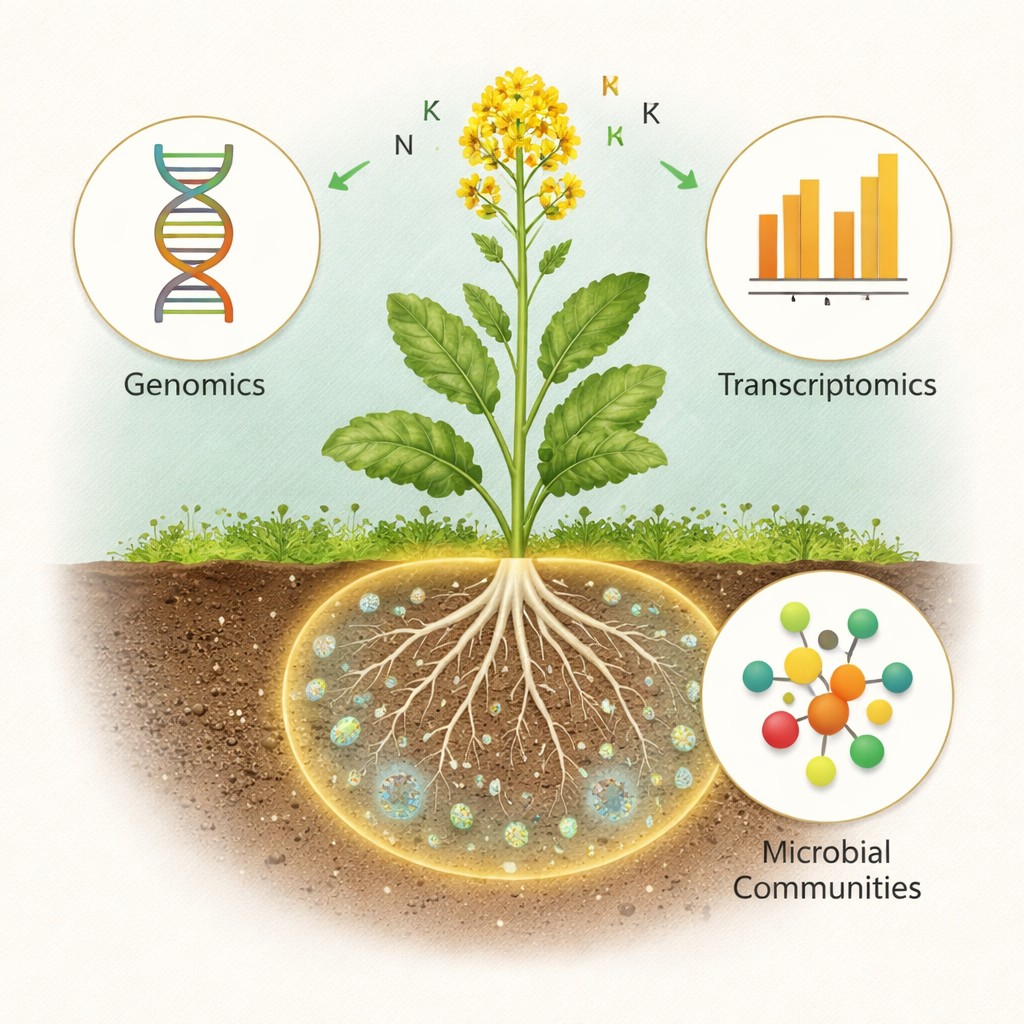
A Massive Multi-Lens Look at Rapeseed
The research team planted 175 genetically distinct rapeseed varieties at two very different field sites in China. For each plot they collected three types of data: which bacterial species were living in the soil stuck to the roots, which genes in the roots were switched on or off, and how much of 12 mineral nutrients, including nitrogen, ended up in the shoots. Together these "multi-omics" measurements created 1,341 paired datasets, allowing the scientists to line up plant DNA, root gene activity and microbial communities side by side. They then used statistical models to see how well each layer could predict the others.
When Gene Activity Tells You Who the Neighbours Are
The analysis showed that the pattern of genes turned on in roots did a better job of predicting which bacteria appeared around them than the underlying DNA sequence alone. In other words, what the root is doing right now matters more for its microbial guests than its static genetic code. When the researchers combined information on root gene activity with the mix of bacteria, they could explain up to about half of the natural differences in nitrogen levels among the plants. This suggests that the microbiome is deeply intertwined with how efficiently a plant takes up key nutrients.
Spotlighting a Helpful Bacterium
Among hundreds of bacterial types, one group, called Sphingopyxis, repeatedly stood out. Its abundance around roots was strongly tied to specific regions of the rapeseed genome and to clusters of root genes involved in handling nitrogen and carbon compounds. The team isolated a Sphingopyxis strain from rapeseed roots, sequenced its genome and tested its effects in controlled pot experiments. Although the bacterium could not fix atmospheric nitrogen on its own, plants inoculated with it grew more lateral (side) roots, accumulated more nitrogen and produced greater shoot biomass, especially in low-nitrogen soil.
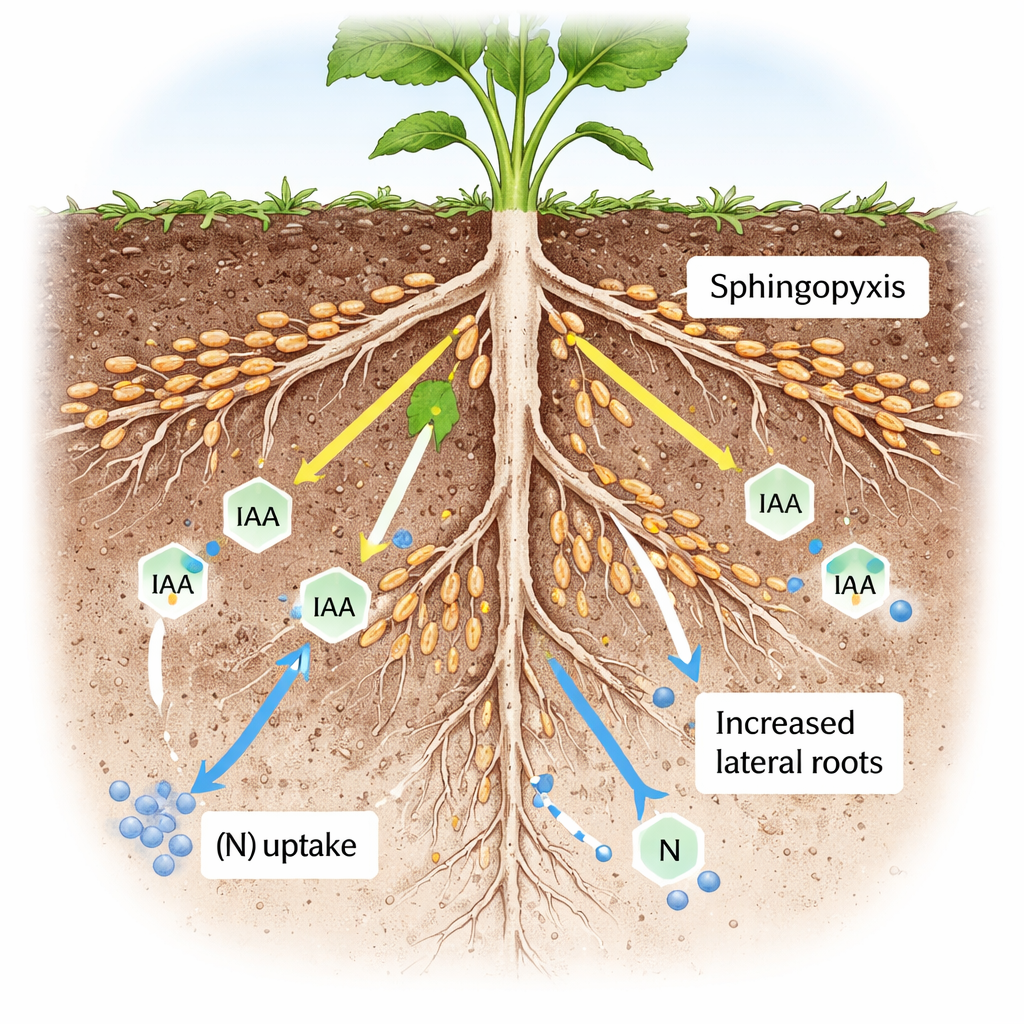
How a Microbe Shapes Roots from the Inside
Digging deeper, the scientists examined the chemistry of roots colonized by Sphingopyxis. They found shifts in many small molecules, including those linked to the plant hormone auxin, a master regulator of root branching. In lab tests, the bacterium produced auxin when supplied with simple building blocks. Microscopy using fluorescent reporter plants showed that Sphingopyxis changed auxin signalling in developing root branches. Plants with normal versions of two particular genes responded strongly to the bacterium, growing more roots and biomass. Mutant plants lacking these genes lost much of the growth benefit, tying Sphingopyxis’s effects directly to the plant’s own genetic control system.
From Hidden Partnerships to Smarter Crops
Overall, the study reveals that rapeseed plants use their genes not only to build roots but also to recruit specific bacteria that help those roots explore the soil and capture nitrogen more effectively. For non-specialists, the key message is that future crop breeding may not focus on the plant alone, but on plant–microbe teams tuned to work together. By selecting varieties that attract beneficial partners like Sphingopyxis, farmers could one day grow high-yielding crops with less fertilizer, cutting costs and environmental damage while keeping harvests strong.
Citation: Li, N., Li, G., Huang, X. et al. Large-scale multi-omics unveils host–microbiome interactions driving root development and nitrogen acquisition. Nat. Plants 12, 319–336 (2026). https://doi.org/10.1038/s41477-025-02210-7
Keywords: plant microbiome, root development, nitrogen uptake, rapeseed, beneficial bacteria