Clear Sky Science · en
Long-term nitrogen burial exceeds denitrification in global fjords
Hidden coastal valleys that shape our seas
Along the edges of many cold, mountainous coasts lie deep, narrow inlets called fjords. They may look like scenic postcards, but this study shows they quietly help control how much fertilizer-like nitrogen circulates in the ocean, and therefore how much carbon life in the sea can lock away. By tracing where nitrogen ends up in fjords around the world, the authors reveal that these underwater valleys are far more important to the planet’s nutrient and climate balance than their small area would suggest.
Why nitrogen in fjords matters
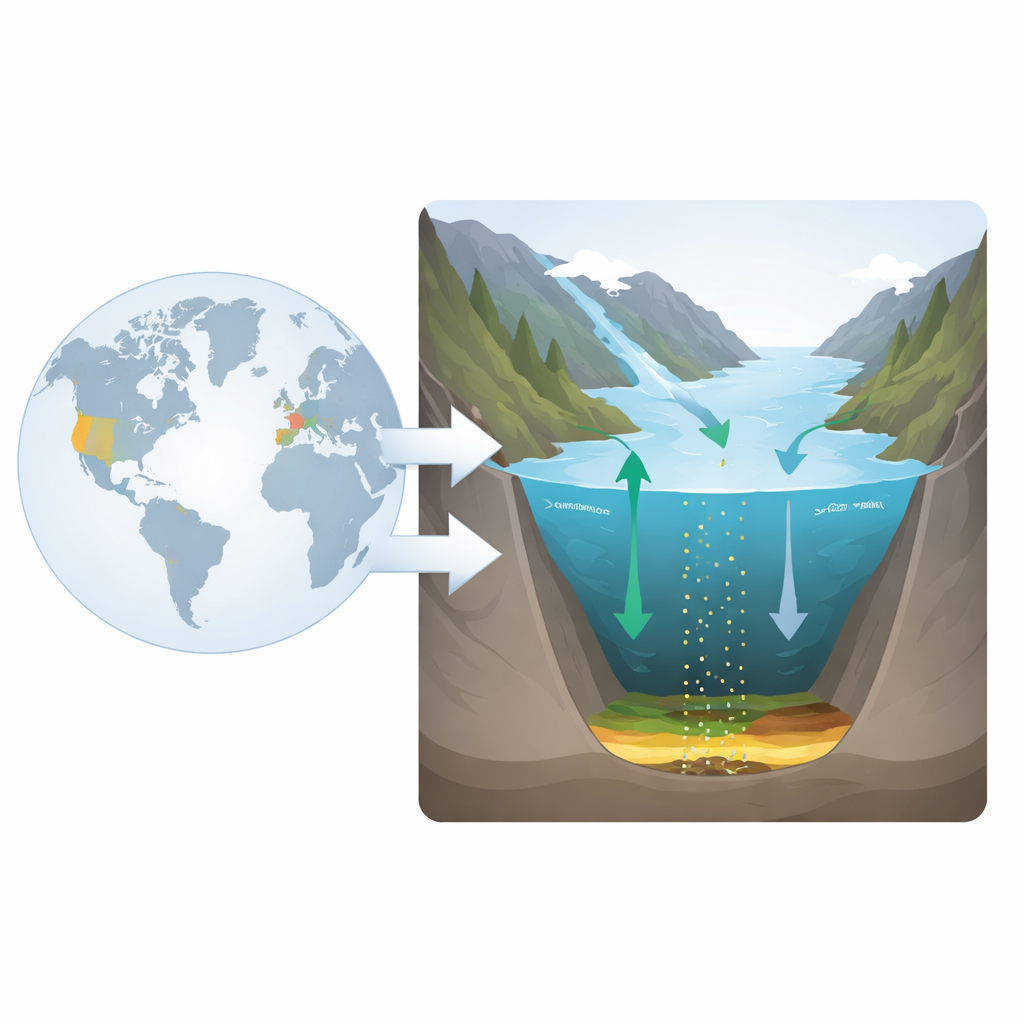
Nitrogen is a basic ingredient of life, limiting how much microscopic algae can grow in the sea. When there is too much nitrogen from farming, sewage, or other human sources, coastal waters become overloaded, fueling algal blooms and oxygen loss. When there is too little, marine life and the ocean’s ability to store carbon can falter. Fjords, despite covering less than one‑thousandth of the global ocean surface, already store about 11% of the ocean’s buried organic carbon. The key question the researchers ask is: do fjords also act as major long‑term storage vaults for nitrogen itself, or does most of it escape back to the atmosphere as gas?
Measuring a global nitrogen vault
To answer this, the team combined new measurements from five fjords in Sweden and Iceland with published data from 74 other fjords worldwide. They focused on two main fates for nitrogen arriving in fjords with river water, glacial melt, and ocean currents. One fate is burial: nitrogen locked into sinking particles that become part of the seabed for centuries or longer. The other is microbial “leakage,” where microbes in low‑oxygen environments convert dissolved nitrogen compounds into harmless nitrogen gas that bubbles away. Using sediment records, chemical analyses, and statistical upscaling that corrects for patchy sampling, the authors estimated how much nitrogen each pathway removes on a global scale.
Fjords as hotspots of buried nitrogen
The results show that fjords are exceptional sinks for nitrogen. On average, each square meter of fjord floor buries more nitrogen each year than most other marine settings and even most lakes. Scaling these rates up suggests that fjords, though tiny in area, are responsible for as much as 18% of all nitrogen burial in the ocean. High‑latitude fjords in places such as Greenland, the Canadian Arctic, and Svalbard are especially effective, thanks to heavy inputs of sediment and nutrient‑rich particles from glaciers and erosion. These fast‑sinking materials shorten the time organic matter spends in oxygenated water, allowing more of its nitrogen to be preserved in the mud rather than broken down and released.
When oxygen runs low, the balance shifts
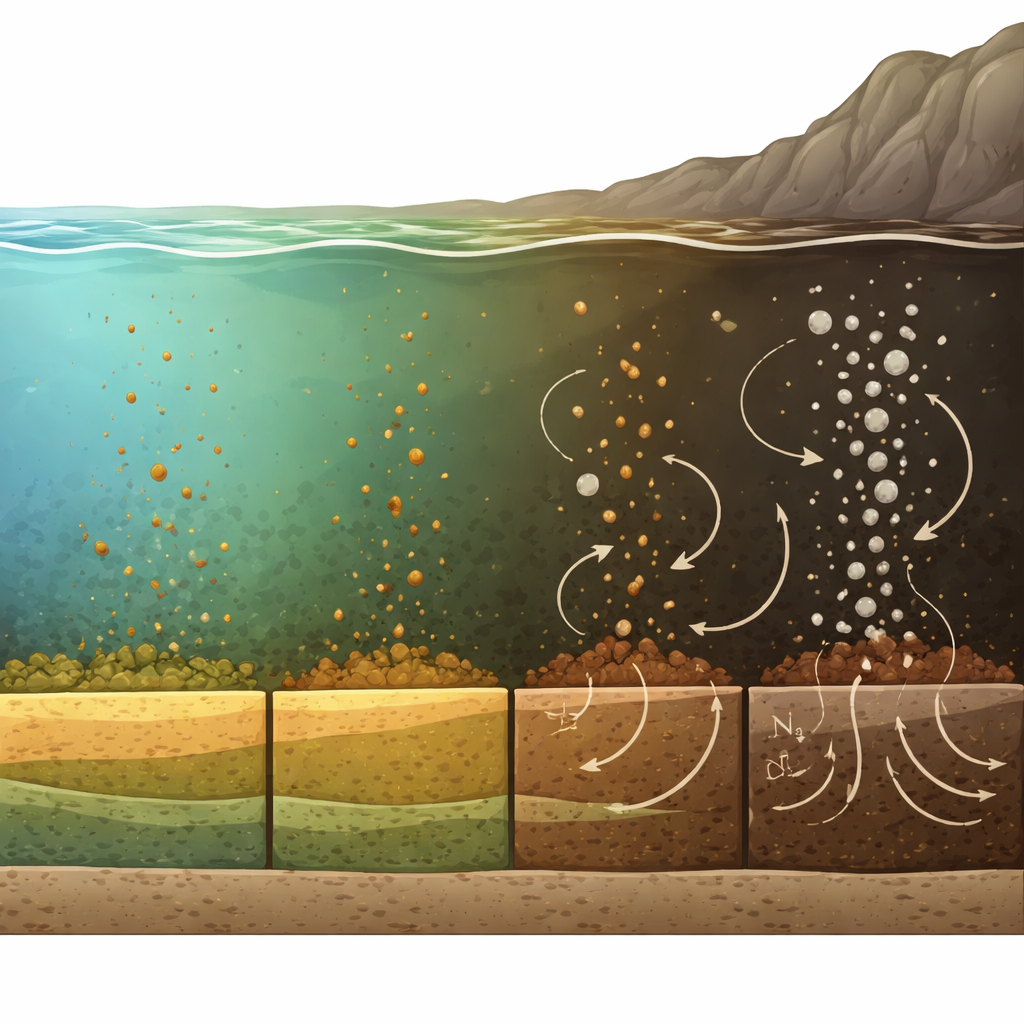
The study also shows that the way fjords remove nitrogen depends strongly on how much oxygen they contain. In most well‑oxygenated fjords, long‑term burial in sediments accounts for roughly two‑thirds of total nitrogen loss, outpacing microbial conversion to gas. But in fjords where deep waters have become severely oxygen‑poor or fully anoxic, the situation flips. There, rates of gas‑forming microbial processes can be up to nine times higher than in oxygen‑rich fjords, sometimes far exceeding burial. As deep waters lose oxygen, the zone where microbes strip oxygen from nitrate expands from a thin layer in the seabed into a thick band of water, greatly boosting nitrogen gas production.
Warming seas and the future of nitrogen
Climate change and human nutrient pollution are likely to reshape this delicate balance. Warming enhances water‑column layering and can starve deep fjord basins of oxygen, while increased nutrient inputs and changing ocean currents fuel more primary production. Together, these trends promote both more burial—through greater delivery of fresh organic particles—and more microbial nitrogen loss, especially where deep waters tip into hypoxia or anoxia. The authors conclude that fjords currently serve as powerful, climate‑friendly filters that lock away excess nitrogen with little greenhouse‑gas side effect. However, as warming and deoxygenation spread, microbial pathways that also generate nitrous oxide, a potent greenhouse gas, may claim a larger share of nitrogen removal. Managing nutrient loads to coastal waters will be critical to keep fjords functioning as effective, low‑impact nitrogen sinks in a changing ocean.
Citation: Cheung, H.L.S., Levin, L.S., Smeaton, C. et al. Long-term nitrogen burial exceeds denitrification in global fjords. Nat Commun 17, 3148 (2026). https://doi.org/10.1038/s41467-026-71116-5
Keywords: fjords, nitrogen cycle, marine sediments, deoxygenation, blue carbon