Clear Sky Science · en
Decomposition of cross-country socioeconomic inequality in mortality by 288 causes of death and 84 risk factors from 1990 to 2021
Why some countries lose more lives than others
Why do people in some countries die much earlier than those in others, even as global medicine and technology advance? This study tackles that question by looking not just at how many people die, but exactly which diseases and everyday hazards drive the gap between richer and poorer nations. Using three decades of global data, the researchers unpack how infections, chronic illnesses, and risks in our homes and bodies combine to create an uneven map of life and death—and how that map has changed from 1990 to 2021.
A long-lasting health gap between nations
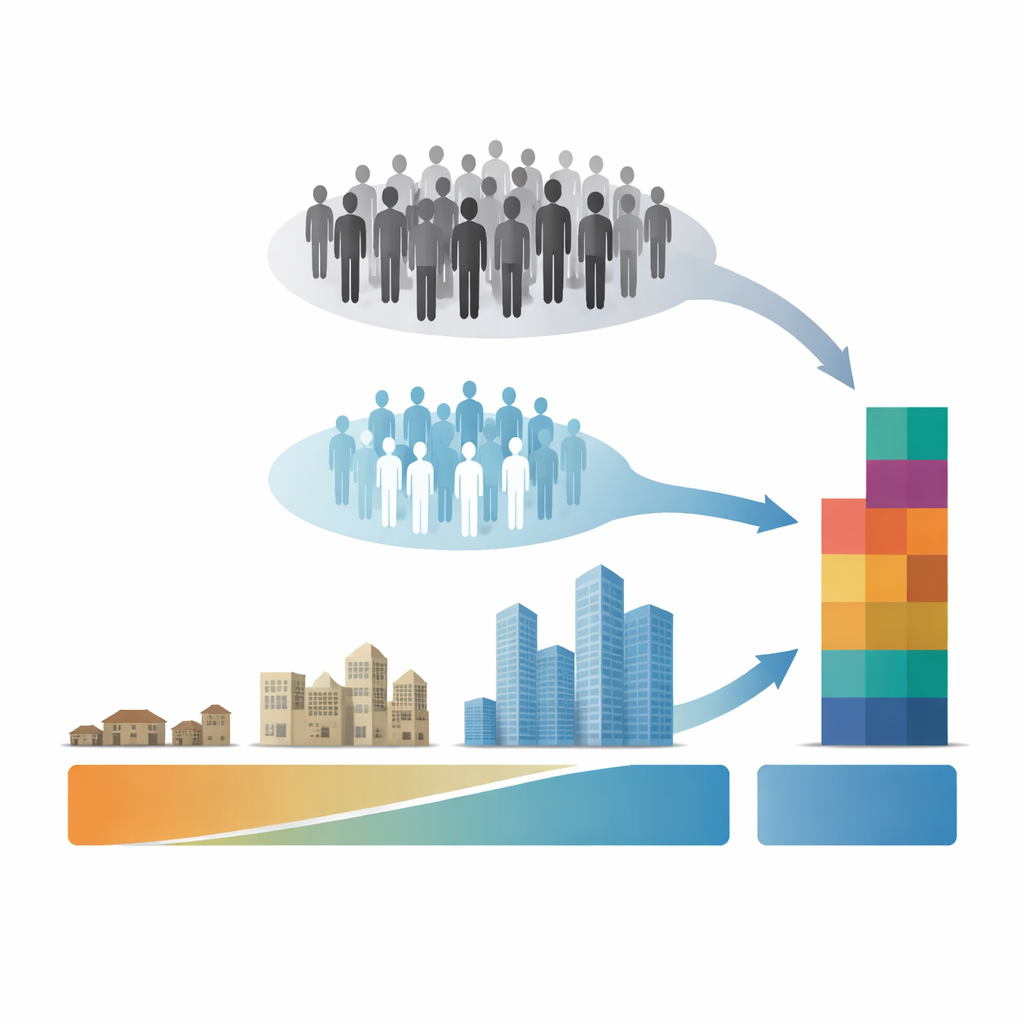
The authors show that, year after year, countries with lower social and economic development have higher death rates, even after accounting for age. They used a combined measure of national prosperity, education, and fertility to rank countries along a development scale, then examined how death rates changed with each small step up that scale. Across 204 countries and territories, a clear pattern emerged: as socioeconomic conditions improved, deaths per 100,000 people consistently fell. Inequality narrowed slightly from the 1990s through the 2010s, but the COVID-19 pandemic reversed some of that progress, making 2021 the year with the largest gap in mortality between better-off and worse-off countries.
From infections to chronic disease: how causes of death shifted
To understand what lies behind this gap, the team divided deaths into three broad groups: infectious and related conditions (including maternal, newborn, and nutritional problems), long-lasting non-communicable diseases such as heart disease and cancer, and injuries. In 1990, infections and related causes accounted for more than four-fifths of the inequality in death rates between countries, reflecting the heavy burden of diarrheal disease, tuberculosis, malaria, and complications around birth in low-income settings. By 2021, that share had fallen to a little over half, thanks to advances in vaccination, nutrition, safe water, and maternal and child health. Yet these causes still dominate the inequality picture, with COVID-19 appearing as the single largest contributor to the mortality gap in 2021. At the same time, chronic diseases, especially cardiovascular conditions like stroke, have grown more important, rising from a minor contributor in 1990 to a major driver of unequal death rates in recent years.
Hidden hazards in air, water, behavior, and the body
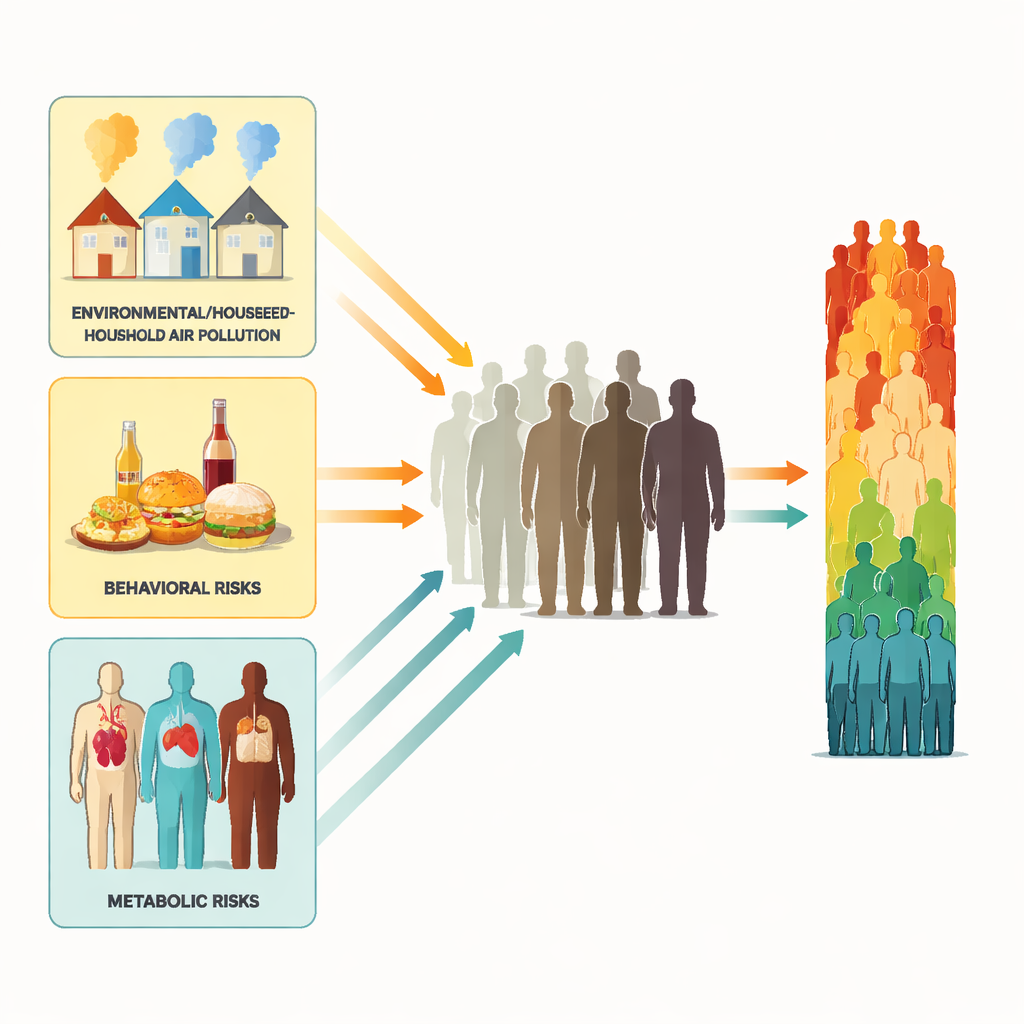
The study also unpacks the role of 84 different risk factors, ranging from polluted air to high blood pressure. Overall, these risks explained roughly half of the inequality in mortality, though their mix changed over time. Environmental and job-related dangers—especially breathing dirty air inside homes that burn coal, wood, or other solid fuels—were the single largest contributors throughout the study period. Risky behaviors linked to poor diet, unsafe sex, and child and maternal malnutrition also played a key role, but their influence shrank as clean water, sanitation, and nutrition improved in many countries. In contrast, risks that arise within the body, such as high blood pressure and high blood sugar, became steadily more important. By 2021, household air pollution from solid fuels was the top single risk factor driving inequality, followed closely by high blood pressure, unsafe sex, high blood sugar, and unsafe water sources.
A double burden for less developed countries
These patterns create a troubling picture for less developed nations. Many are now facing a “double burden” of disease: they still struggle with infections and early-life conditions that have largely faded in richer countries, while also seeing rapid growth in chronic illnesses linked to aging, diet, and urban lifestyles. Because the countries at the lowest end of the development scale have changed little over three decades, they are being left behind on both fronts. The authors argue that health systems in these settings must be strengthened to handle outbreaks like COVID-19 while also scaling up prevention, early diagnosis, and treatment for heart disease, diabetes, and other long-term conditions.
What this means for closing the life-and-death divide
For a general reader, the takeaway is clear: where you live still powerfully shapes your chances of dying young, but the reasons why are evolving. The world has made real progress against infections, unsafe water, and child malnutrition, yet these remain major killers in poorer countries. At the same time, chronic diseases and metabolic problems, once associated mainly with wealthier societies, are now major sources of unfair loss of life globally. The study suggests that policies to speed the switch to clean household energy, expand basic health services, and promote healthier lifestyles—especially controlling blood pressure and blood sugar—could significantly narrow the gap in mortality between rich and poor nations. In short, targeted action on a small set of diseases and risks could move the world closer to the ideal that a longer, healthier life should not depend on a country’s bank balance.
Citation: Peng, D., Xu, R., Hales, S. et al. Decomposition of cross-country socioeconomic inequality in mortality by 288 causes of death and 84 risk factors from 1990 to 2021. Nat Commun 17, 2586 (2026). https://doi.org/10.1038/s41467-026-70877-3
Keywords: global health inequality, socioeconomic status and mortality, communicable and non-communicable diseases, household air pollution, cardiovascular risk factors