Clear Sky Science · en
Analysis of medieval burials from Ibiza reveals genetic and pathogenic diversity during the Islamic period
Island graves and hidden stories
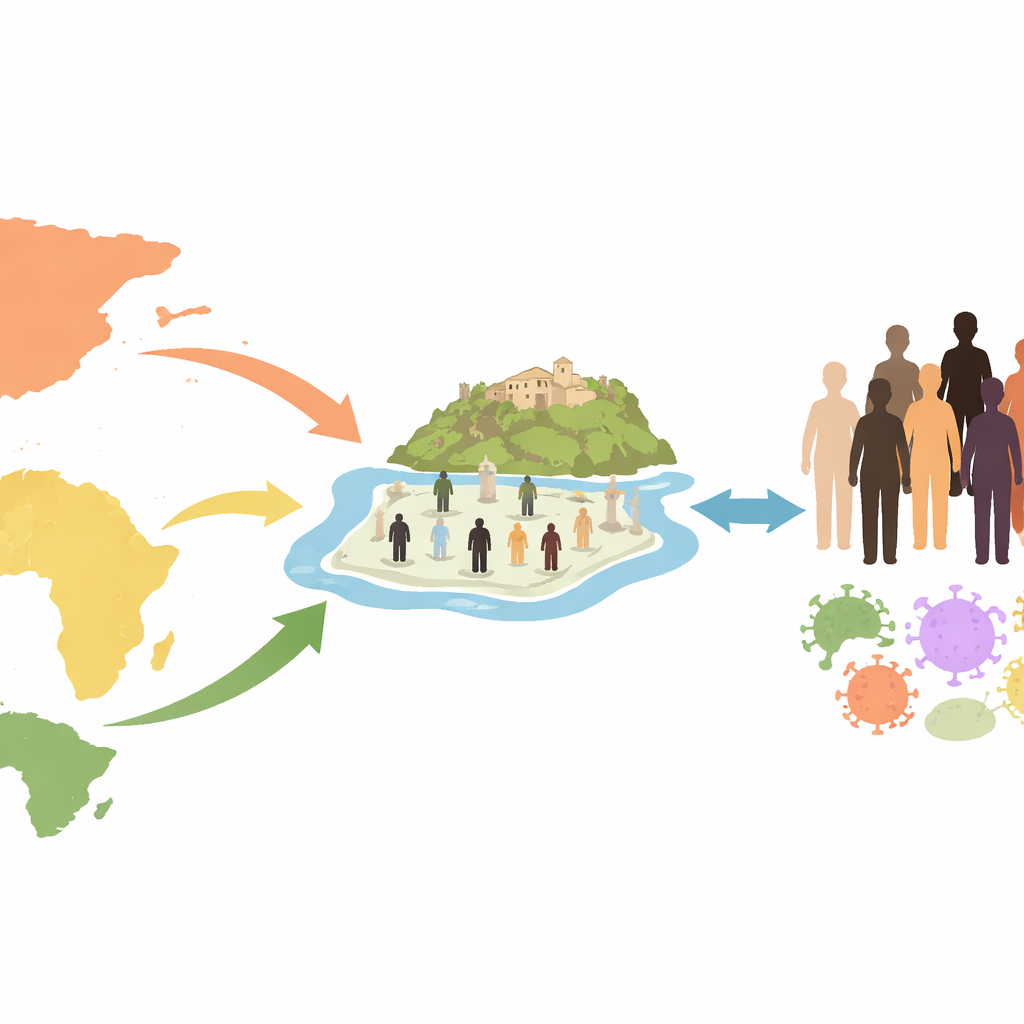
On a sunny holiday island famous for beaches and nightlife, an old cemetery has revealed a very different Ibiza: one shaped by conquest, migration, slavery, and disease over a thousand years ago. By reading DNA from skeletons buried in an Islamic-era graveyard, researchers have reconstructed who these people were, where they came from, and which infections they carried. Their results turn a small patch of ground into a window onto medieval Mediterranean life, connecting Ibiza to North Africa, the wider Islamic world, and even communities south of the Sahara.
An island at the crossroads
Ibiza became part of the Islamic realm in 902 CE, when it was conquered by forces from the Umayyad Emirate of Córdoba. Before that, the island seems to have been sparsely populated. New settlers, mainly Amazigh (often called Berber) groups from North Africa along with Arab elites and Islamised local Iberians, built a modest town and established a main Muslim cemetery known as the Maqbara of Madina Yabisa. Archaeological digs at one sector of this burial ground uncovered 125 simple graves, mostly following Islamic customs: bodies laid on their right side, facing toward Mecca, with almost no grave goods. From these, the team was allowed to sample 30 individuals, and ultimately recovered enough DNA from 13 of them, dated to roughly 950–1150 CE.
Mixed roots in a new community
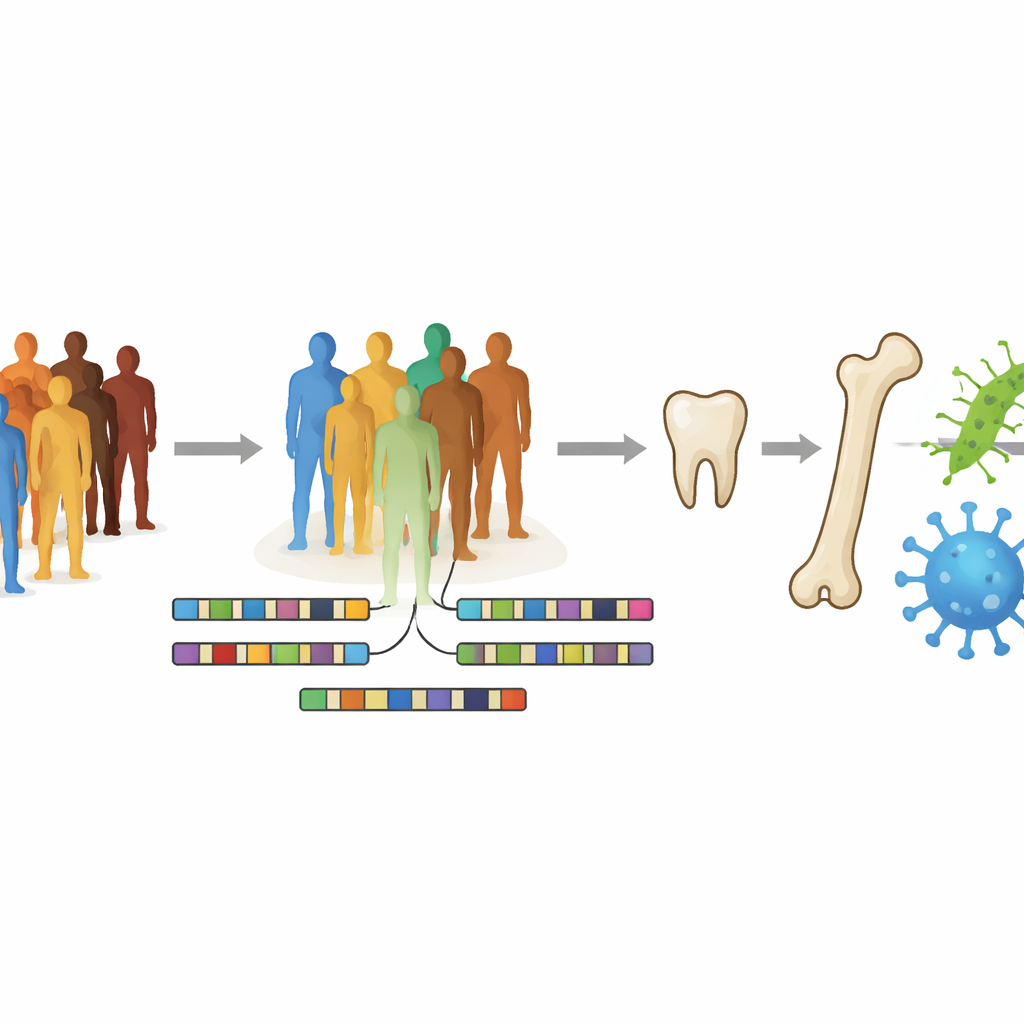
Using whole-genome sequencing and sophisticated comparison with thousands of present-day and ancient genomes, the scientists showed that the buried people formed a genetic mosaic. Most carried a blend of ancestry from Europe and North Africa, with each person’s mix slightly different—some predominantly European, others strongly North African. By looking at how long uninterrupted stretches of each ancestry ran along the chromosomes, the team could estimate when mixing occurred. For most individuals, North African and Iberian lineages appear to have blended only two to eight generations before they died, placing the main mixing event around the late 9th to early 10th century, shortly before or around the Islamic conquest of Ibiza. A few individuals had very little North African ancestry but were buried in the Muslim cemetery, suggesting that religious and cultural change sometimes moved faster than genes.
Long-distance links across the Sahara
Two men in the cemetery stood out. Their DNA showed that they were not just partially influenced by Sub-Saharan Africa but were themselves recent arrivals, or children of arrivals, from far to the south. One man’s closest genetic matches today live in the Senegambia region near the Atlantic coast, while the other is closest to peoples in southern Chad, near the central Sahel. Historical Arabic sources describe trans-Saharan routes that carried both enslaved people and military recruits from these regions to North Africa and then on to Iberia, especially under the Almoravid dynasty in the 11th and 12th centuries. The radiocarbon dates of these two individuals place them in that second wave of migration. Their skeletons therefore provide rare, direct evidence that these far-flung networks reached as far as Ibiza.
Traces of old infections
The same DNA extracts that reveal ancestry also capture fragments of ancient microbes and viruses. By carefully sifting through this genetic debris, the researchers found signs of several infections. One individual carried DNA from Mycobacterium leprae, the bacterium that causes leprosy, adding Ibiza to the growing map of medieval European leprosy cases. Others showed evidence of hepatitis B virus and human parvovirus B19, common blood-borne infections that can persist for years, as well as the bacterium Streptococcus pneumoniae and an oral microbe linked to gum disease. Interestingly, the man with leprosy does not appear to have been treated differently in death—his grave follows the same respectful pattern as others—hinting that people with this feared disease were not always pushed to the margins of society.
What these graves tell us today
Taken together, the genomes and pathogen traces from this small cemetery paint a vivid picture of medieval Ibiza as a busy node in a much larger world. The people buried here carry within their DNA the imprint of rapid mixing between Iberians and North Africans after the island’s conquest, as well as the footsteps of men who had travelled—voluntarily or under coercion—from Senegambia and southern Chad across the Sahara. At the same time, the microscopic remains of leprosy and common viral infections capture the health challenges they faced. In a period where written records are scarce, these 13 individuals provide a rare, high-resolution snapshot of everyday lives at the edge of the Islamic Mediterranean, showing how empire, trade, war, and disease all left lasting marks on human bodies and histories.
Citation: Rodríguez-Varela, R., Pochon, Z., Mas-Sandoval, A. et al. Analysis of medieval burials from Ibiza reveals genetic and pathogenic diversity during the Islamic period. Nat Commun 17, 2703 (2026). https://doi.org/10.1038/s41467-026-70615-9
Keywords: ancient DNA, medieval Ibiza, North African ancestry, trans-Saharan networks, ancient pathogens