Clear Sky Science · en
Global patterns and drivers of soil microbial nitrogen and phosphorus use efficiency
Why tiny soil workers matter
Hidden in every handful of soil is an army of microbes that quietly help decide how much food our ecosystems can produce and how much carbon remains locked in the ground. These microscopic workers must stretch scarce supplies of the key nutrients nitrogen and phosphorus, much like a household stretching a tight budget. This study asks a deceptively simple question at the global scale: how efficiently do soil microbes use these nutrients, and what controls that efficiency from the tropics to the tundra?
Measuring how thrifty microbes are
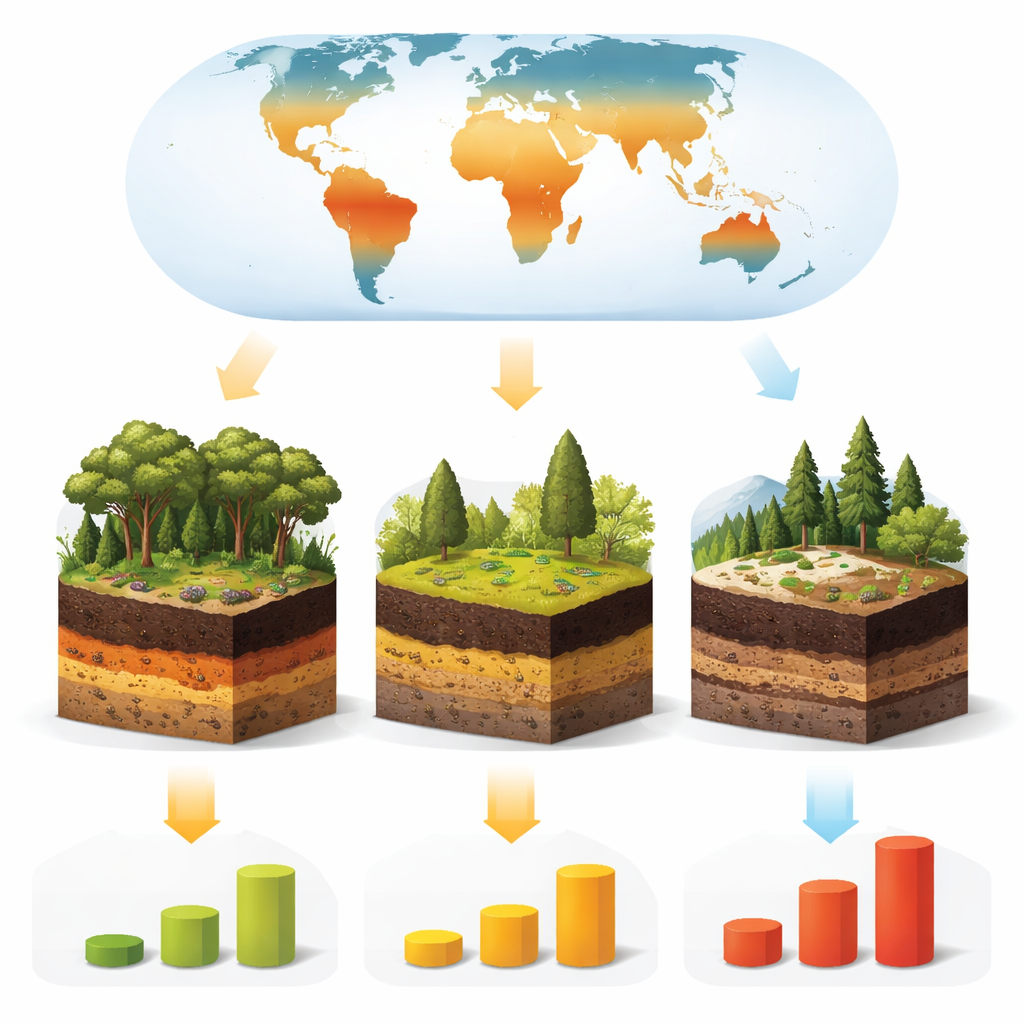
Instead of tracking every molecule inside microbes, the researchers used a clever shortcut. Microbes release enzymes into the soil to break apart dead plants and other organic matter, freeing nitrogen and phosphorus they can use. By compiling data from 213 studies around the world on these enzyme activities, along with information on soil chemistry, climate, and vegetation, the team estimated how much of the captured nitrogen and phosphorus microbes tend to invest in growth versus spending it on making more enzymes. They call these fractions nitrogen use efficiency and phosphorus use efficiency, and they calculated them for more than 2000 and 3400 soil samples, respectively.
Global map of microbial nutrient budgets
When the team pieced together this global dataset and applied machine-learning models, a striking pattern emerged. On average, soil microbes keep about 60% of the nitrogen they capture for building biomass, but only about 35% of the phosphorus. Nitrogen use efficiency is highest in warm tropical and subtropical regions and drops steadily toward colder boreal forests and tundra, where microbes appear to “spend” more nitrogen on enzyme production to mine stubborn organic matter. In contrast, phosphorus use efficiency shows no simple north–south trend. Instead, it forms scattered hotspots, such as certain North American forests, suggesting that phosphorus thrift is driven more by local soil conditions than by broad climate zones.
The central role of soil carbon
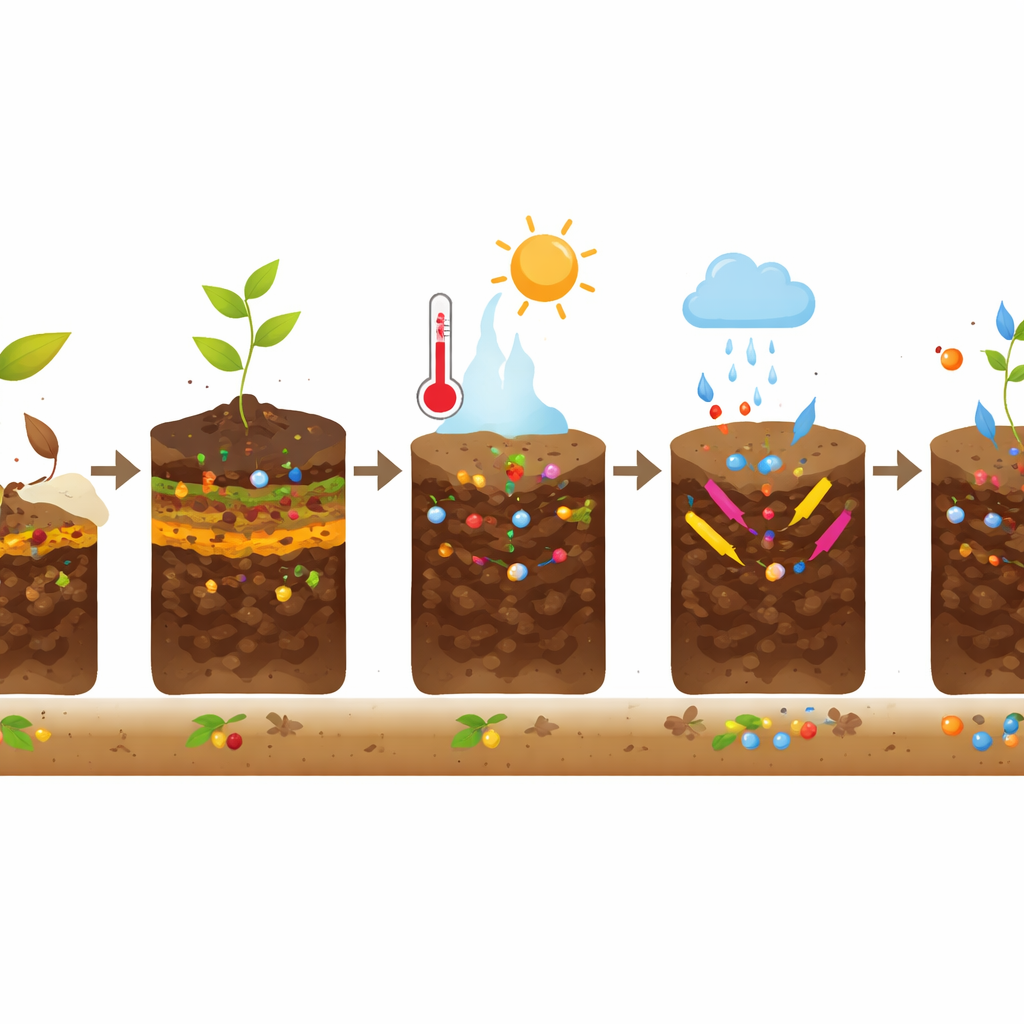
Across all climates and biomes, one factor stood out above the rest: the amount of organic carbon in the soil. Soils richer in organic carbon tended to support microbes that use both nitrogen and phosphorus more efficiently, especially in places that start out carbon-poor. With more carbon energy at hand, microbes can invest in enzymes and still retain more nutrients for growth, reducing losses back to the environment. However, this positive effect levels off at moderate carbon levels, hinting at a shift from energy shortage to true nutrient shortage. Climate still matters—temperature and moisture influence how fast microbes can grow and how stressed they are—but these effects are layered on top of the basic fuel supply provided by soil carbon.
Forests, grasslands, and future change
Forests generally showed higher microbial nutrient use efficiency than grasslands in the same climate zones. Forest soils tend to contain tougher, carbon‑rich litter that forces microbes to work harder to obtain nitrogen and phosphorus, encouraging them to conserve these nutrients once acquired. That thrifty behavior may help forest soils hold onto nutrients and carbon even as atmospheric carbon dioxide and temperatures rise. Grasslands, with lower baseline nutrient use efficiency, may be more prone to losing nitrogen and phosphorus during future warming-driven pulses of decomposition. At the same time, the study highlights uncertainties: the enzyme-based approach captures how microbes invest in nutrient acquisition rather than exact process rates, some regions—especially tropical and boreal zones—remain sparsely sampled, and plant–microbe competition for nutrients was not explicitly included.
What this means for soils and climate
In everyday terms, this work provides a first global picture of how good soil microbes are at “stretching” nitrogen and phosphorus, and why that thriftiness varies from place to place. It shows that carbon-rich soils encourage more efficient nutrient use, that cold northern ecosystems push microbes to spend more nitrogen on unlocking frozen organic matter, and that phosphorus use is governed by complex, highly local controls. These insights can help improve computer models that predict how much carbon soils will store or release under climate and land-use change, and they can guide land management aimed at keeping soils fertile and resilient in a warming world.
Citation: Gao, D., Kuzyakov, Y., Delgado-Baquerizo, M. et al. Global patterns and drivers of soil microbial nitrogen and phosphorus use efficiency. Nat Commun 17, 2576 (2026). https://doi.org/10.1038/s41467-026-70602-0
Keywords: soil microbes, nutrient cycling, soil organic carbon, nitrogen efficiency, phosphorus efficiency