Clear Sky Science · en
International testing and refinement of AI algorithms predicting acute leukemia subtypes from routine laboratory data
Why this matters for patients everywhere
For many people with acute leukemia, the clock starts ticking long before they ever see a specialist. In parts of the world where advanced tests are scarce or slow, simply figuring out what kind of leukemia a patient has can take days—time they may not have. This study explores whether an artificial intelligence (AI) program, using only the routine blood tests almost every hospital already performs, can quickly suggest the likely leukemia subtype and help doctors move faster, especially in resource-limited settings.
Turning everyday blood tests into an early warning
The researchers brought together records from 6206 patients with acute leukemia treated at 20 centers in 16 countries, spanning all inhabited continents and a wide range of income levels. Instead of relying on specialized scans or genetic tests, they fed an existing AI model with standard laboratory measurements taken at diagnosis, such as blood counts, clotting measures, and basic chemistry results. The goal was to see whether a tool first built on French data could still recognize three major leukemia types—acute myeloid leukemia (AML), acute promyelocytic leukemia (APL), and acute lymphoblastic leukemia (ALL)—in very different hospitals, populations, and age groups. 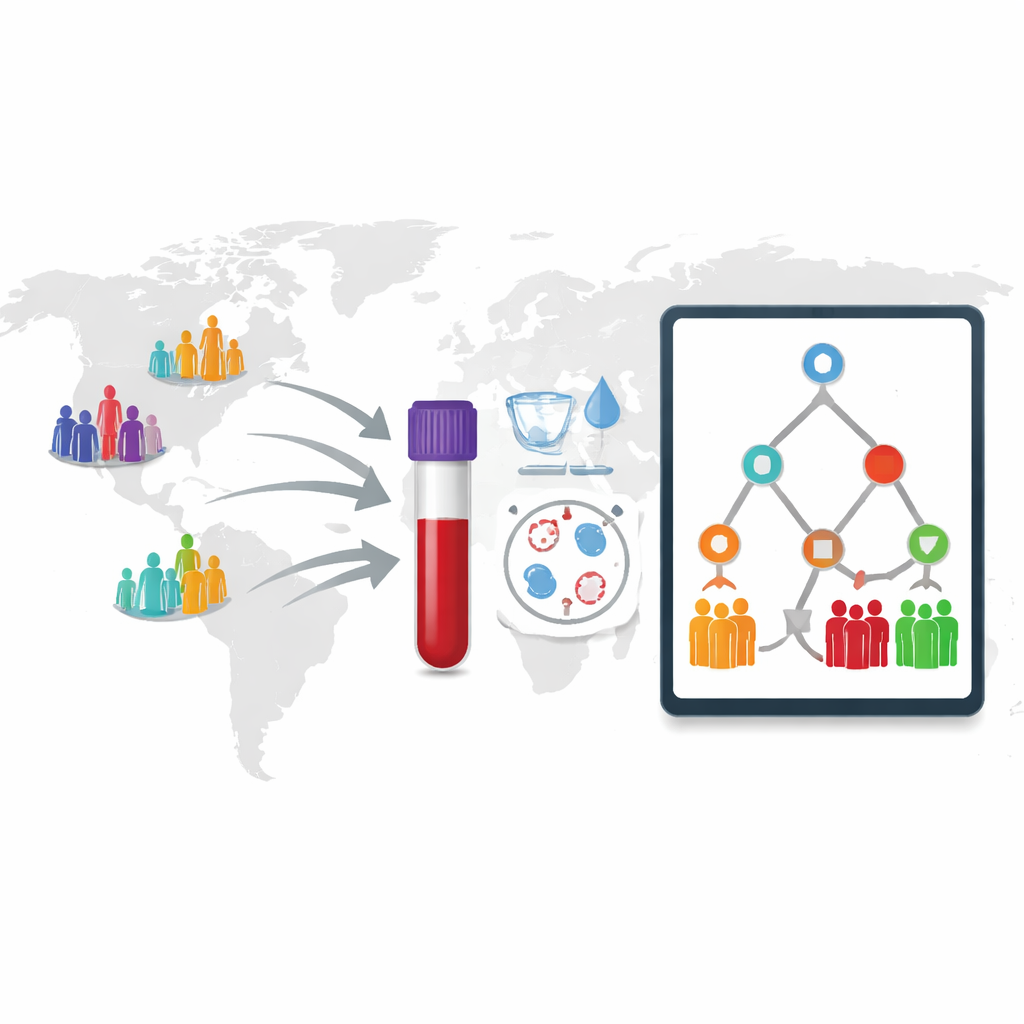
Strong signals, but gaps in who benefits
When applied broadly to adults, the AI model performed well overall: it was especially accurate for AML and APL, two forms where early recognition can strongly influence survival. However, the original version came with a strict internal “confidence” rule that only reported a result when it was very sure. This made its numbers look excellent on paper, but it also meant that in practice up to more than 90% of patients would receive no AI suggestion at all. Even without that rule, performance varied widely between centers and leukemia types, reflecting differences in patient ages, local disease patterns, and even which laboratory machines were used.
Teaching the system to handle messy real-world data
To make the tool more useful in everyday practice, the team focused on why it failed in some cases. They compared the underlying blood-test patterns of correctly and incorrectly flagged patients and used statistical explanation methods to see which measurements mattered most. Certain clotting markers and red blood cell properties turned out to be especially important for distinguishing APL from other types, while white cell patterns helped separate AML from ALL. The researchers then added a new preprocessing step that screens for “outlier” patients whose lab results look very different from what the AI has seen before. By combining two such filters and removing only a modest fraction of cases, they boosted accuracy for difficult groups—particularly for patients who previously fell below the model’s confidence threshold—while still keeping predictions available for most people. 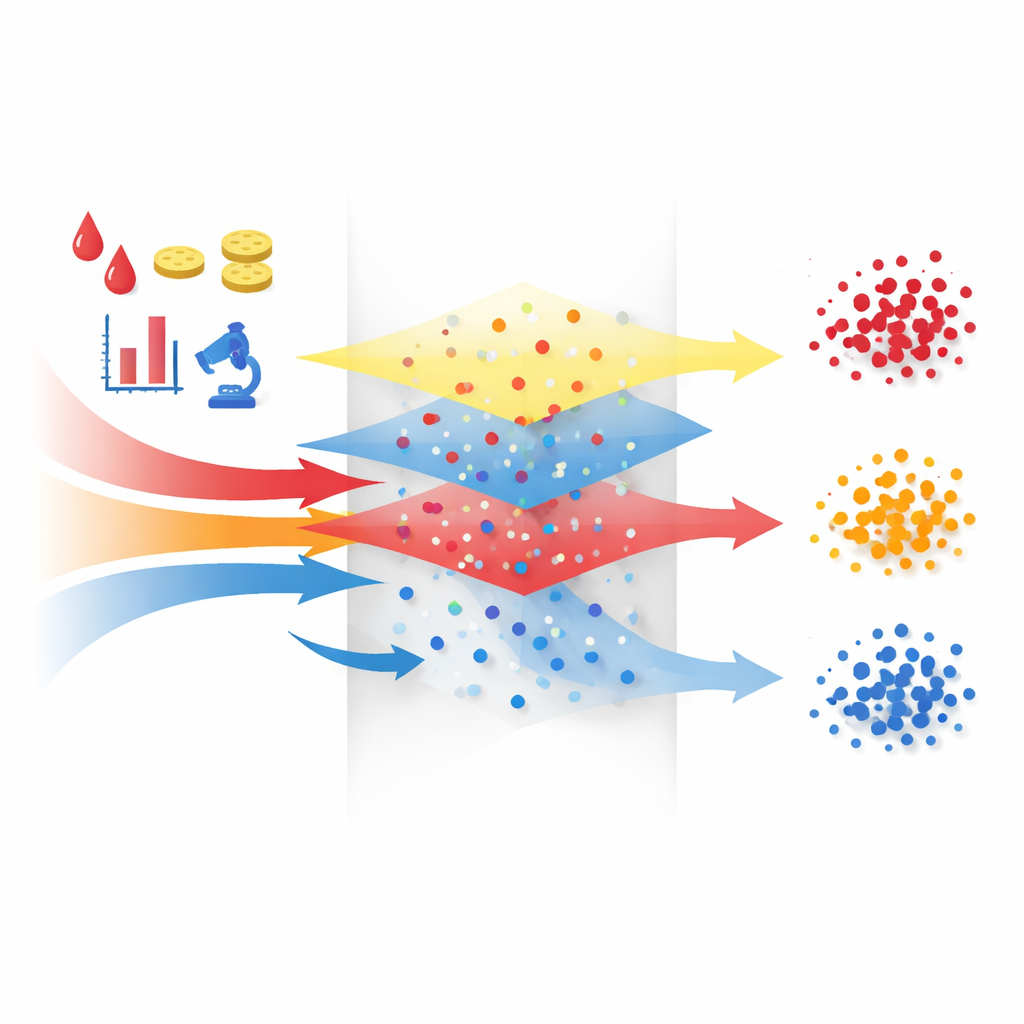
Adapting AI to children, not just adults
Children with leukemia often show different laboratory patterns from adults, and this turned out to matter greatly. When the adult-trained AI was run on 1746 pediatric patients, its performance dropped, especially for AML. The team showed that key blood values, such as clotting factors and cell counts, followed distinct ranges in younger patients. Rather than accepting weaker performance, they retrained the AI specifically on pediatric data, which sharply improved its ability to recognize childhood ALL and AML while maintaining strong results for the rarer pediatric cases of APL. This highlights an important lesson: AI systems meant to support diagnosis must be tailored to the populations they are intended to serve.
Toward faster and fairer leukemia care
The authors emphasize that this AI tool does not replace the gold-standard procedures—microscopic examination, flow cytometry, and genetic testing—that doctors rely on to confirm leukemia type and choose precise therapies. Instead, it offers a way to flag probable leukemia subtypes quickly using lab tests that are already widely available, even in many low- and middle-income countries. By refining the model to handle diverse hospitals, filtering out unreliable predictions, and creating a pediatric version, the study shows how AI could help shorten the time to specialist care and life-saving treatment. The work lays the groundwork for future trials to test whether such decision support can actually lower early death rates, bringing the benefits of modern leukemia care a little closer to patients regardless of where they live.
Citation: Turki, A.T., Fan, Y., Hernández-Sánchez, A. et al. International testing and refinement of AI algorithms predicting acute leukemia subtypes from routine laboratory data. Nat Commun 17, 2649 (2026). https://doi.org/10.1038/s41467-026-70584-z
Keywords: acute leukemia, artificial intelligence, diagnostic support, health equity, laboratory tests