Clear Sky Science · en
Trisomy 21 Drives ADARB1 Overexpression and Premature RNA Recoding in the Developing Fetal Brain
How an Extra Chromosome May Rewire the Developing Brain
Down syndrome is caused by an extra copy of chromosome 21, but how this extra DNA changes the developing brain has remained mysterious. This study looks inside fetal brains to see how gene activity and RNA "fine-tuning" are altered before birth. The work focuses on a powerful editor of RNA messages, called ADARB1, and shows that its overactivity may push brain cells to mature their communication systems too early, potentially helping to explain later learning and thinking differences.
Peeking Into the Fetal Brain
The researchers analyzed tissue from the prefrontal cortex and hippocampus—two regions critical for memory, planning, and learning—from fetuses with trisomy 21 and from typical controls, all between 13 and 22 weeks after conception, a key window for brain wiring. Using deep RNA sequencing, they measured which genes were turned on or off and how RNA molecules were chemically edited. They found widespread disruption of gene activity in trisomy 21, with many genes on chromosome 21 more active than normal, as expected from having an extra copy. But the effects spread far beyond that chromosome, altering networks involved in energy use, protein production, and immune and synaptic functions. 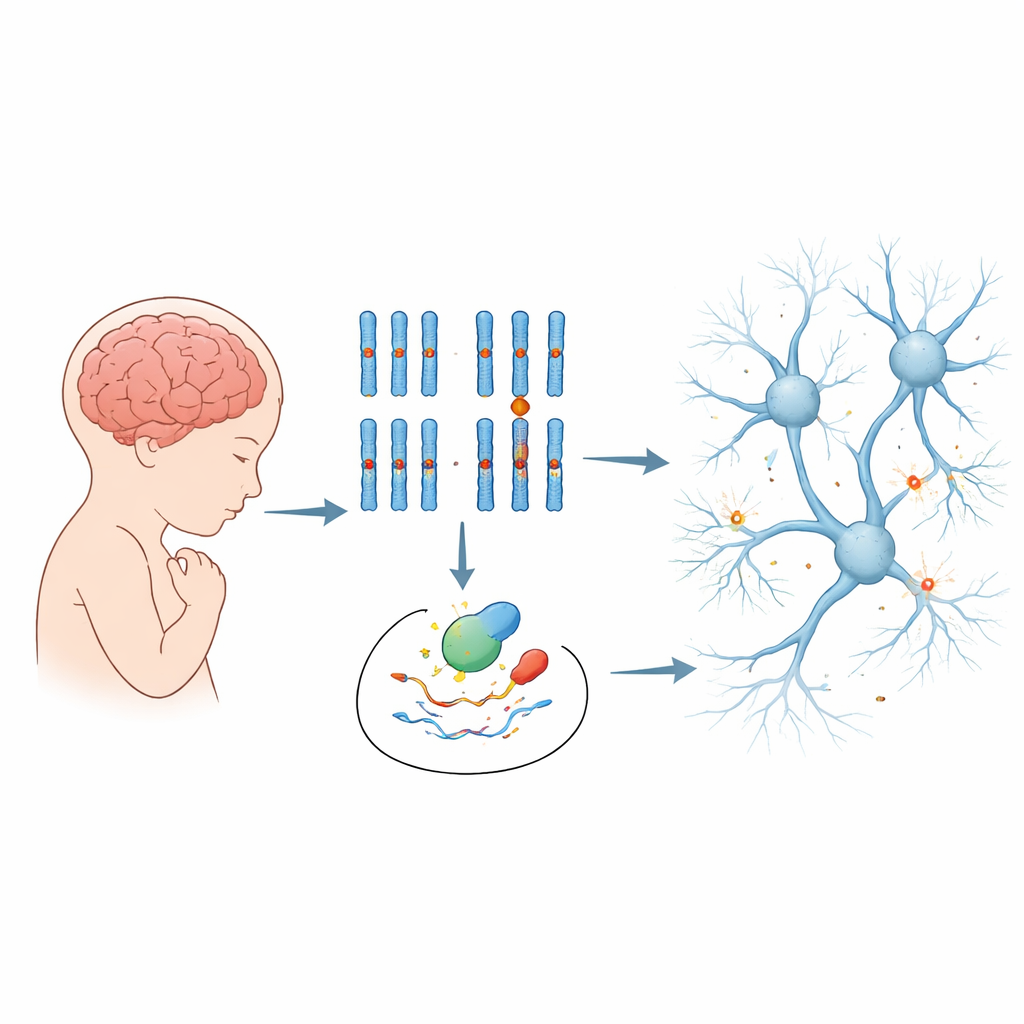
Time-Shifted Growth Programs
One striking pattern was a kind of developmental jet lag. Genes that are usually most active before birth were dialed down, while genes that normally turn on after birth were switched on early. This shift appeared in both studied brain regions and suggested that key programs guiding when cells grow, divide, and form connections are out of sync in trisomy 21. Gene groups tied to mitochondrial function (the cell’s power plants), protein-making machinery, and RNA handling were generally suppressed, whereas those linked to electrical signaling and the brain’s supporting matrix were boosted. In the hippocampus especially, the normal coordinated behavior of gene networks that support synaptic plasticity, chromatin structure, metabolism, and immune responses was notably disturbed, hinting at region-specific vulnerability.
An Overactive RNA Editor
The centerpiece of the study is ADARB1, a gene on chromosome 21 that encodes an enzyme responsible for adenosine-to-inosine (A-to-I) RNA editing. This chemical editing can subtly change the sequence and behavior of proteins or tune how long RNA messages last. In fetal brains with trisomy 21, ADARB1 levels were clearly higher, while related editing enzymes did not change. A global measure of editing within repetitive RNA elements was also increased, and statistical modeling pointed to ADARB1 as the main driver of this rise. When the team mapped individual editing sites across the genome, most changes in trisomy 21 were increases in editing, particularly in the tail regions (3′UTRs) of RNAs, where editing can weaken binding by regulatory microRNAs and destabilize transcripts.
Premature Tuning of Synaptic Proteins
Most crucially, the study identified a set of classic "recoding" sites—editing events that change the amino-acid sequence of proteins—within genes that build glutamate and GABA receptors, key gatekeepers of excitatory and inhibitory brain signaling. In trisomy 21 fetuses, receptors encoded by genes such as GRIK2, GRIA2, GRIA3, and GABRA3 showed higher-than-normal editing at sites known to influence ion flow and receptor kinetics. By comparing these levels to a large reference dataset of typical human brain development, the researchers showed that fetuses with trisomy 21 had editing patterns that resembled those normally seen later in life. In other words, the RNA-level tuning of these receptors appeared prematurely advanced. A meta-analysis across many independent cell and tissue datasets confirmed consistent overexpression of ADARB1 and over-editing at numerous sites, especially in 3′UTRs and at a key site in GRIA3 that affects how fast certain receptors recover from activation. 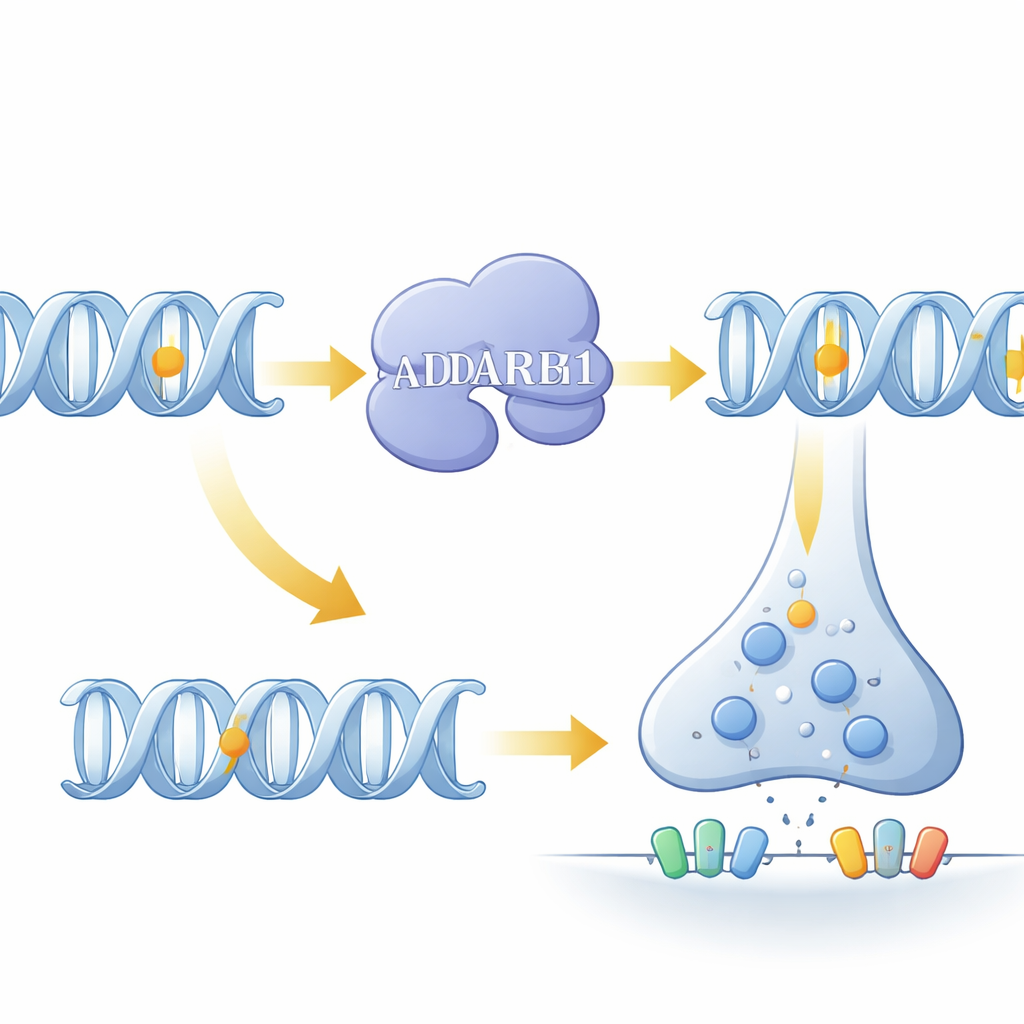
Broader Immune and Tissue Context
Because trisomy 21 also strongly affects immune pathways, the team examined blood samples from hundreds of individuals. There, ADARB1 was again higher in trisomy 21, but global RNA editing rose only in people whose immune cells showed strong interferon activation, and this blood editing was driven mainly by a different enzyme, ADAR1. In contrast, in the fetal brain, editing changes were tightly linked to ADARB1 and to neuron-enriched sites, not to shifts in cell composition or immune markers. This contrast underscores that the same extra chromosome can reshape RNA editing in distinct ways in the brain and the immune system.
What This Means for People With Down Syndrome
To a layperson, the main message is that an extra copy of chromosome 21 does more than simply turn some genes up or down: it also appears to overactivate a molecular "copy editor" of RNA, ADARB1, in the fetal brain. This overediting speeds up the normal fine-tuning of receptor proteins that control how brain cells talk to each other, potentially causing circuits to mature on a shifted timetable and altering the balance of excitation and inhibition. While the study does not prove cause and effect, it reveals RNA editing as a powerful and previously underappreciated layer of Down syndrome biology—one that might eventually be used to track early brain changes or guide therapies aimed at restoring more typical timing and strength of neural communication.
Citation: Breen, M.S., Yang, A., Wang, X. et al. Trisomy 21 Drives ADARB1 Overexpression and Premature RNA Recoding in the Developing Fetal Brain. Nat Commun 17, 2797 (2026). https://doi.org/10.1038/s41467-026-70217-5
Keywords: Down syndrome, fetal brain development, RNA editing, ADARB1, synaptic signaling