Clear Sky Science · en
Cell type-specific epigenetic regulatory circuitry of coronary artery disease loci
Why heart disease genes matter to all of us
Coronary artery disease, which can lead to heart attacks, remains the number one killer worldwide. We now know of hundreds of spots in our DNA that slightly raise or lower a person’s risk, but for most of them we still do not understand how they actually harm the heart. This study tackles that mystery by following the trail from genetic variation, through the molecular control switches inside different cell types, all the way to changes in blood vessels and fat tissue that influence heart disease.
From DNA clues to cell control switches
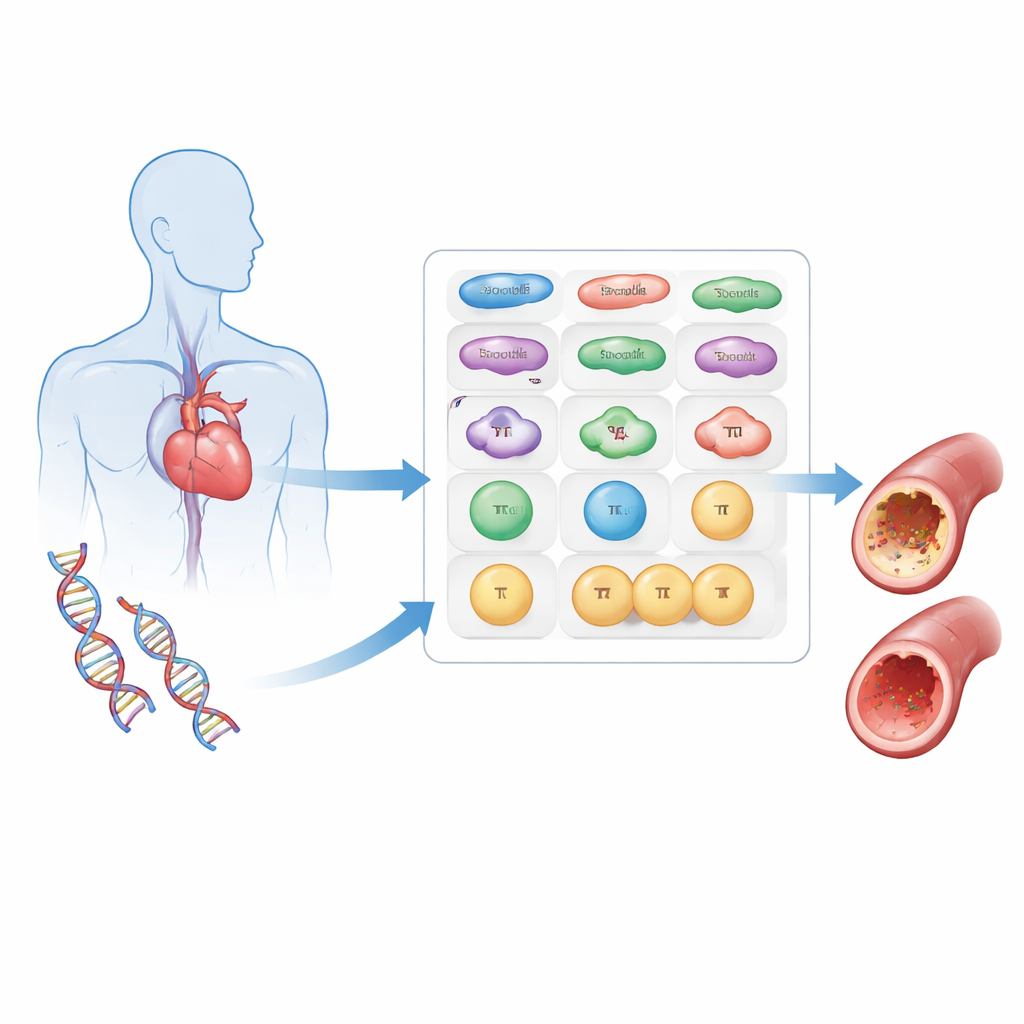
The researchers started with genetic data from more than one million people to map tens of thousands of DNA changes linked to coronary artery disease. Most of these changes do not alter proteins directly; instead they fall in the vast stretches of DNA that act as on–off switches for genes. To understand what these switches do, the team combined the genetic map with epigenetic information—chemical marks that show which parts of the genome are active—in 45 types of human cells relevant to heart disease, including blood vessel cells, immune cells, and fat cells. This allowed them to see where risk-linked DNA changes land in the real working landscape of the body.
Pinpointing risk genes and their cell types
Using two complementary statistical tools, the study linked risk variants to nearby genes and to the regulatory elements that control them. One method scanned entire gene regions for an excess of risk signals, while the other asked whether a variant would strengthen or weaken the docking sites where transcription factors—proteins that turn genes on or off—bind to DNA. Together, these approaches highlighted 1,580 candidate genes that may mediate coronary artery disease risk. Remarkably, nearly a quarter of these were non-coding RNA genes, which do not make proteins but can strongly influence how other genes behave. Many of the genes overlapped with earlier studies, but almost 800 were newly implicated, expanding the known catalog of heart disease genes.
Connecting genes to body traits and tissues
Finding candidate genes is only part of the challenge; the team also needed to show that these genes matter in real tissues and people. They examined gene activity in artery plaques from surgery patients and in multiple tissues from individuals with and without coronary artery disease. More than four out of five candidate genes were expressed differently in at least one tissue, suggesting they truly participate in disease processes. The researchers then performed a broad scan across many health traits—such as blood cholesterol, immune cell counts, body weight, and blood pressure—to see which traits shared the same genetic signals as the candidate genes. Over 1,100 genes, including many non-coding RNAs, lined up with risk factors like inflammation and lipid levels, especially in artery and fat tissue, showing how genetic risk is channeled through specific organs and pathways.
A deeper look at a protective RNA in fat cells
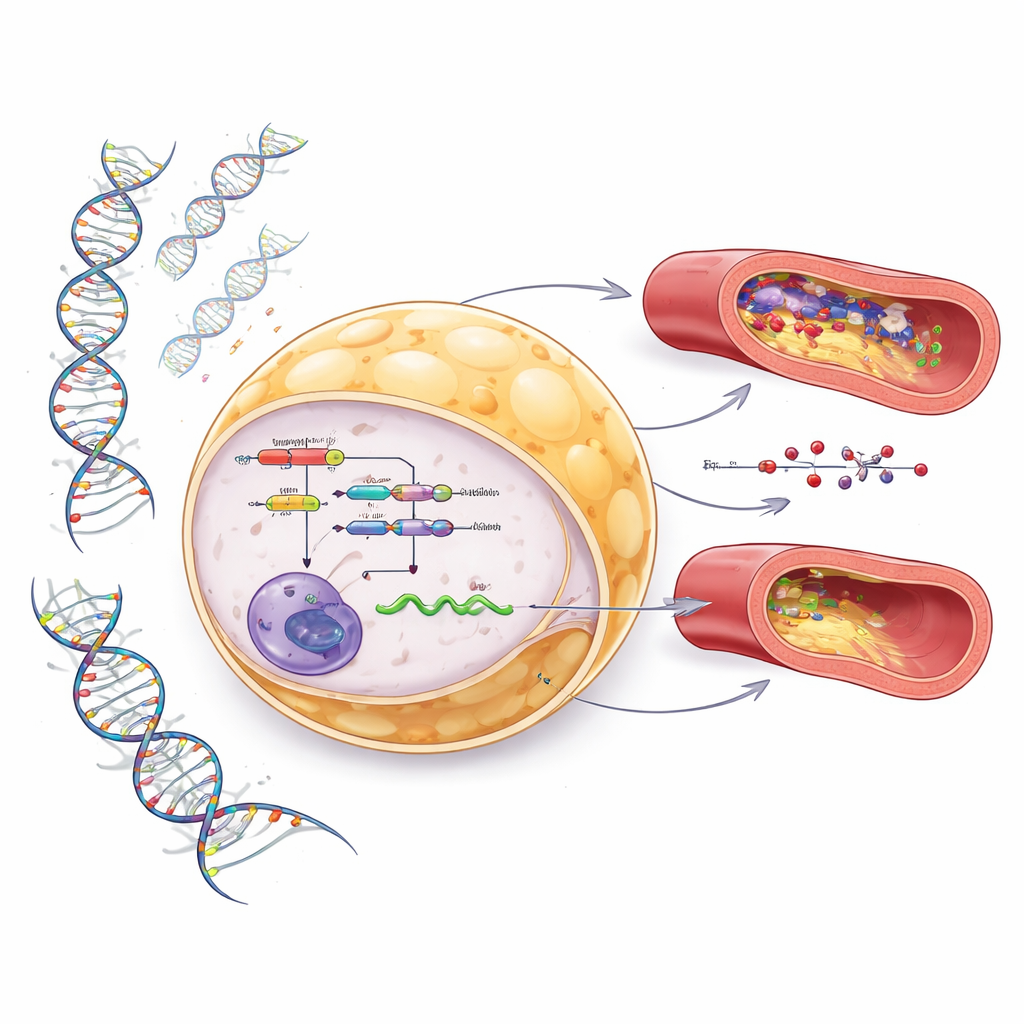
One long non-coding RNA, called IQCH-AS1, stood out because its genetic signals overlapped strongly with measures of obesity, such as body mass index and waist–hip ratio, specifically in fat tissue. To probe its role, the scientists turned to human preadipocytes—cells that can become fat cells—in the lab. When they used CRISPR gene editing to remove IQCH-AS1, these precursor cells multiplied less and matured poorly into fat-storing cells. The resulting fat cells stored fewer triglycerides and released more inflammatory molecules while making fewer anti-inflammatory ones. This imbalance could leave more fat circulating in the blood and promote chronic low-grade inflammation, both of which damage arteries. Consistent with this, IQCH-AS1 levels were lower in fat tissue from patients with atherosclerosis, and risk variants tied to higher body weight were associated with reduced IQCH-AS1 expression.
What this means for understanding and treating heart disease
By weaving together human genetics, cell-type-specific epigenetic maps, and functional experiments, this study shows that many heart disease risk variants act by subtly rewiring gene control in particular cells, rather than by breaking proteins outright. The work produces a broad but refined list of genes—both protein-coding and non-coding—that operate in key tissues like blood vessels, immune cells, and fat. The case study of IQCH-AS1 illustrates how a single non-coding RNA in fat cells can influence obesity-related traits and, in turn, coronary artery disease risk. For lay readers, the takeaway is that inherited risk for heart disease flows through intricate control circuits in specific cell types, offering a rich set of new targets for future diagnostics and therapies aimed at preventing heart attacks before they occur.
Citation: Hecker, D., Song, X., Baumgarten, N. et al. Cell type-specific epigenetic regulatory circuitry of coronary artery disease loci. Nat Commun 17, 2367 (2026). https://doi.org/10.1038/s41467-026-70216-6
Keywords: coronary artery disease, genetic risk, epigenetics, non-coding RNA, adipose tissue