Clear Sky Science · en
Single-cell genomics highlight MYC-associated metabolic activation and altered cell interactions in T-prolymphocytic leukemia progression
Why this slow-burning leukemia matters
T‑prolymphocytic leukemia (T‑PLL) is a rare blood cancer that usually behaves like a medical wildfire, spreading quickly and proving hard to control. Yet in up to a quarter of patients, the disease smolders quietly for years before suddenly flaring into an aggressive phase. This study asks a simple but crucial question: what changes inside these rogue immune cells as they shift from a quiet to a fast‑growing state? By tracking thousands of individual cells over time, the authors uncover how T‑PLL cells gradually gain metabolic “self‑sufficiency” and loosen their ties to the body’s normal control systems. These insights could point to new, more precise treatment strategies.
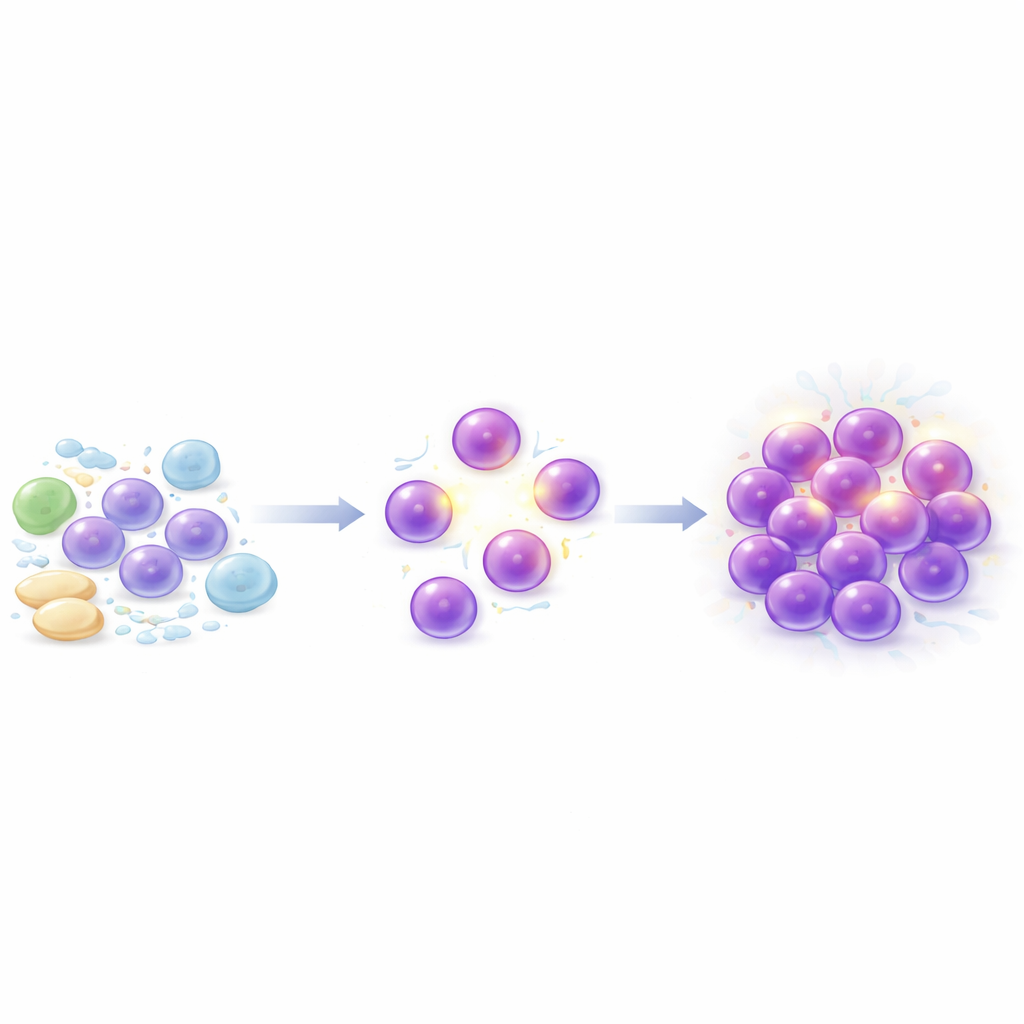
Following cancer cells one by one
The researchers collected blood samples from 17 untreated T‑PLL patients, including 11 who were followed over time from an early, slow phase to a later aggressive phase. Using single‑cell RNA sequencing, they measured which genes were active in more than 200,000 individual cells, and they compared these to immune cells from healthy donors. They also performed whole‑genome sequencing in a subset of patients to see which DNA changes emerged as the disease progressed. This combination allowed them to observe not only which genetic lesions were present, but also how different subgroups of leukemia cells expanded or shrank over time and how the surrounding immune environment responded.
Turning up the cell’s internal engine
A central discovery was that aggressive T‑PLL cells strongly switched on a gene program controlled by MYC, a well‑known cancer‑promoting gene. Cells in the active phase showed higher MYC levels, more copies of the MYC region in their DNA, and stronger activity of MYC‑regulated genes than cells in the indolent phase or healthy T cells. These MYC‑driven programs were tightly linked to pathways that power the cell’s “engines,” including oxidative phosphorylation and glycolysis, which are the main ways cells generate energy. Functional tests with a metabolic analyzer confirmed that active‑phase T‑PLL cells consumed more oxygen and produced more acid, signs of heightened energy production, while early‑phase cells remained metabolically constrained and responded poorly to stimulation. Together, these results suggest that as T‑PLL advances, its cells escape energetic limits and fuel rapid growth by revving up their internal power plants.
Needing fewer outside growth signals
Healthy T cells normally rely on signals from their environment—especially through the T‑cell receptor, which senses antigens and helps control growth and survival. In early T‑PLL, this signaling axis is already distorted by known cancer drivers, but it still appears to play a major role. The new data show that, during progression to active disease, many T‑PLL subclones dial down components of the T‑cell receptor machinery and show weaker responses when the receptor is experimentally stimulated. Key downstream transcription factors become less active, and some patients’ leukemia cells lose or reduce molecules such as CD45 that help tune receptor signaling. In essence, the tumor cells evolve to depend less on outside survival cues, relying instead on their boosted internal metabolism and MYC‑driven programs.

Escaping the watchful immune neighborhood
The study also examines non‑cancerous immune cells in the same blood samples. As T‑PLL shifts to an active phase, monocytes and certain dendritic cell types increase in number, but their gene activity changes in ways that point to blunted inflammation and altered interferon signaling. Across multiple immune cell types, genes involved in presenting antigens and mounting immune responses are dampened. At the same time, computational models of cell‑to‑cell communication show that leukemia cells interact less with most surrounding immune cells in the aggressive phase, while specific signals toward monocytes become stronger. Molecules such as Annexin A1 and reduced levels of the surface protein CD48 are highlighted as potential contributors to a more immune‑evasive, tumor‑friendly environment.
What this means for patients
Taken together, the findings outline a stepwise path from quiet to aggressive T‑PLL: early leukemia cells are still partly held in check by limited energy supply, dependence on external growth signals, and immune surveillance. Over time, subclones that amplify MYC, boost their energy production, and weaken their reliance on outside cues gain a selective advantage and come to dominate, leading to rapid disease expansion. For patients, this suggests that therapies targeting MYC‑related pathways, cellular metabolism, or specific tumor–immune interactions might be especially valuable in the active phase—and possibly even earlier, before the leukemia fully escapes these natural brakes.
Citation: Wahnschaffe, L., Jungherz, D., Müller, T.A. et al. Single-cell genomics highlight MYC-associated metabolic activation and altered cell interactions in T-prolymphocytic leukemia progression. Nat Commun 17, 2319 (2026). https://doi.org/10.1038/s41467-026-70185-w
Keywords: T-prolymphocytic leukemia, single-cell genomics, MYC signaling, cancer metabolism, tumor microenvironment