Clear Sky Science · en
Conformal and adhesive gel for stable electrophysiology on hairy animals without shaving
Reading Brainwaves Without the Haircut
Electroencephalography, or EEG, lets scientists listen in on the brain’s faint electrical signals from outside the skull. But there is a stubborn, everyday obstacle: hair. Thick fur on animals and dense hair on people create tiny gaps between the scalp and electrodes, blurring signals or blocking them entirely. Shaving solves the problem but is often uncomfortable, culturally sensitive, or unethical for research animals. This study introduces a new kind of soft, smart gel that can slip through hair, cling gently yet firmly to skin, and then let go on command—making high‑quality brain recording possible without the haircut.
A Gentle Interface Between Hair and Wires
The researchers set out to create what they call a hair‑adaptable and adhesion‑tunable, or HAAT, interface: a material that forms the crucial bridge between scalp and EEG electrode. This gel must do three things that normally conflict with one another. First, it has to start out fluid enough to flow around individual hairs and into skin wrinkles. Second, once in place, it needs to stiffen and stick strongly so that the electrode does not move, even as the subject sweats or shifts. Third, when the experiment is over, it must be possible to peel the gel away without yanking out hairs or irritating delicate skin. Achieving all three in a single material required redesigning the gel’s internal chemistry from the ground up. 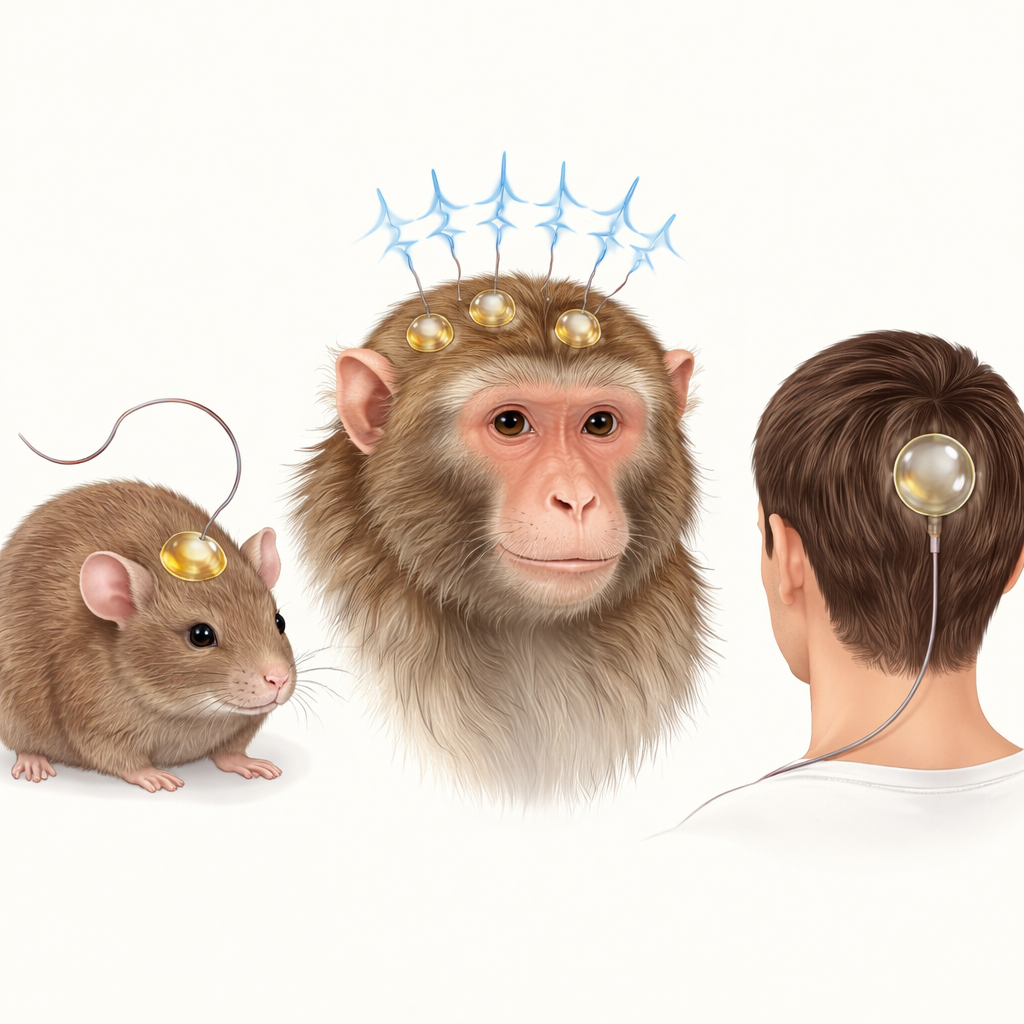
A Shape‑Shifting Gel With Built‑In Conductivity
The team built the HAAT material from a copolymer—long molecular chains formed from two types of building blocks. One block provides dynamic disulfide bonds, tiny chemical links that can break and reform with temperature or chemical cues. When warmed slightly above body temperature, these bonds loosen, the chains shorten, and the material behaves like a thick liquid that can seep between hairs. As it cools back to skin temperature, the bonds reconnect, turning the liquid into a more solid gel that hugs the scalp. The second block carries charged groups that create ion‑filled pathways, allowing the gel to conduct the brain’s faint electrical signals as effectively as, or better than, commercial EEG pastes. Metal ions are added as extra cross‑links to tune how stiff and tough the final gel becomes.
Strong Grip When You Need It, Soft Release When You Don’t
Because EEG recordings can last hours, the gel must hold fast without slipping but still come off gently. The authors carefully adjusted the proportions of the gel’s components to balance stiffness and toughness at the skin surface. They then devised a special “detachment solution” made from glutathione—a common biological antioxidant—and salt. When this solution seeps between the gel and the skin, it snips the same disulfide bonds that once held the polymer together and also weakens non‑covalent attractions like hydrogen bonds. As a result, the gel’s grip on skin and hair drops by more than fiftyfold. In tests on pig skin and actual hairy scalps, the material could be peeled away without redness or hair loss, outperforming standard commercial electrodes. 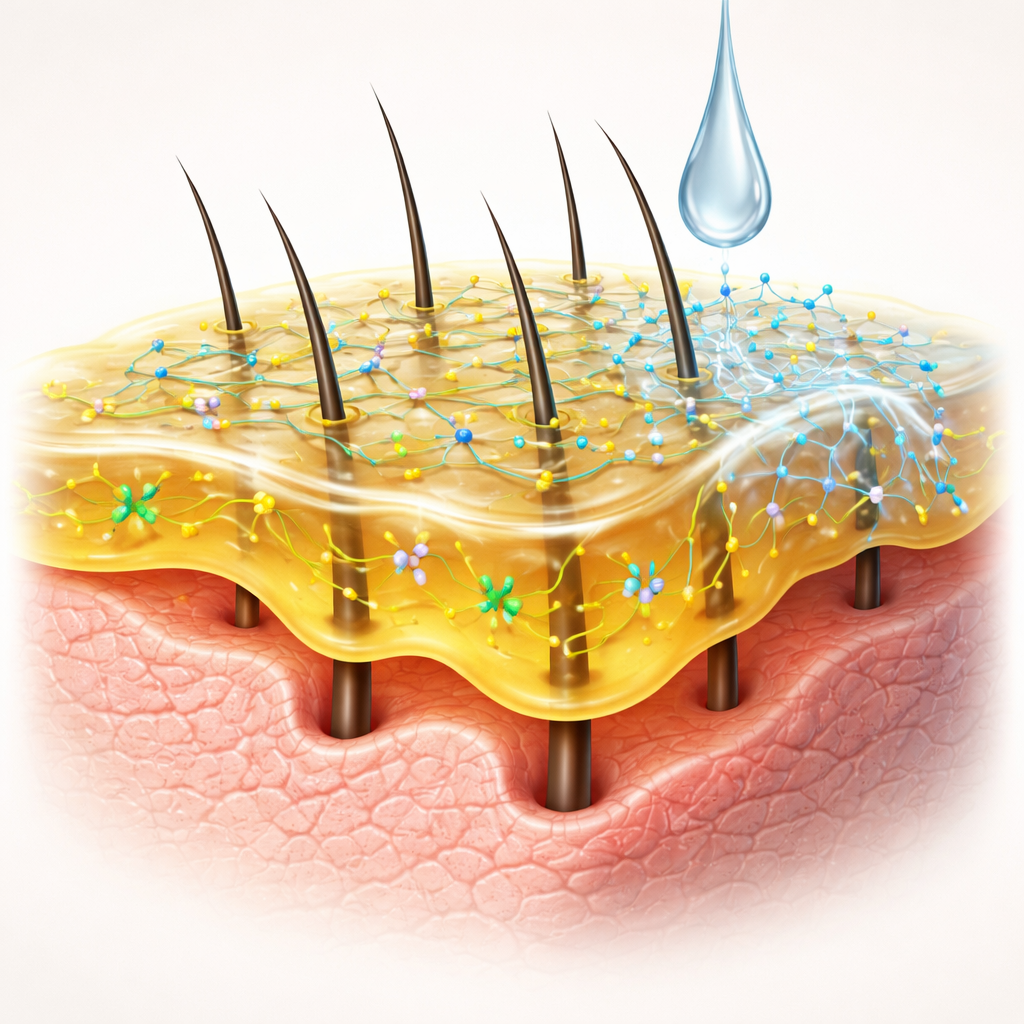
Clear Signals From Hairy Heads
To show that this chemistry matters in practice, the team recorded brain activity from humans, monkeys, and mice—three species with very different hair patterns. On the backs of human heads, the gel flowed easily through thick hair, stayed put during sweating, and captured the familiar rhythms of brainwaves (theta, alpha, beta, and gamma) with higher power than standard pastes. In monkeys with fine, dense hair, HAAT formed stable contacts at many sites simultaneously, making it possible to build a 16‑channel map of brain activity without signal mixing between electrodes. Most strikingly, on tiny mouse heads covered by dense fur, conventional gels failed to pick up any usable EEG, while the new gel clearly recorded auditory responses. In a demanding visual attention task, the gel recorded subtle event‑related potentials from a monkey for hours, revealing how its brain responded differently to flashes appearing on the left or right side of a screen.
Why This Matters for Brain Research
By combining a heat‑switchable fluid‑to‑gel transition, strong but reversible bonding, and built‑in ionic conduction, the HAAT material solves a long‑standing practical problem in brain research: how to get stable, non‑invasive electrical recordings from hairy scalps without shaving. For scientists, this opens the door to more naturalistic studies in animals and people who would otherwise avoid or be excluded from EEG experiments, including children and field‑study subjects. For the broader public, it points toward future wearable brain‑monitoring devices that are comfortable, discreet, and hair‑friendly—a step closer to reading the brain’s whispers without cutting a single strand.
Citation: Yang, L., Chen, M., Qi, J. et al. Conformal and adhesive gel for stable electrophysiology on hairy animals without shaving. Nat Commun 17, 2249 (2026). https://doi.org/10.1038/s41467-026-70093-z
Keywords: EEG gel, hairy scalp recording, brainwave monitoring, adhesive hydrogel, noninvasive neuroscience