Clear Sky Science · en
Post-pandemic changes in population immunity have reduced the likelihood of emergence of zoonotic coronaviruses
Why this matters now
After years of living with COVID-19, a natural question is whether all those infections and vaccinations have changed our vulnerability to the next dangerous coronavirus jumping from animals to humans. This study asks exactly that: has the world’s new wall of immunity against SARS‑CoV‑2 made it harder for related animal viruses to spark another pandemic, or could some kinds of vaccines even backfire? The answers help refine how we think about future pandemic threats and the best ways to prepare.
How past infections shape future threats
The researchers focused on a group of animal coronaviruses closely related to SARS‑CoV‑2, known collectively as sarbecoviruses, which circulate in bats and other wildlife. Some of these viruses can already latch onto human cells, so understanding their chances of taking off in people is urgent. The team collected blood samples from hundreds of people in Scotland with different COVID‑19 histories: never infected and unvaccinated, previously infected, vaccinated, or both infected and vaccinated (so‑called hybrid immunity). They then tested how well antibodies in these samples could block the spike proteins of several animal sarbecoviruses, including strains found in bats and pangolins, as well as the original SARS virus from 2002.
What the lab tests revealed
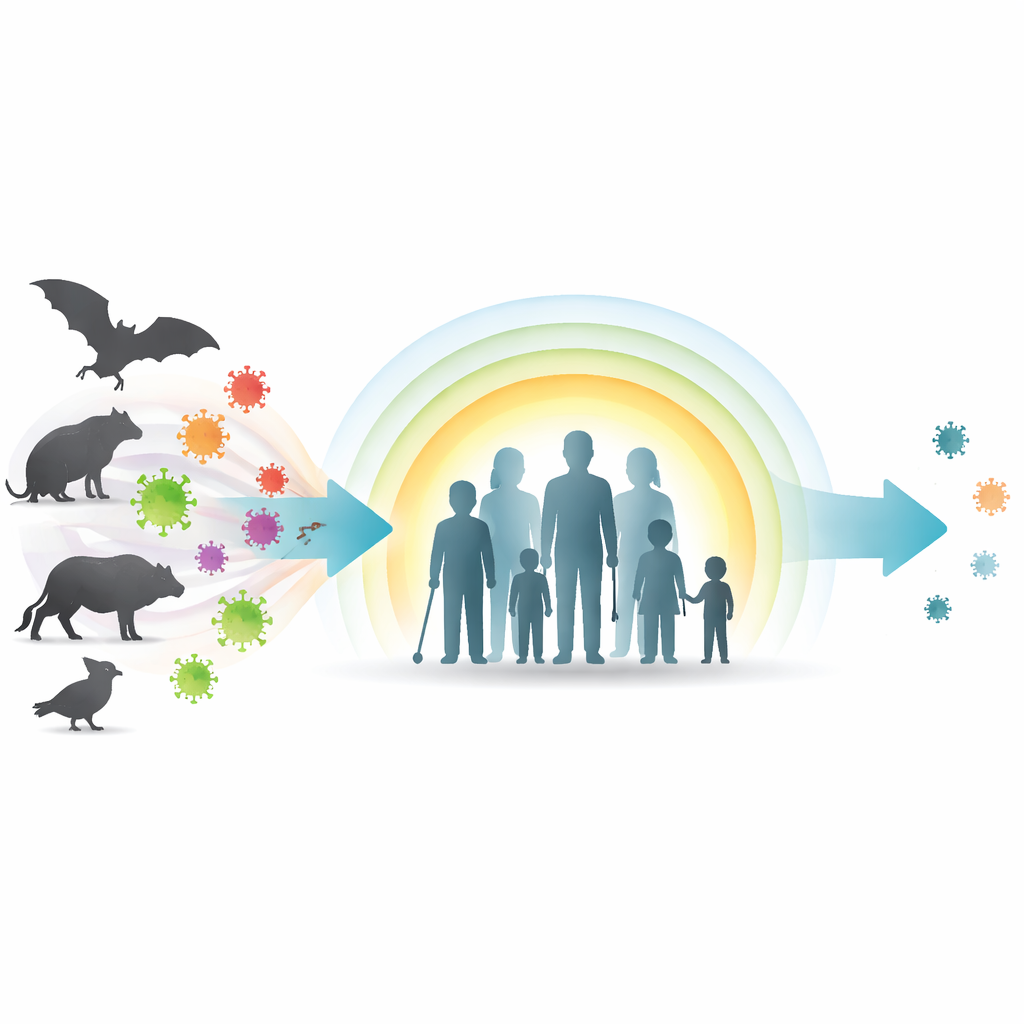
Across the board, people who had any encounter with SARS‑CoV‑2—through infection, vaccination, or both—had far stronger ability to neutralize these animal viruses than those who were completely naïve. The most powerful cross‑protection appeared in people with hybrid immunity, whose antibodies were both broader and stronger. The degree of cross‑neutralization also followed a simple pattern: the more similar an animal virus’s spike protein was to the original Wuhan strain of SARS‑CoV‑2, the better existing antibodies could block it. Some close relatives, such as the bat virus RaTG13, were neutralized very effectively, suggesting they would struggle to spread widely in today’s human population.
Simulating a new virus entering a post‑COVID world
To move from test tubes to real‑world risk, the team built a detailed computer model of virus spread based on Scotland’s population, age structure, social contact patterns, and COVID‑19 vaccine roll‑out. They introduced a hypothetical new sarbecovirus, dubbed SARS‑CoV‑X, and allowed it to circulate alongside SARS‑CoV‑2. The model translated the laboratory neutralization results into reduced chances of infection for people with different immune backgrounds. It then explored many scenarios, varying how contagious the new virus was, how long immunity lasted, and how much cross‑protection came from past SARS‑CoV‑2 infection or vaccination.
The simulations showed that in an entirely naïve population, several real animal sarbecoviruses would have a modest chance of becoming established. But under current post‑pandemic conditions—where most people carry some SARS‑CoV‑2 antibodies—that probability drops sharply. Two factors dominated the outcome: how strong natural cross‑immunity is and how transmissible the new virus is. When cross‑immunity was high, even fairly contagious viruses struggled to gain a foothold. Conversely, a very transmissible virus with little cross‑reactivity could still pose a serious risk.
When vaccines help—and when they might hurt
The researchers also asked how a rapid, two‑month vaccination campaign using existing COVID‑19 vaccines would affect the fate of SARS‑CoV‑X after its first detection. When these vaccines provided at least moderate cross‑protection, starting such a campaign around the time the new virus began to spread substantially lowered its chances of becoming endemic, especially if uptake was high. The benefit was greatest when launched close to the introduction of the new virus; if started many months earlier or later, the impact was much smaller. However, the model revealed a surprising twist: a hypothetical vaccine that was highly specific to SARS‑CoV‑2 but offered almost no cross‑immunity to SARS‑CoV‑X could, in some situations, increase the risk that SARS‑CoV‑X would emerge. By suppressing SARS‑CoV‑2 circulation, such a vaccine would reduce opportunities for people to gain broad, infection‑derived antibodies that incidentally protect against related animal viruses, thinning the population’s natural shield.

What this means for future pandemics
For a general audience, the bottom line is encouraging but nuanced. The COVID‑19 pandemic and global vaccination efforts have not just protected us from SARS‑CoV‑2 itself; they have also built a partial immune barrier against many related coronaviruses that might otherwise threaten to spill over from animals. This makes the emergence of some SARS‑like viruses less likely than it would have been in 2019. At the same time, the work highlights that not all vaccines are equal from a broader preparedness standpoint. Those that generate cross‑reactive immunity against whole groups of related viruses are likely to offer the best long‑term defense, while extremely narrow vaccines could, in rare circumstances, remove helpful background immunity. Overall, the study supports continued surveillance of animal coronaviruses, ongoing tracking of human immunity, and the development of broadly protective “pan‑sarbecovirus” vaccines as key pillars of preparing for the next pandemic threat.
Citation: Imrie, R.M., Bissett, L.A., Raveendran, S. et al. Post-pandemic changes in population immunity have reduced the likelihood of emergence of zoonotic coronaviruses. Nat Commun 17, 2248 (2026). https://doi.org/10.1038/s41467-026-69988-8
Keywords: cross-immunity, zoonotic coronaviruses, pandemic preparedness, SARS-CoV-2 vaccination, sarbecoviruses