Clear Sky Science · en
Tumor-informed circulating tumor DNA stratifies recurrence risk and survival in anal squamous cell carcinoma
Why a blood test for tiny DNA bits matters
Cancer care often feels like flying through clouds with limited visibility: doctors know where they started, but it can take months to see if treatment really worked. This is especially true for anal squamous cell carcinoma, a cancer usually treated with combined chemotherapy and radiation. The study summarized here explores whether a simple blood test, looking for traces of tumor DNA, can act like a real‑time radar system—showing early on who is likely cured, who is at risk of relapse, and when a hidden cancer may be quietly returning.
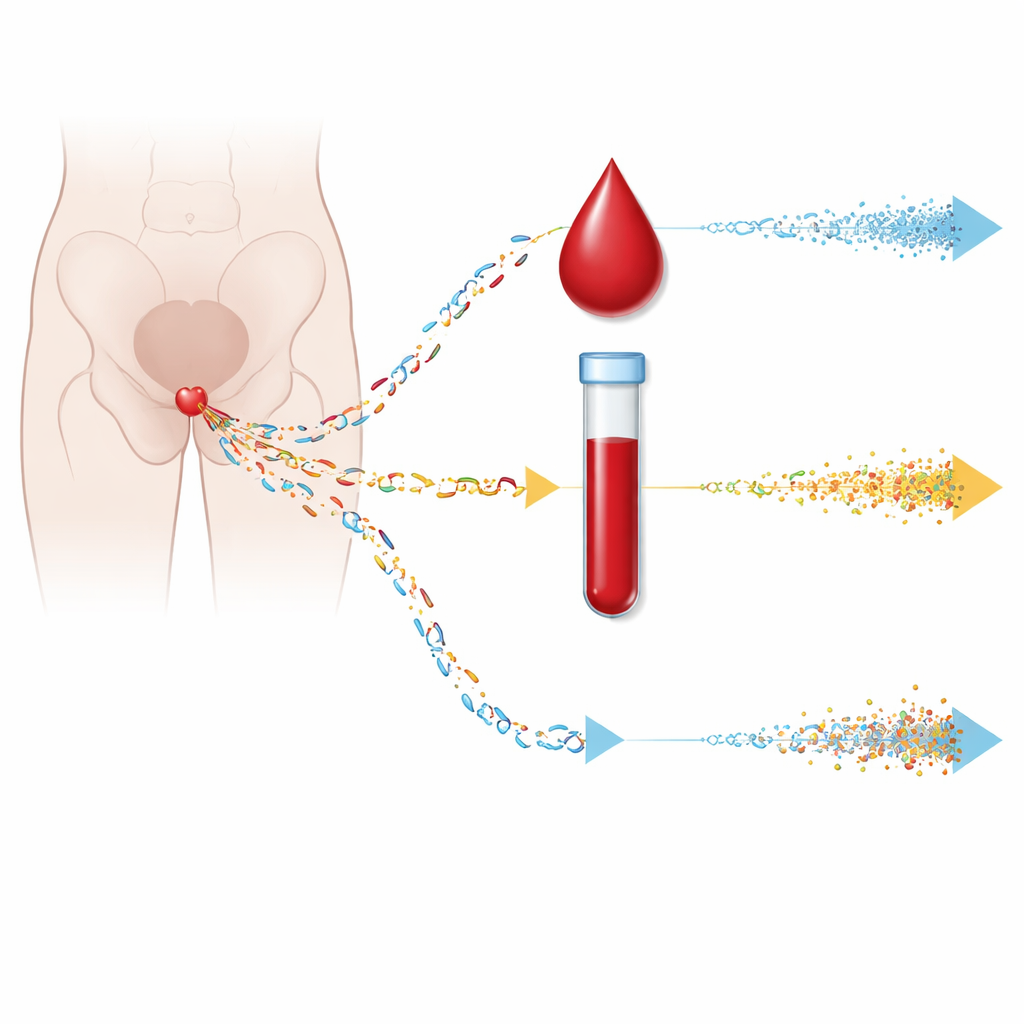
A closer look at a hard‑to‑track cancer
Anal squamous cell carcinoma is often linked to human papillomavirus (HPV) infection and is usually treated without surgery, using focused radiation and chemotherapy. While many patients do well, doctors often need up to six months of repeated exams and scans to decide whether the tumor has truly disappeared. During that long waiting period, some cancers are already regrowing, and options for successful salvage treatment can narrow. The researchers wanted a faster, more reliable signal of who is in danger, ideally one that comes from a quick blood draw instead of repeated invasive tests.
Following tumor DNA breadcrumbs in the blood
The team studied 84 adults with non‑metastatic anal cancer treated at two centers with modern chemoradiation. For each patient, they used a “tumor‑informed” blood test: first, they sequenced the patient’s own tumor to identify up to 16 unique genetic changes. Then they built a custom assay to look in the bloodstream for these exact changes as fragments of circulating tumor DNA, or ctDNA. Over the course of treatment and follow‑up, they analyzed 647 blood samples taken before therapy, during treatment, at the end of treatment, and during routine surveillance. Most patients—about four out of five—had detectable ctDNA before treatment started, especially those with larger tumors or involved lymph nodes, confirming that this blood signal reflects overall tumor burden.
What ctDNA levels reveal about future outcomes
The strongest message came from the blood tests around the time treatment ended. Patients whose ctDNA was still detectable at that point faced strikingly worse outcomes: at one year, they had lower overall survival, more relapses, and far higher rates of cancer returning in the pelvis. In contrast, people who started out ctDNA‑negative or who cleared ctDNA during treatment had excellent results—no locoregional recurrences at one year and essentially 100% survival and progression‑free survival in this early follow‑up window. The timing of ctDNA clearance mattered: earlier and sustained disappearance of tumor DNA in the blood gave the greatest reassurance that treatment had worked deeply and durably.
An early warning signal during follow‑up
During post‑treatment surveillance, ctDNA behaved like a smoke alarm that goes off before anyone can see flames. Seven patients who initially cleared ctDNA later developed a new rise in tumor DNA in their blood. In every single case, this “molecular recurrence” came before doctors could detect relapse on scans or exams—by a median of about two and a half months, and sometimes much longer. No patients with consistently negative ctDNA during surveillance experienced treatment failure. This suggests that, if validated, ctDNA monitoring could allow doctors to tighten follow‑up and consider earlier intervention for those showing the first invisible signs of returning disease, while easing the burden of testing for those with persistently clean blood tests.
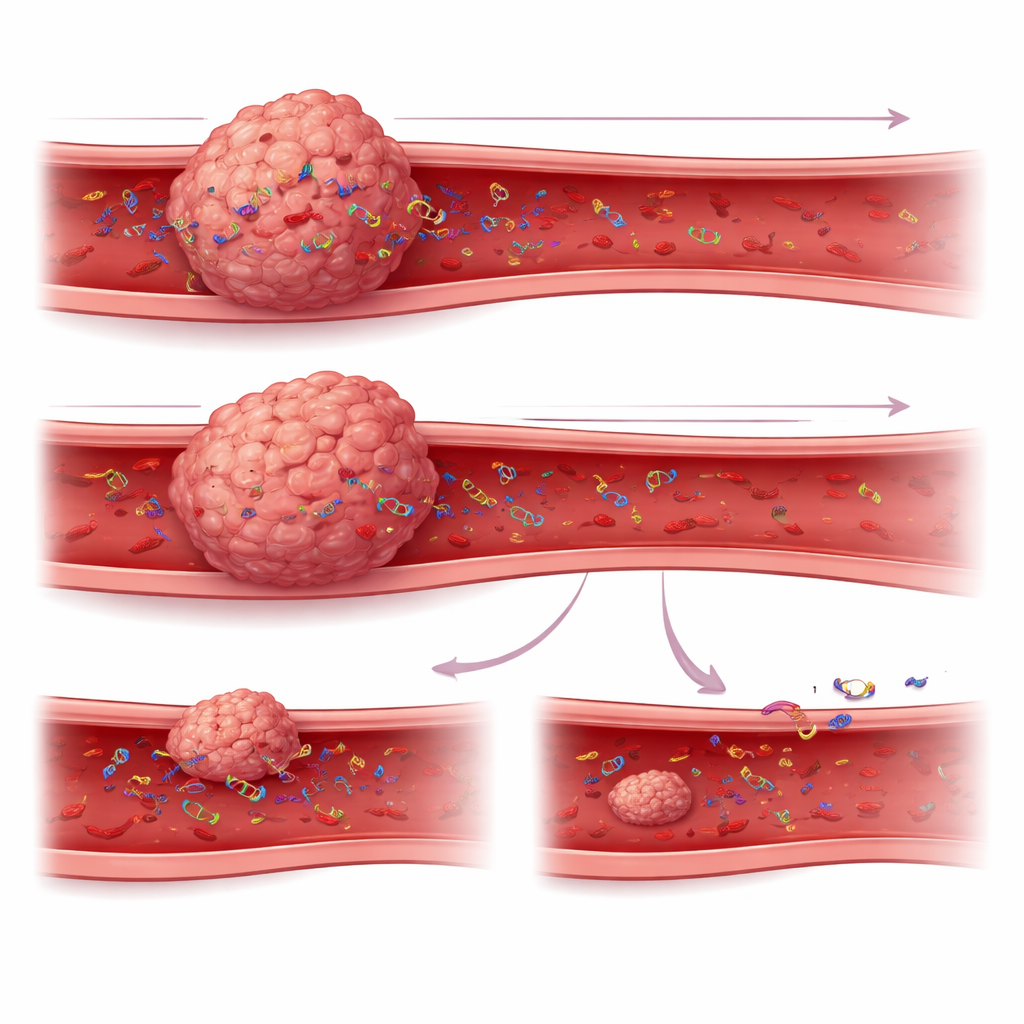
What this could mean for patients and care
Taken together, the study shows that personalized ctDNA blood testing can capture, in near real time, how well chemoradiation is working for anal cancer and whether hidden cancer cells may still be present. End‑of‑treatment ctDNA positivity identifies a small group at very high risk of recurrence and death, while early and durable ctDNA clearance marks a group with excellent short‑term outcomes. Reappearance of ctDNA during follow‑up reliably foreshadows clinical relapse. The authors stress that larger, prospective trials are needed before changing standard care, but they envision a future in which these blood tests help tailor treatment intensity, focus additional therapy on those who truly need it, and reduce anxiety and unnecessary procedures for those whose blood shows that their cancer has, at least for now, been thoroughly beaten.
Citation: Romesser, P.B., Bercz, A., Alvarez, J. et al. Tumor-informed circulating tumor DNA stratifies recurrence risk and survival in anal squamous cell carcinoma. Nat Commun 17, 3241 (2026). https://doi.org/10.1038/s41467-026-69984-y
Keywords: circulating tumor DNA, anal cancer, liquid biopsy, chemoradiation response, cancer recurrence monitoring