Clear Sky Science · en
Natural photosynthetic system for restoring homeostasis of animal organelle interaction network
Turning Plant Power into a New Kind of Medicine
Back pain from worn-out spinal discs is one of the most common reasons people struggle with mobility and quality of life. Deep inside those discs, tiny structures within cells fall out of balance under long-term stress. This study explores a surprisingly simple idea with big implications: borrowing the sunlight-powered machinery of plants and installing it inside animal cells to help them rebalance and heal. 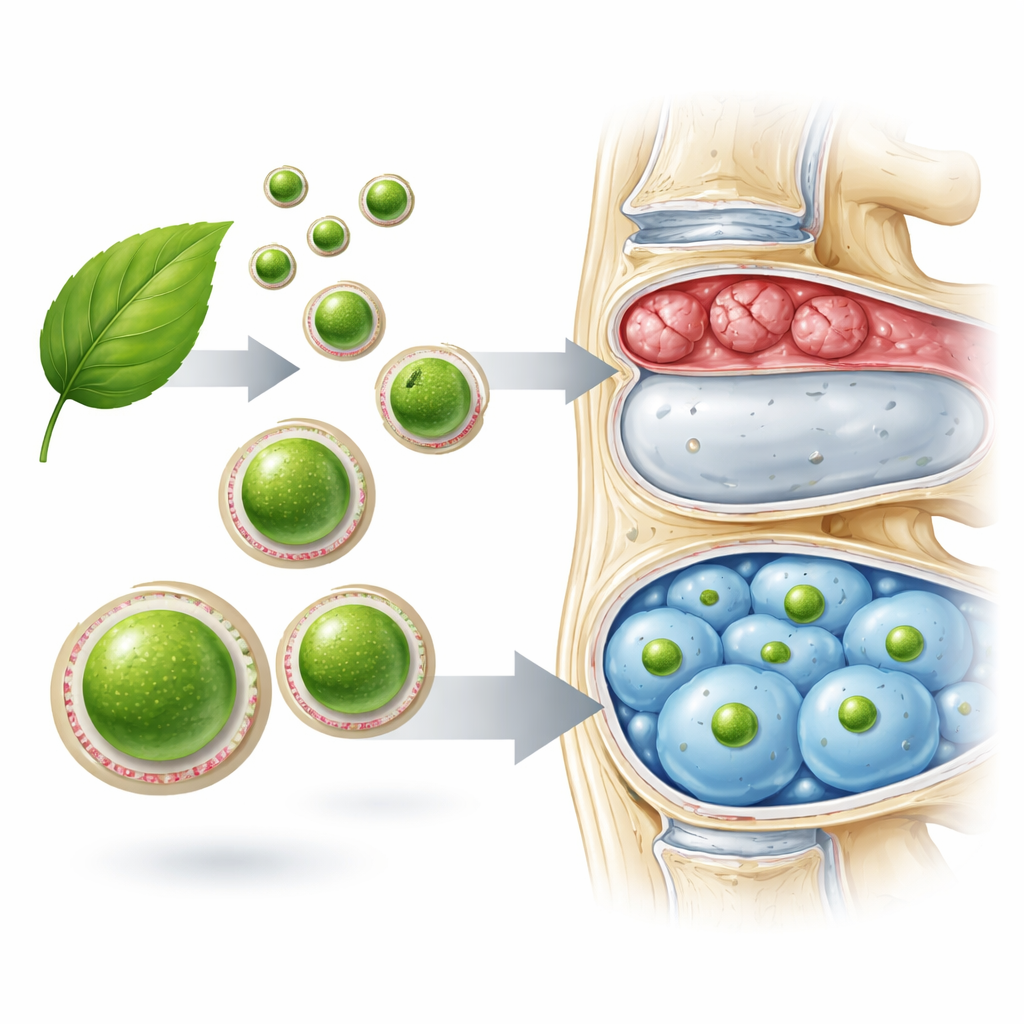
When Cell Interiors Fall Out of Balance
Our cells are filled with miniature compartments, or organelles, that must constantly talk to one another. Two of the most important are mitochondria, which act like power plants, and the endoplasmic reticulum, a network that helps manage fats, proteins, and calcium signals. In tissue from people with degenerating spinal discs, the authors found that this conversation breaks down. Disc cells showed signs of stress, excess reactive oxygen molecules, and abnormal calcium levels. The contact zones where mitochondria and the endoplasmic reticulum touch became overly tight and frequent, leading to overloaded, damaged mitochondria that could no longer maintain healthy energy levels.
Smuggling Photosynthesis into Animal Cells
Plants are naturally good at coping with environmental stress because they can tap into photosynthesis for extra energy and for fine control of their internal chemistry. The researchers isolated tiny functional units from spinach thylakoid membranes—essentially nanoscale photosynthetic droplets—and called them nanothylakoid units. To get these into disc cells safely and specifically, they wrapped the particles in membranes taken from nucleus pulposus cells, the main cell type within spinal discs. This coating helped the particles evade breakdown, fuse with target cells, and avoid the cell’s garbage disposal system. Once inside and exposed to red light, these hybrid particles produced measurable amounts of ATP, the cell’s energy currency, and also generated NADPH, a key molecule that helps control oxidative stress.
Rewiring the Organelles’ Conversation
Using diseased disc cells in culture, the team showed that light-activated nanothylakoid units raised energy levels and shifted the balance from breakdown toward rebuilding of the tissue’s supporting matrix. More importantly, they reshaped the inner organization of the cells. Extra energy allowed the endoplasmic reticulum to refill its calcium stores, lowering free calcium in the rest of the cell and inside mitochondria. Markers of stress in the endoplasmic reticulum dropped. Microscopy revealed that the abnormal over-contact between mitochondria and the endoplasmic reticulum relaxed toward a more normal spacing. Mitochondria regained a healthier membrane potential, opened their permeability pores less often, produced more of their own ATP, and generated fewer harmful reactive oxygen molecules. At the same time, analysis of lipids showed that the endoplasmic reticulum’s fat composition shifted toward more unsaturated triglycerides, which are associated with more fluid, flexible membranes. This increased fluidity likely makes organelle contacts more dynamic and less locked into a harmful, over-tight state. 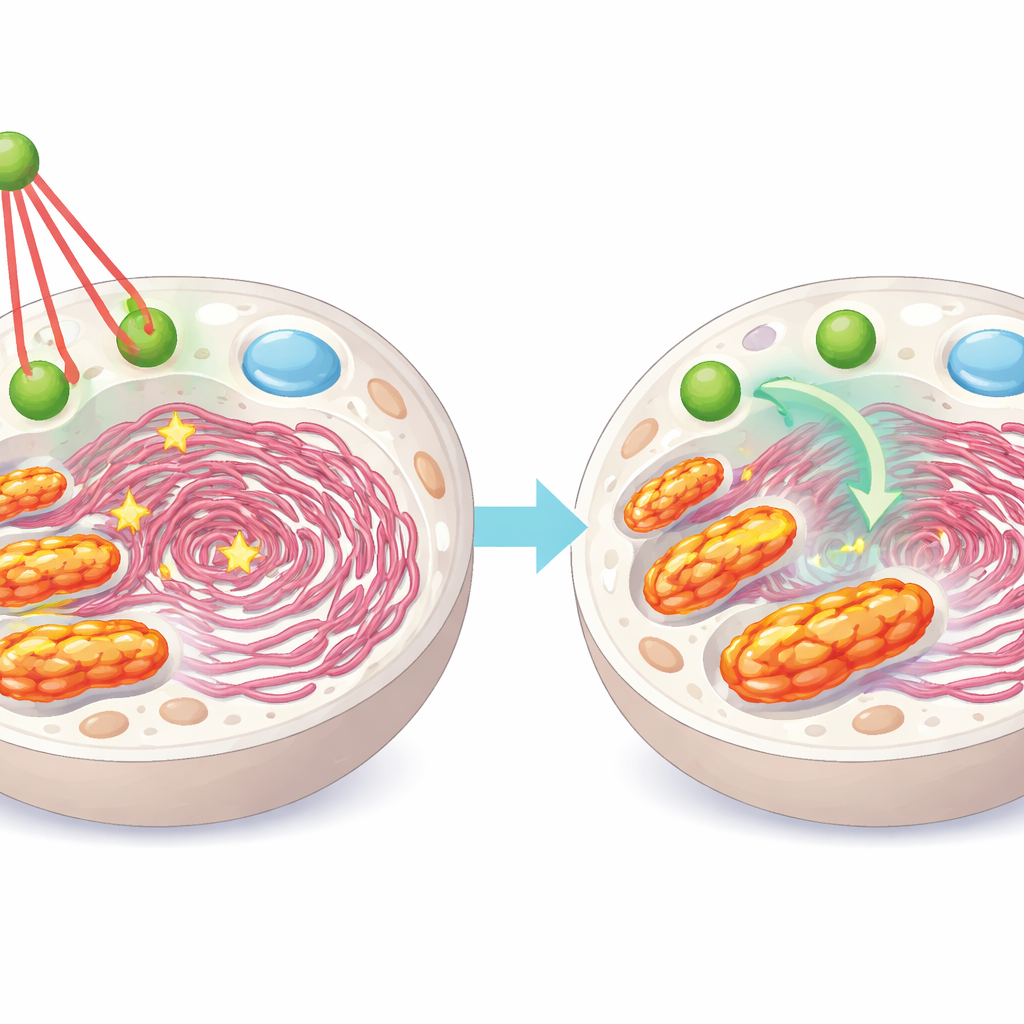
From Cell Dishes to Living Spines
To see whether this plant-powered repair strategy could work in real animals, the scientists used rat and rabbit models of disc degeneration created by needle injury. They injected the membrane-coated nanothylakoid units into the damaged discs and supplied red light. In rats, external light was enough to reach the shallow tail discs. In rabbits, whose discs lie deeper, the team built a tiny, implantable, wirelessly powered light-emitting diode. This device, sealed in a soft, biocompatible coating, could be switched on and timed remotely via a smartphone. In both animals, discs treated with light-activated photosynthetic particles retained more height and water, had healthier tissue structure under the microscope, and showed more of the key matrix proteins that keep discs springy. At the cellular level, the same patterns emerged: reduced stress signals, normalized organelle contacts, and better-preserved mitochondria.
A New Way to Use Sunlight in Medicine
In everyday language, this work shows that it is possible to move a working fragment of plant photosynthesis into animal cells and use it as a living micro-battery and chemical balancer. Rather than targeting a single molecule or pathway, the approach gently nudges the whole internal network of organelles back toward equilibrium—improving energy supply, calming stress, softening cell membranes, and loosening cramped contacts between key structures. Coupled with wirelessly powered implants that deliver light deep inside the body, this “photosynthesis therapy” could open new avenues for treating not only degenerating spinal discs but also other diseases where the internal organization and communication of cell organelles are disrupted.
Citation: Xia, C., Dai, Z., Wang, Y. et al. Natural photosynthetic system for restoring homeostasis of animal organelle interaction network. Nat Commun 17, 3087 (2026). https://doi.org/10.1038/s41467-026-69825-y
Keywords: intervertebral disc degeneration, organelle interaction, photosynthetic nanoparticles, mitochondria, wireless light therapy