Clear Sky Science · en
Behavioral shifts mask the success of legislation and outreach for endangered species recovery
Why This Story Matters
California condors are among the rarest birds on Earth and a flagship for wildlife recovery. For years, scientists and lawmakers have tried to save them from a silent killer: lead from hunting ammunition left in animal carcasses. Yet despite new laws and public education, reports of condors dying from lead have gone up, leaving many to wonder whether these efforts are failing. This study digs beneath the surface and reveals a more complicated – and ultimately more hopeful – story about how changing behavior by both people and birds can hide the real benefits of conservation.
A Bird Brought Back From the Brink
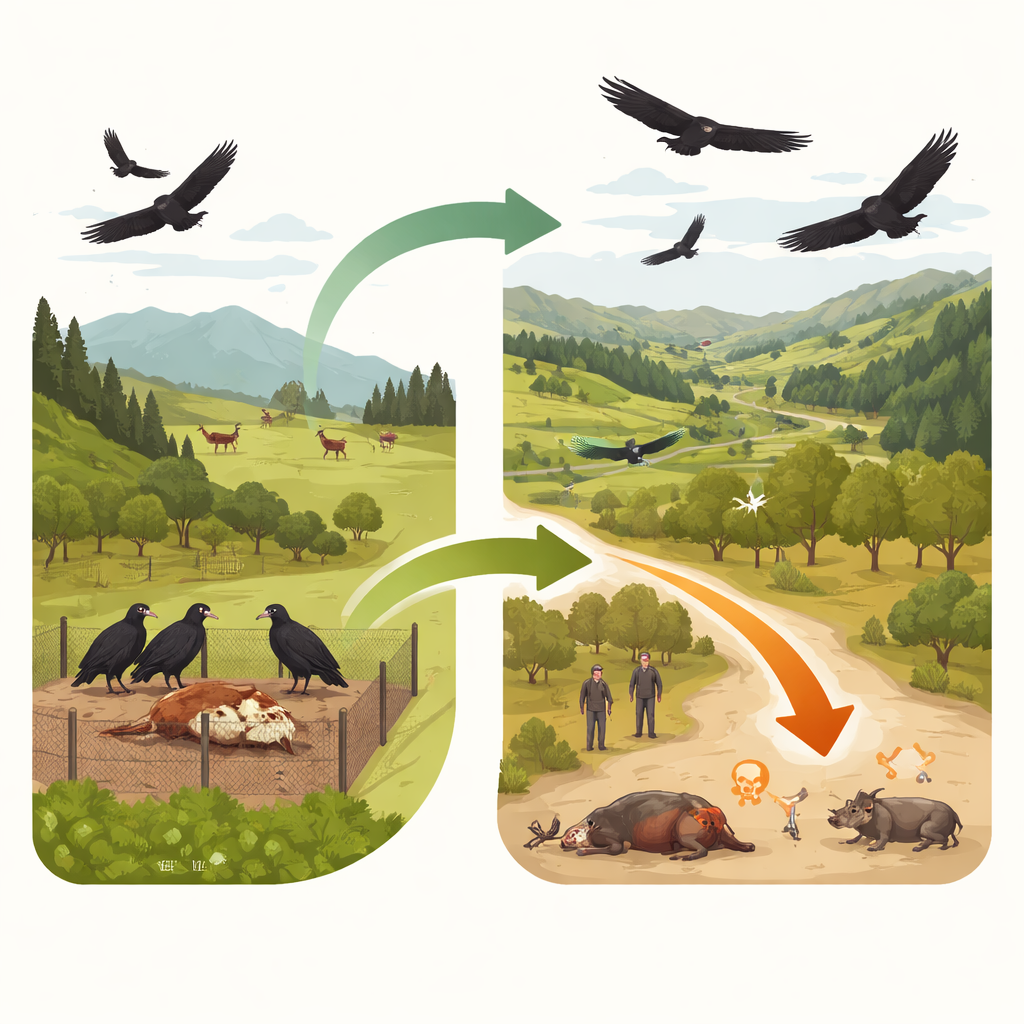
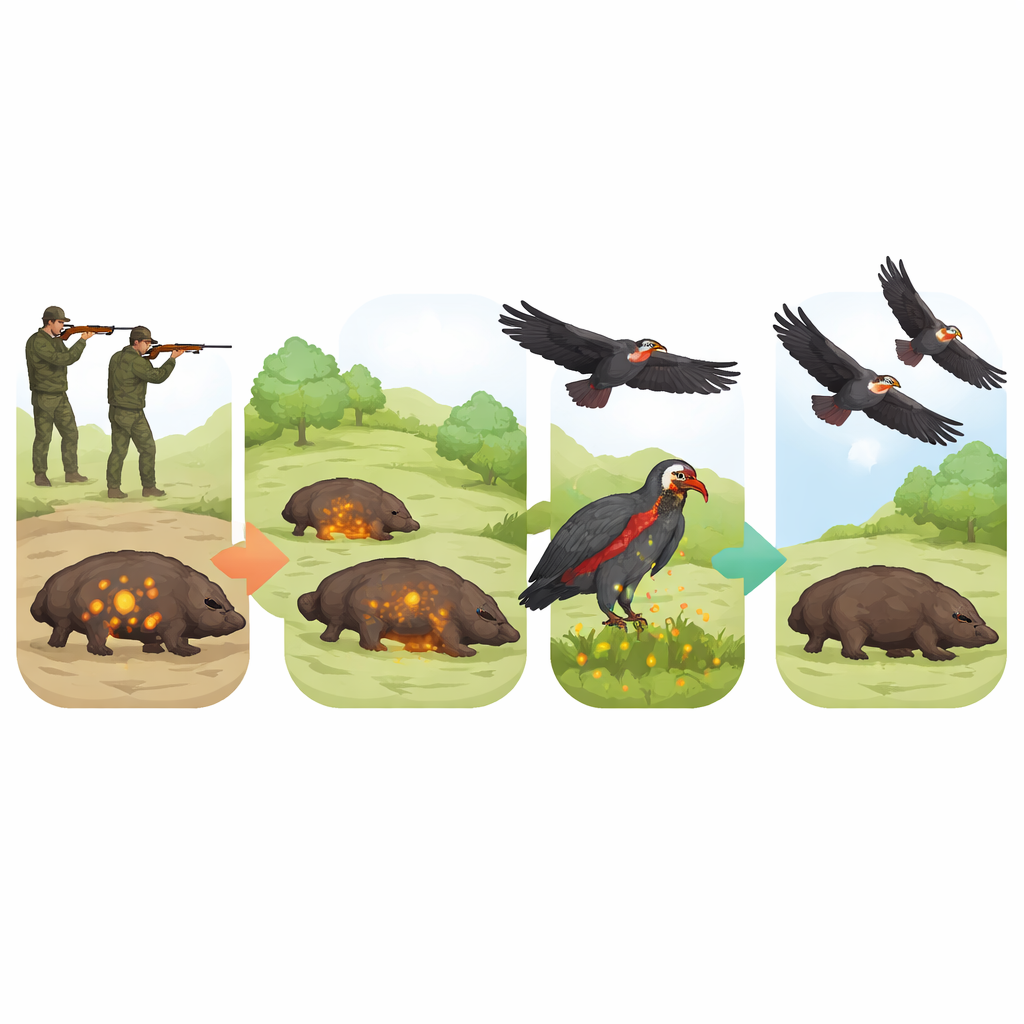
California condors once soared widely across western North America, but by the 1980s they had vanished from the wild. A captive breeding and release program has slowly rebuilt free-flying flocks in central and southern California and in Baja California, Mexico. The main threat today is not habitat loss or shooting, but lead fragments in carcasses left by hunters or pest control. When condors feed on these remains, they can ingest enough lead to sicken or kill them. Over three decades, managers have poured resources into monitoring every bird, providing safe carcasses at feeding stations, and working with hunters to switch to non-lead ammunition.
Laws, Outreach, and a Puzzling Trend
California introduced two major bans on lead-based ammunition for hunting: a regional ban in condor range in 2008 and a statewide ban for all wildlife in 2019. Outreach programs also ramped up, offering information and free boxes of non-lead ammunition to hunters. By all expectations, condor exposure to lead should have dropped. Instead, blood tests taken regularly from nearly every free-flying condor in California showed rising levels of lead over time, and survival rates declined. Meanwhile, a comparison flock in Baja, where lead exposure is minimal, showed low lead levels and a growing population. This contrast set up a central puzzle: were the bans and outreach actually ineffective, or was something else masking their success?
Wilder Condors and More Pig Carcasses
The researchers assembled an unusually detailed picture of condor lives and human activities from 1996 to 2023, including almost a million behavioral observations, GPS tracking, necropsies, hunting tag returns, and outreach records. They found that as condors relearned how to live more freely on the landscape, they increasingly left the safety of feeding stations and release areas, where carcasses are lead-free and hunting is limited. Birds that stayed near these sites or fed often on supplied carcasses had lower lead in their blood; those that ranged more widely and inland had higher levels. At the same time, human behavior shifted. Hunting for wild pigs, and likely unrecorded pig culling, expanded across California. Because pig carcasses and gut piles are often left on the ground, they became an important and growing source of lead for condors, especially in the central flock. These two changes – wilder condors and more pig carcasses – pushed exposure upward and made it look as if legal protections were not working.
What the Bans and Outreach Really Achieved
When the researchers built statistical models that separated the effects of bird behavior, hunting levels, and policy, a different picture emerged. After accounting for where condors traveled and how much deer and pig hunting occurred, both ammunition bans were linked to lower lead exposure, with especially strong benefits after 2019. Deer hunting, once a major source of contamination, actually became helpful in some cases: where outreach and non-lead ammo giveaways were strong, many deer hunters appear to have switched ammunition, turning their gut piles into safe food for condors. Outreach mattered measurably. More in-person contacts with hunters and more boxes of non-lead ammunition distributed were associated with lower lead levels in condor blood and with higher short-term survival during peak hunting seasons. Even modest gains in survival are crucial for a species that breeds slowly and lives a long time.
Hidden Progress and a Warning for Conservation
The study concludes that laws and education programs to reduce lead ammunition in California have, in fact, worked—and have likely kept condor populations from declining even faster. However, their success has been partly hidden by the very changes conservationists hope to see: condors behaving more like truly wild birds and human hunting practices shifting in ways that create new risks, such as increased wild pig shooting and culling. The authors argue that this “running just to stay in place” dynamic will become more common as ecosystems and human behavior change quickly. For endangered species recovery, simple before-and-after checks may underestimate the value of good policies. Instead, managers need to track how both people and wildlife adapt over time, so that effective actions are recognized, improved, and not abandoned just when they are most needed.
Citation: Bakker, V.J., Doak, D.F., Welch, A. et al. Behavioral shifts mask the success of legislation and outreach for endangered species recovery. Nat Commun 17, 1819 (2026). https://doi.org/10.1038/s41467-026-69617-4
Keywords: California condor, lead ammunition, wildlife conservation, scavenger birds, hunting outreach