Clear Sky Science · en
Sustained physical activity offers benefits beyond activity volume in chronic disease prevention
Why Keeping Active Over the Years Matters
Many of us have heard that exercise is good for us, but we may wonder whether it is better to squeeze in intense workouts here and there or to simply move our bodies regularly over many years. This study followed more than 230,000 U.S. health professionals for over three decades to tackle exactly that question. The researchers compared different long-term patterns of physical activity and showed that staying consistently active over adulthood lowers the chances of developing major chronic diseases more than doing large amounts of activity only once in a while.
How the Study Tracked Movement and Health
Participants in three large ongoing studies—male health professionals and two generations of nurses—answered detailed questionnaires about their leisure-time physical activity every two years. They reported how many hours per week they spent walking, running, cycling, swimming, doing aerobics, and similar activities. From these answers, the researchers calculated an overall "volume" of weekly activity and then averaged it over time to capture long-term habits. They also counted how often people reached at least the level of movement recommended by U.S. guidelines, which is roughly the energy cost of brisk walking for about 150 minutes per week. Over a median of 32 years, the team recorded new diagnoses of type 2 diabetes, major cardiovascular disease (such as heart attacks and strokes), and many types of cancer.

More Activity Helps, but Most Gains Come from Modest Levels
When the researchers looked simply at how much people moved on average, they found a clear pattern: those in the highest group of long-term activity had substantially lower risks of major chronic diseases than those in the lowest group. Compared with people who did very little, those who averaged the most weekly activity had about 22% fewer major chronic diseases overall, 45% fewer cases of type 2 diabetes, 28% fewer major heart and blood vessel events, and modestly lower cancer risk. The biggest drop in risk occurred as people went from being inactive to doing about the amount of movement recommended in current guidelines; doing more than this brought smaller, additional benefits, especially for diabetes and cardiovascular disease.
Consistency Beats Bursts for Most Diseases
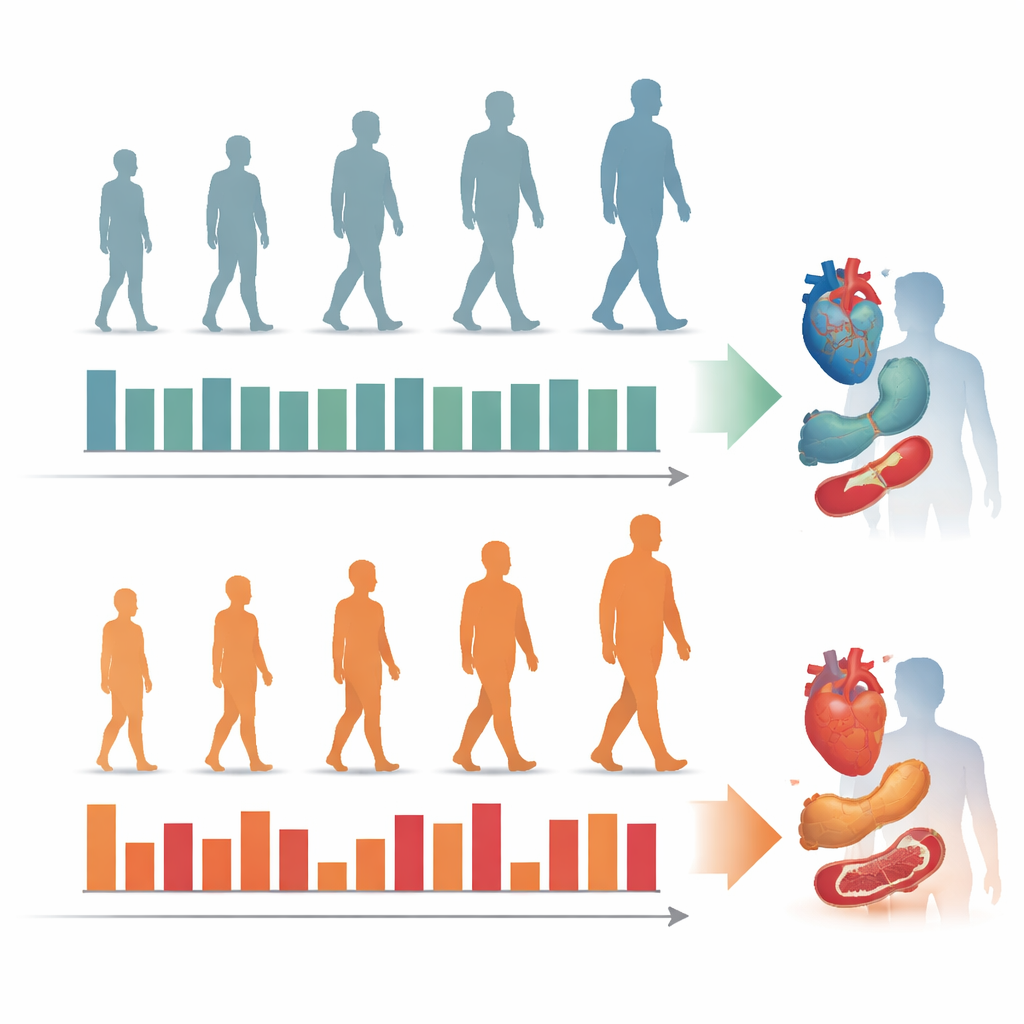
Next, the team examined how steady people’s habits were. Some maintained at least the recommended activity level nearly every year, while others swung between active and inactive periods even if their overall average looked similar. People who met the guidelines almost every year had lower risks of major chronic diseases, type 2 diabetes, cardiovascular disease, and obesity-related cancers than those who rarely met them. When the researchers combined volume and consistency, a striking pattern emerged: doing a moderate amount of activity steadily year after year led to slightly better protection against heart disease and cancer than doing a higher average amount in irregular bursts separated by long inactive stretches. For diabetes, however, very high total activity volume still offered particularly strong benefits, even if it was less consistent.
Activity Paths Through Midlife and Later-Life Health
To better understand how habits in midlife relate to health after age 60, the researchers grouped people by how their activity changed from ages 40 to 60. One small group stayed mostly inactive; another, the largest, hovered around the recommended level; others moved from high to medium levels, from medium to high, or stayed highly active throughout. Compared with those who remained inactive, every active path was linked to fewer chronic diseases later on. People who kept a medium level of activity had about a 10% lower risk, those who moved from high to medium or from medium to high had 20–24% lower risk, and those who stayed highly active had about a 28% lower risk. The benefits were especially strong for diabetes, where sustained high activity through midlife nearly halved later risk.
What This Means for Everyday Life
This long-running study shows that what matters for long-term health is not only how much you move, but also how long you keep at it. Regular physical activity at or slightly above the recommended level, maintained year after year, helps reduce the chances of developing diabetes, heart disease, and many cancers as we age. While bursts of intense exercise are not harmful—and can be very helpful for diabetes—they do not fully make up for long stretches of inactivity, especially when it comes to heart disease and cancer. For most people, the most realistic and rewarding goal is to build everyday routines that keep them moving steadily through midlife and beyond, turning physical activity into a lasting part of their lifestyle rather than a short-lived push.
Citation: Fang, Z., Wang, P., Rosner, B.A. et al. Sustained physical activity offers benefits beyond activity volume in chronic disease prevention. Nat Commun 17, 2730 (2026). https://doi.org/10.1038/s41467-026-69552-4
Keywords: physical activity, chronic disease prevention, exercise consistency, type 2 diabetes risk, cardiovascular health