Clear Sky Science · en
Allelic variation of Avr genes in highly virulent strains explains severe wheat stem rust epidemics
Why rust on wheat matters to everyone
Wheat stem rust is a centuries‑old crop disease that can strip fields of grain and threaten the global food supply. In the past two decades, new, highly aggressive forms of this fungus have caused damaging outbreaks in Africa and Europe, slipping past wheat varieties that were bred to resist them. This study asks a basic but crucial question: what, exactly, changed in these new fungal strains that allowed them to break through wheat’s defenses and spread so widely?
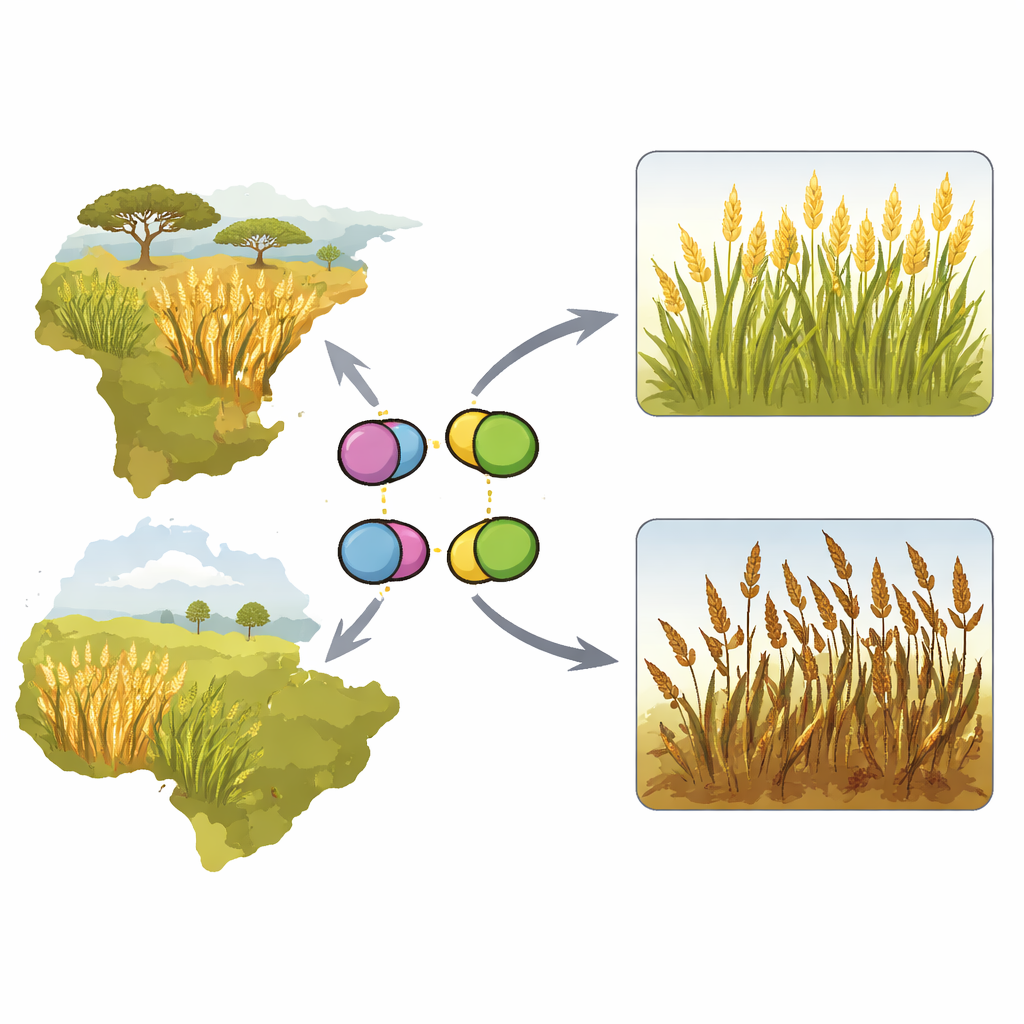
How plants and fungi play molecular hide‑and‑seek
Wheat defends itself using resistance genes that can sense specific molecules produced by invading fungi. When a resistance gene detects one of these fungal molecules, it triggers an immune reaction that stops infection. The fungus, in turn, carries matching "avirulence" genes that encode the very molecules the plant is trying to spot. If the fungal molecule is present and intact, a wheat variety carrying the matching resistance gene can block disease. But if the fungus deletes or alters that molecule, it can slip past the plant’s surveillance system. The recurrent appearance of new stem rust races reflects this genetic arms race between fungal avirulence genes and wheat resistance genes.
Reading the fungus’s genomes chromosome by chromosome
The stem rust fungus is unusual because each individual carries two distinct nuclei, each with its own full genome. This makes it difficult to pinpoint which versions of avirulence genes are present. The authors used state‑of‑the‑art long‑read DNA sequencing and three‑dimensional chromosome mapping to produce complete, nucleus‑by‑nucleus genome maps for two epidemic strains: ETH2013‑1, responsible for a major outbreak in Ethiopia in 2013, and ITA2018‑1, part of a lineage that spread across Europe after first erupting in Sicily in 2016. They showed that the four nuclei from these two isolates form four unique genomic "haplotypes" that are distinct from previously studied reference strains, providing a much clearer picture of the fungus’s genetic diversity and family tree.
Pinpointing the gene changes behind recent epidemics
With these complete genomes in hand, the team systematically examined known avirulence genes linked to important wheat resistance genes. They catalogued dozens of sequence variants, including changes in gene copy number, subtle mutations that alter a single amino acid, and cases where the gene has been completely deleted. Using a combination of plant cell assays, model plants, and a virus‑based delivery system, they tested whether each fungal variant is still recognized by its matching wheat resistance gene. In total, they functionally characterized 22 new avirulence variants. This allowed them to explain, at the molecular level, why some stem rust lineages can infect certain wheat varieties while others cannot.
How one missing gene helped a strain sweep across Europe
One striking finding involves the race known as TTRTF, which caused the deadly Sicilian outbreak and later became widespread in Europe. Many durum wheat cultivars in the affected fields carried a resistance gene called Sr13b, expected to protect them. The researchers discovered that the Italian epidemic strain carries a clean deletion of the corresponding avirulence gene, AvrSr13, from both of its nuclei. Without this gene, the fungus no longer produces the telltale molecule that Sr13‑based defenses are designed to detect, allowing TTRTF to infect Sr13b wheat unchecked. The same strain also harbors a modified form of another avirulence gene, AvrSr35, explaining its ability to bypass a second wheat resistance gene, Sr35.
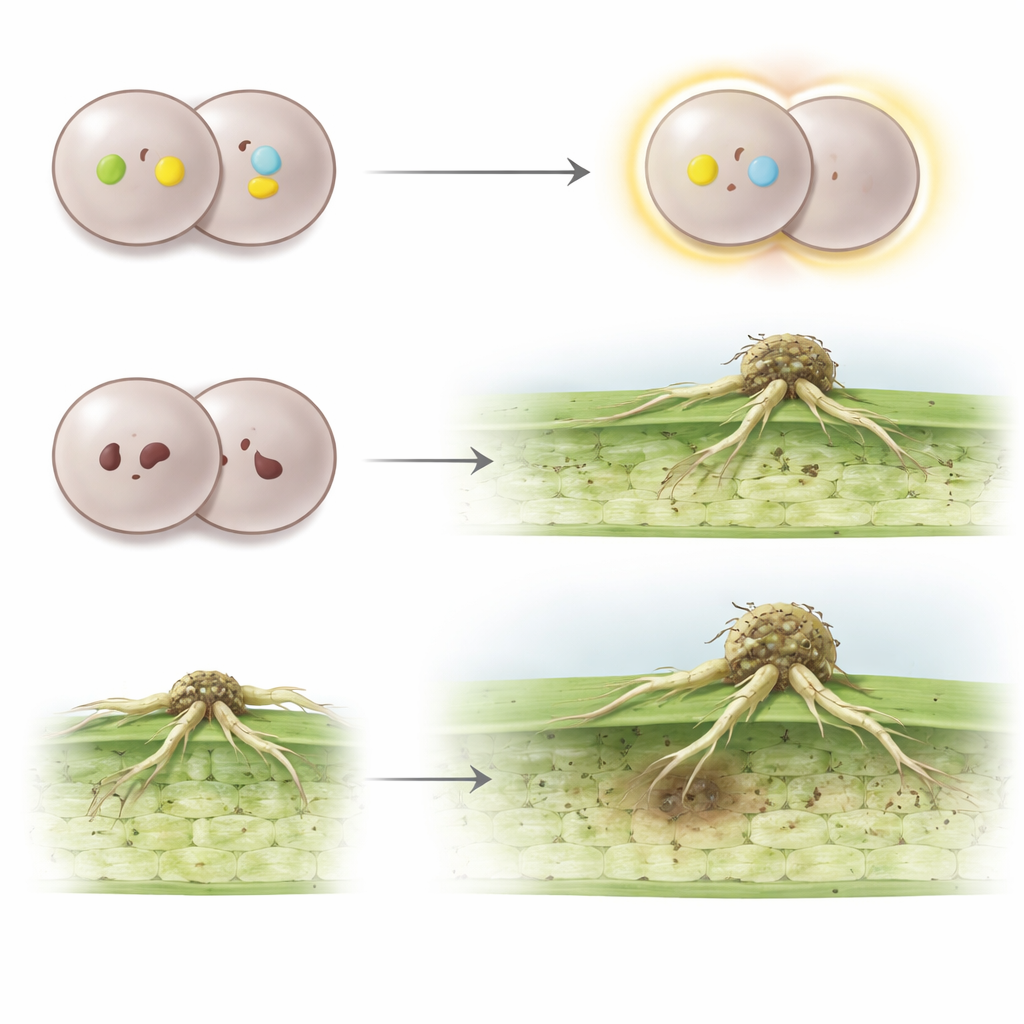
Building a genetic atlas to stay ahead of rust
Beyond explaining recent outbreaks, the study establishes an "Avr gene atlas" for the stem rust fungus: a reference map that links specific avirulence gene variants to their behavior against key wheat resistance genes. This atlas can be used to interpret DNA sequences collected from rust spores in the field and to predict, from sequence alone, which wheat varieties are likely to be at risk. For plant breeders and disease surveillance teams, this means they can choose resistance genes that the dominant rust populations are still unable to evade and quickly detect when new, more dangerous variants arise.
What this means for protecting future harvests
In everyday terms, this work shows exactly how recent rust strains have picked the genetic locks on some of wheat’s best security systems. By revealing which fungal keys have changed, and which plant locks still hold, the study provides a roadmap for designing wheat varieties with longer‑lasting resistance and for using portable DNA‑based tools to track dangerous rust types as they move around the world. Ultimately, understanding these molecular details is a practical step toward keeping wheat harvests secure in the face of an evolving pathogen.
Citation: Spanner, R.E., Henningsen, E.C., Langlands-Perry, C. et al. Allelic variation of Avr genes in highly virulent strains explains severe wheat stem rust epidemics. Nat Commun 17, 2718 (2026). https://doi.org/10.1038/s41467-026-69508-8
Keywords: wheat stem rust, plant immunity, avirulence genes, genome sequencing, crop disease surveillance