Clear Sky Science · en
Enhanced forest carbon gains from stronger protection in China’s protected areas
Why Saving Forests Matters for Everyone
China has been planting and protecting forests on an enormous scale, both to safeguard wildlife and to help slow climate change. But do protected areas actually keep more carbon locked away in trees than unprotected land, and how much more could they store in a warming world? This study combines space laser measurements and computer models to reveal how different types of protected areas in China are already boosting forest carbon storage—and how stronger protection could deliver major additional climate benefits by the end of this century.
Measuring Forest Carbon from Space
To see how well protection is working on the ground, the researchers turned to a NASA space mission called GEDI, which uses laser pulses to measure forest height and structure. From these data, they estimated how much carbon is stored above ground in forests across China at a fine scale of one kilometer. They then compared roughly 51,000 forest locations inside protected areas to carefully matched locations outside, making sure that each pair shared similar climate, terrain, and human pressures. This matching step helps isolate the effect of protection itself, rather than differences in where parks happen to be located. 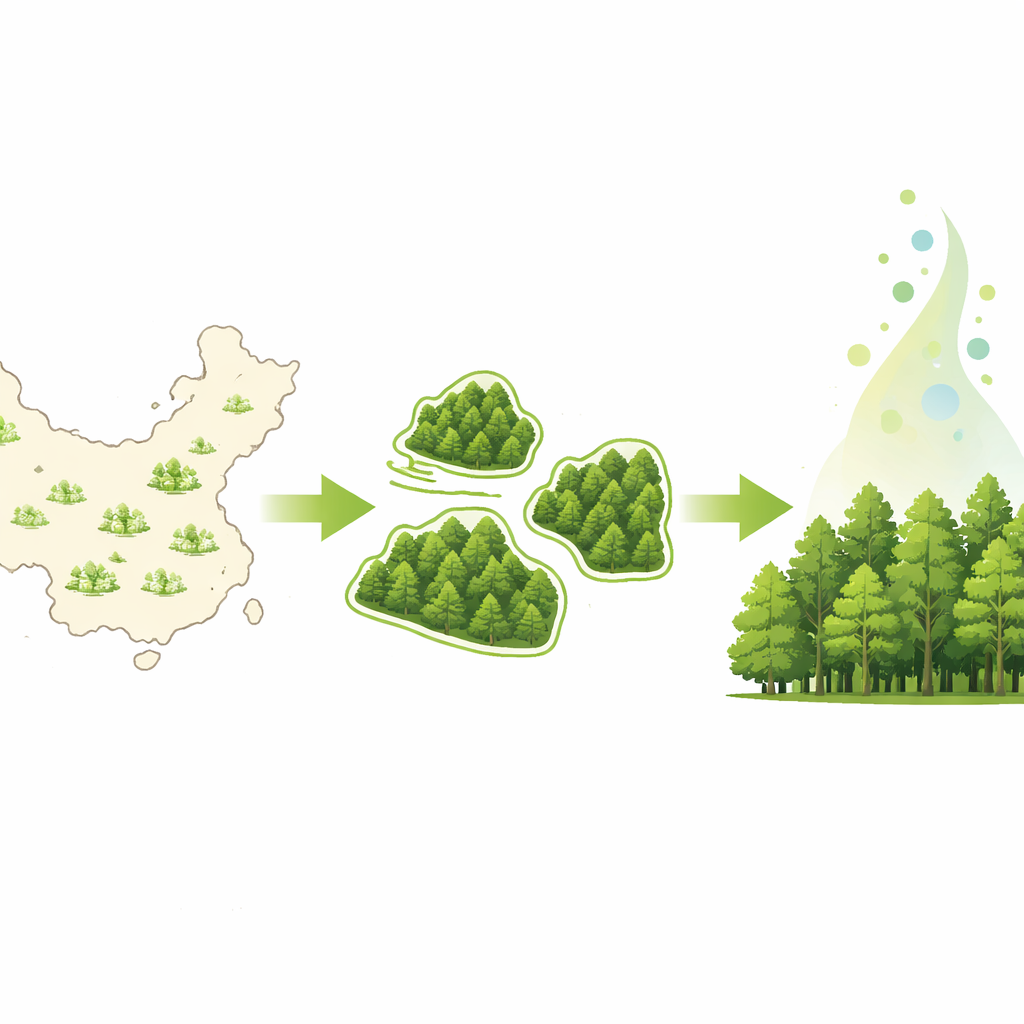
Stronger Protection, More Carbon
The comparisons show that forests inside China’s protected areas hold about 13 percent more aboveground carbon than similar forests without protection. On average, protected forests store about 68 metric tons of carbon per hectare, versus 60 in unprotected sites. When the team broke this down by protection level, a clear pattern emerged: national parks—which have the strictest rules and largest, most intact ecosystems—stored the most extra carbon, about 18 metric tons per hectare beyond nearby unprotected forests. Nature reserves gained about 8 tons per hectare, while more lightly regulated nature parks gained about 5. Not all protected areas perform equally well, however; some reserves and parks actually underperform their surroundings, suggesting that weak enforcement or local pressures can erode the carbon advantage.
How Forest Management Shapes the Outcome
Forest history and use also turned out to matter. The study grouped forests into four broad types: untouched intact forests, naturally regrowing forests left alone, naturally regrowing forests that are managed, and planted forests. Intact forests—mostly found in remote mountains—already store the most carbon, but surprisingly, protection makes little difference there because many of these old-growth stands remain relatively undisturbed even outside parks. By contrast, naturally regrowing and planted forests gain a clear carbon boost from protection. Managed naturally regenerating forests inside protected areas showed the largest extra carbon gain, roughly 10 metric tons per hectare more than similar managed forests outside. This suggests that combining legal protection with careful, low-impact management can help regrowing forests catch up to intact forests in how much carbon they hold, while also supporting biodiversity recovery.
Looking Ahead Under Climate Change
To ask what the future might hold, the team coupled today’s satellite-based carbon estimates with a detailed ecosystem model that simulates how forests respond to changing climate and rising carbon dioxide. They explored three possible futures, from low to high greenhouse gas emissions, out to the year 2100. In all cases, forests in China’s protected areas are projected to store more carbon per hectare in the future than they do today, largely because warmer temperatures and extra carbon dioxide can speed tree growth—at least up to a point. The key question is how much of this potential gain protected areas can actually keep, given the risk of logging, degradation, and land-use change outside their borders. 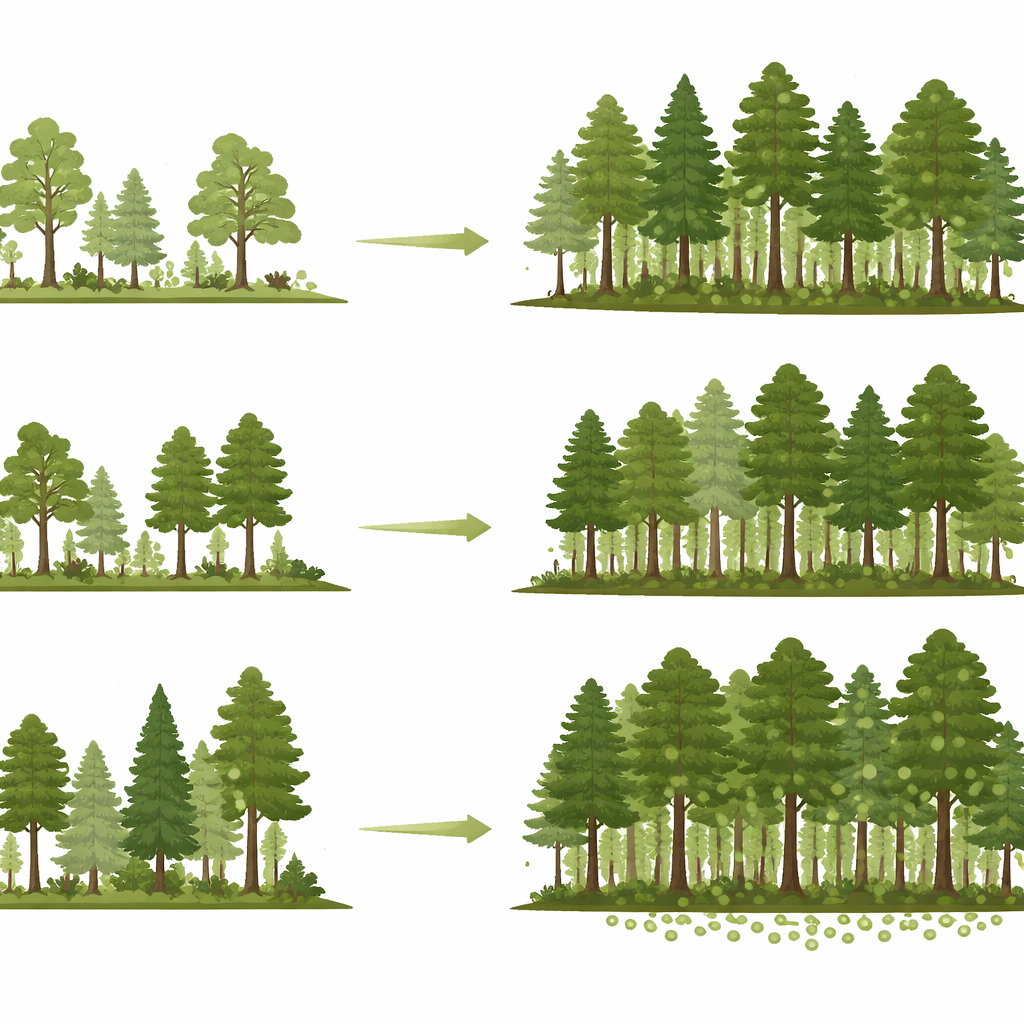
Carbon Rewards from Stronger Safeguards
By combining the model’s future growth with today’s measured effectiveness of protection, the authors estimate how much additional carbon could be retained under different protection levels. If all protected forests kept their current mix of rules and enforcement, they would add roughly 250 to 290 billion kilograms of extra carbon by 2100, depending on the emissions pathway. If instead all protected areas were managed as strictly as today’s national parks, that bonus could swell to about 600 billion kilograms of carbon under a high-emissions scenario—nearly three times what they currently preserve, and equivalent to about one-fifth of China’s annual fossil fuel emissions. Realizing this potential will require not just more parks, but better-targeted and better-governed ones, especially in carbon-rich and wildlife-rich regions, along with thoughtful management that balances dense tree growth with fire risk and the health of whole ecosystems.
What This Means for Climate and Nature
For a layperson, the takeaway is straightforward: legally protecting forests in China already keeps more carbon locked away in trees than if those lands were left unprotected, and stronger, longer-lasting safeguards could greatly expand that climate benefit. National-park-level protection, paired with smart management and restoration, would help forests grow taller and denser, supporting wildlife while soaking up more of the carbon dioxide that warms our planet. In a world searching for nature-based climate solutions, China’s protected forests illustrate how careful land protection can serve both people and nature—provided that policies, funding, and local practices keep pace with the rising expectations we place on these living carbon vaults.
Citation: Fu, Y., Li, W., Niu, Z. et al. Enhanced forest carbon gains from stronger protection in China’s protected areas. Nat Commun 17, 2609 (2026). https://doi.org/10.1038/s41467-026-69505-x
Keywords: forest carbon, protected areas, China forests, climate mitigation, natural regeneration