Clear Sky Science · en
Triggering action potentials of a single neuron by multiphoton excitation elicits visually guided behavior
Lighting Up a Single Brain Cell
Imagine being able to switch on a single brain cell deep inside a living brain and watch how that tiny change ripples out into behavior. This study shows that it is now possible to do exactly that in mice, using ultrafast laser light instead of genetic tricks. The work opens a window onto how individual neurons contribute to perception and action, and hints at future ways to study—and perhaps someday treat—the brain without adding foreign genes.
Gently Poking Neurons with Light
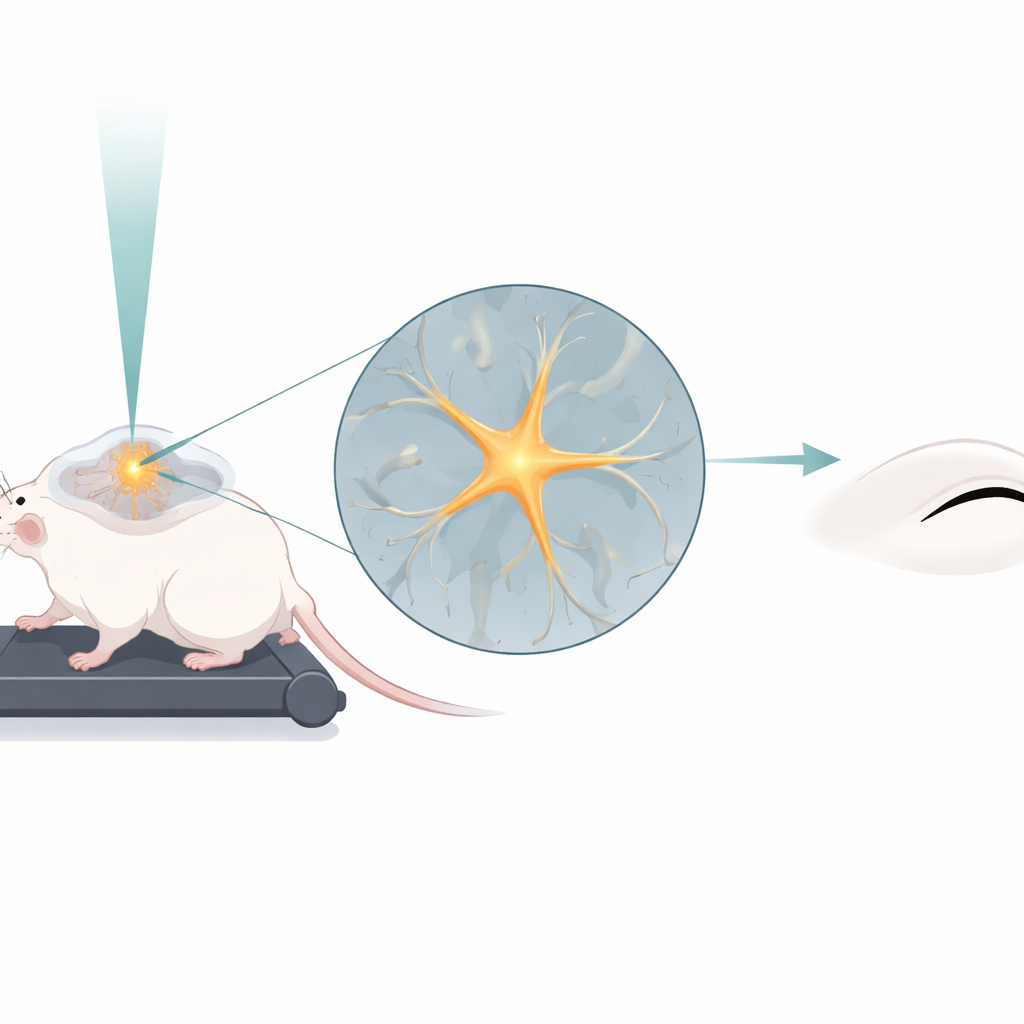
Most modern methods for steering brain activity rely on optogenetics, which requires adding light-sensitive proteins to nerve cells through genetic engineering. That limits where and how the methods can be used. The authors of this paper developed an “opsin-free” alternative that uses a tightly focused femtosecond laser beam to nudge neurons that are already there. By scanning the laser over a tiny patch of a neuron’s cell body, they can open natural calcium channels in its membrane, let calcium ions flow in, slowly depolarize the cell, and make it fire electrical spikes, called action potentials. Because the laser is sharply focused in three dimensions, the effect is confined to the targeted neuron, leaving neighboring cells essentially untouched.
Safe and Precise Single-Cell Control
The team first tested their approach in brain slices and cultured neurons. They showed that brief, local light scans reliably triggered calcium increases and action potentials, but only when specific calcium channels were available and sodium channels were functional. Blocking these pathways stopped the effect, confirming that the laser was working through the neuron’s own machinery rather than simply heating tissue. In live mice, the researchers tuned the laser power so that each neuron had a clear threshold at which it responded, and found that using about 20–40% above this level gave nearly perfect activation without signs of damage. Dyes that reveal torn membranes stayed dark, and neurons remained responsive to normal inputs, demonstrating that the method can safely and repeatedly drive individual cells.
From Single Cells to Learned Eyeblinks
To see what this fine-grained control means for behavior, the scientists trained head-fixed mice on a simple task: blink when a small square of light appears in a certain position on a screen. Over days of pairing that visual cue with a gentle air puff to the eye, mice learned to close the eyelid in anticipation whenever that specific square flickered on. While the animals performed the task, the researchers used two-photon microscopy to map groups of neurons in the primary visual cortex that consistently responded to the appearance or disappearance of that square. These “ensembles” were sprinkled across the cortical surface, each containing only a few dozen cells that lit up together during the learned eyeblink response.
Making and Breaking Behavior with One Neuron
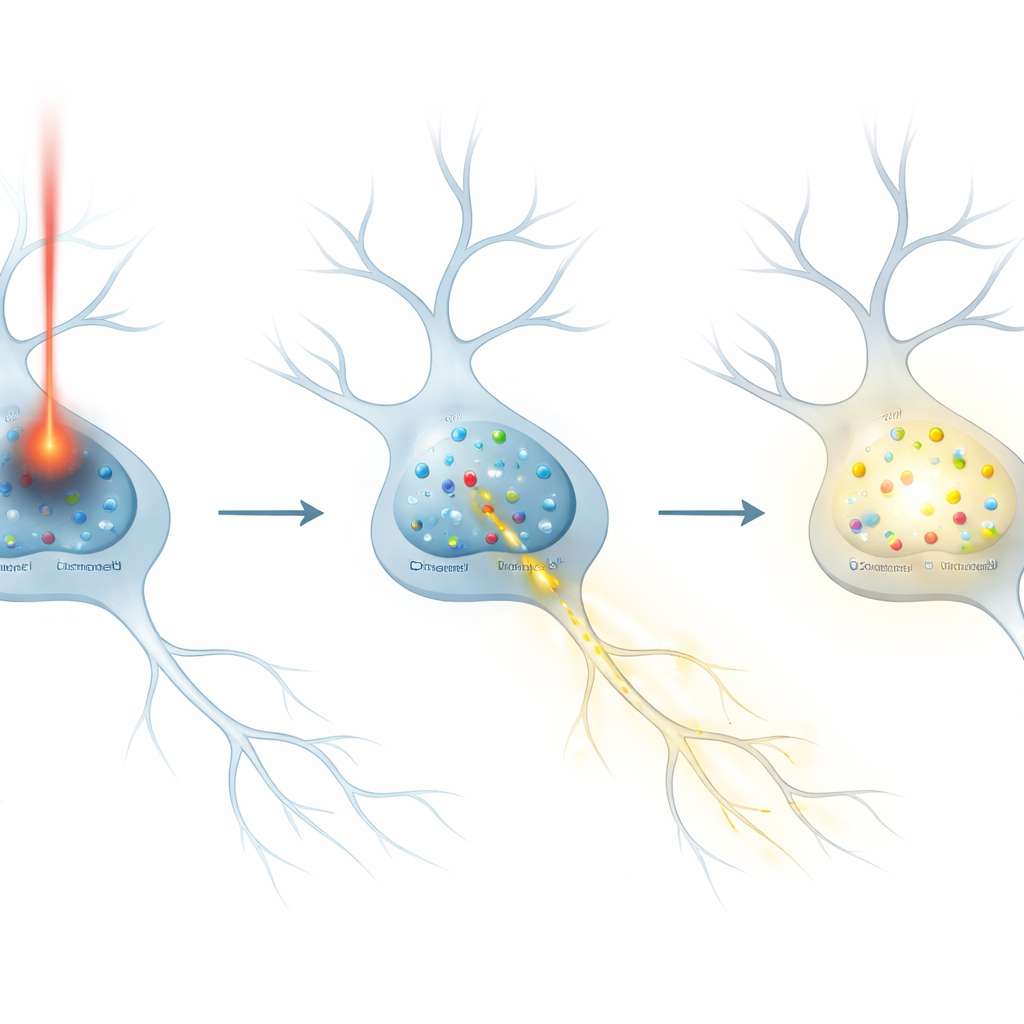
Once they had identified these ensembles, the authors used their laser method to activate randomly chosen single neurons within them, but only after turning off all visual cues. Strikingly, stimulating just one such neuron was enough to trigger an eyeblink in the trained mice most of the time, while stimulating neurons outside the ensemble almost never did. The rest of the ensemble usually stayed quiet during these light-triggered blinks, suggesting that an individual, well-chosen neuron can stand in for the whole group in driving this simple learned action. When the laser power was increased further, however, calcium flooded into the targeted neuron for minutes, temporarily silencing its ability to fire. In this “photodisruption” mode, even normal visual cues could no longer produce eyeblinks, and many other ensemble neurons stopped responding as well—an entire network seemed briefly paralyzed by the loss of a single member.
A Flexible but Fragile Network
Importantly, this paralysis did not last. The silenced neurons gradually pumped calcium back out, and with repeated presentations of the visual cue, the ensemble’s activity and the eyeblink behavior returned. This shows that while individual neurons can have powerful, causal roles in guiding behavior, the network as a whole is robust enough to recover from their temporary loss. For a general reader, the key message is that a single neuron in the visual cortex can both launch and stall a learned, visually guided action when precisely controlled with light. The new opsin-free laser technique gives neuroscientists a powerful way to probe such cause-and-effect relationships at the level of individual cells in a living brain, without the need for genetic modification.
Citation: Wang, H., Xiao, Y., Tang, W. et al. Triggering action potentials of a single neuron by multiphoton excitation elicits visually guided behavior. Nat Commun 17, 2608 (2026). https://doi.org/10.1038/s41467-026-69446-5
Keywords: single-neuron control, two-photon stimulation, visual cortex, eyeblink conditioning, neural ensembles