Clear Sky Science · en
Transposable elements hitchhike on Starships across fungal genomes
How fungal DNA stowaways reshape life
Fungi that attack plants and insects are powered by genomes in constant flux. This study reveals a surprising way that chunks of mobile DNA "hitchhike" between species on enormous genetic vehicles nicknamed Starships. By smuggling in bursts of new mobile elements, these Starships can rapidly rewire fungal chromosomes and even drain a pathogen of its ability to infect its host, with implications for agriculture, biocontrol, and our broader understanding of evolution.
Hidden passengers in fungal genomes
All complex organisms carry countless bits of mobile DNA, called transposable elements, that can copy and paste or cut and paste themselves around the genome. Most are quiet, but when they erupt in activity they can rearrange chromosomes, change how genes are switched on, and help species adapt—or malfunction. Another recent discovery in fungi is the Starship: a giant stretch of DNA that can move horizontally between species and often carries useful cargo genes. The authors asked whether Starships might also act as ferries for transposable elements, helping these genetic stowaways leap into new fungal hosts.
A dramatic genome shake‑up in a biocontrol fungus
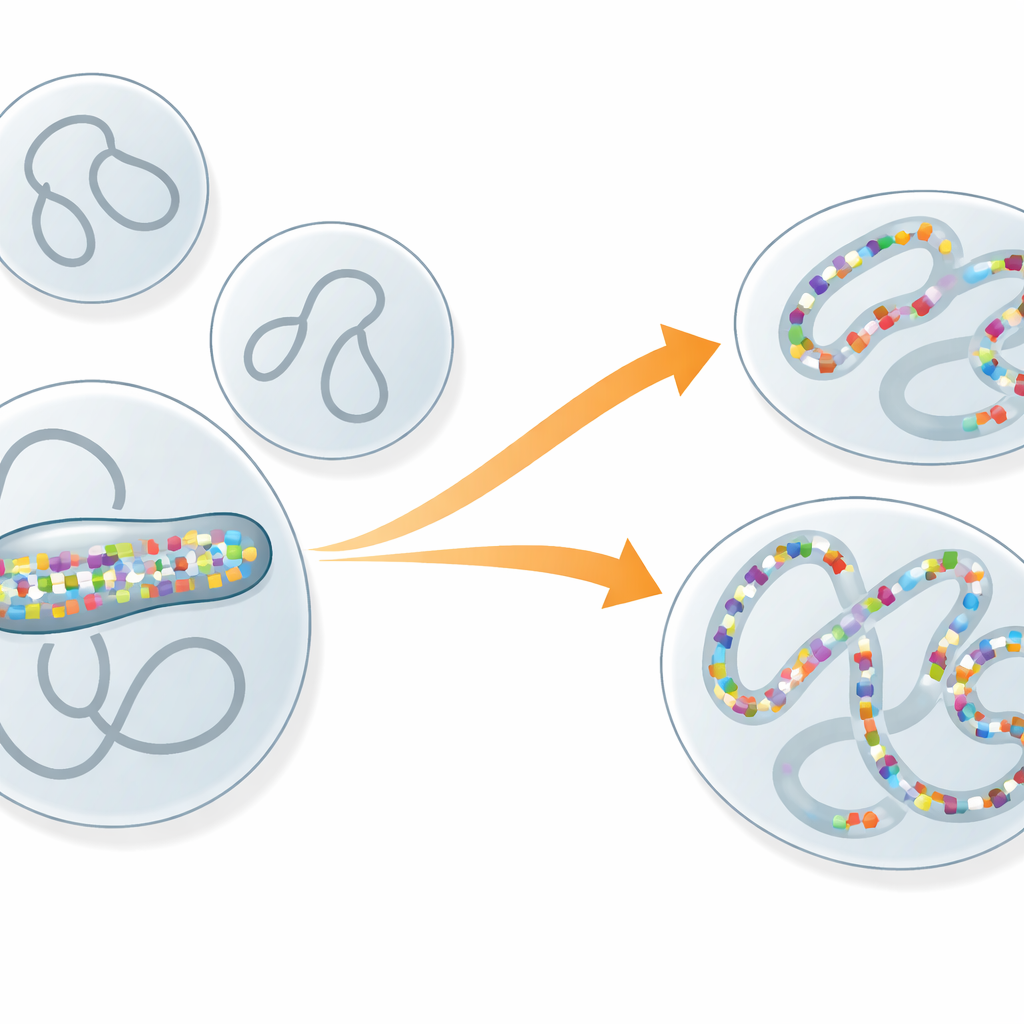
The team focused first on two closely related strains of the insect‑killing fungus Metarhizium anisopliae, widely used to control livestock ticks and crop pests. Using high‑accuracy long‑read DNA sequencing, they assembled both genomes to near‑chromosome level. One strain, called NE, had more chromosomes and over three times as much transposable DNA as its cousin E6. When the researchers lined up the chromosomes of the two strains, they found that NE’s genome had been extensively reshuffled: segments from different chromosomes were broken and rejoined in new combinations, producing dozens of major breakpoints. Many of these breakpoints sat right next to three particular families of mobile DNA, hinting that their activity had helped fracture and re‑stitch the genome.
Starships deliver a burst of mobile DNA
Digging deeper, the authors discovered that copies of those same three transposable element families—Helitrons, hAT‑Restless, and Mutator—were nearly identical across the NE genome, meaning they had spread very recently. Phylogenetic analyses showed that these elements were more closely related to counterparts in other Metarhizium species than to older elements in NE itself, pointing to recent arrival from outside. Crucially, one huge Starship in NE, named s00261, carried multiple copies of these elements plus dozens of other transposons. Hundreds of nearly identical copies of its passenger elements had dispersed across NE’s chromosomes. Statistical comparisons showed that elements sitting on this Starship were far more likely to have proliferated than similar elements elsewhere, strongly suggesting that the Starship introduced them and sparked a genome‑wide expansion.
From genome chaos to lost infectivity
These genetic fireworks had real‑world consequences. When NE and E6 strains were tested against cattle ticks, E6 killed the parasites efficiently, while NE was no more lethal than a control treatment. Measurements of enzymes secreted during early infection showed that NE produced far less of several key proteins involved in digesting the insect cuticle. Proteomic profiling confirmed that hundreds of secreted proteins differed in abundance between the strains. In several striking cases, genes for important enzymes had been moved or disrupted by nearby transposable elements or breakpoints; for example, a major virulence‑related protease gene and parts of a toxin‑making cluster had been relocated or partially lost where new insertions occurred. The authors argue that the Starship‑driven burst of mobile DNA rearranged regulatory neighborhoods and gene clusters, helping to strip NE of its pathogenic punch.
Starships as shuttles for mobile DNA across fungi
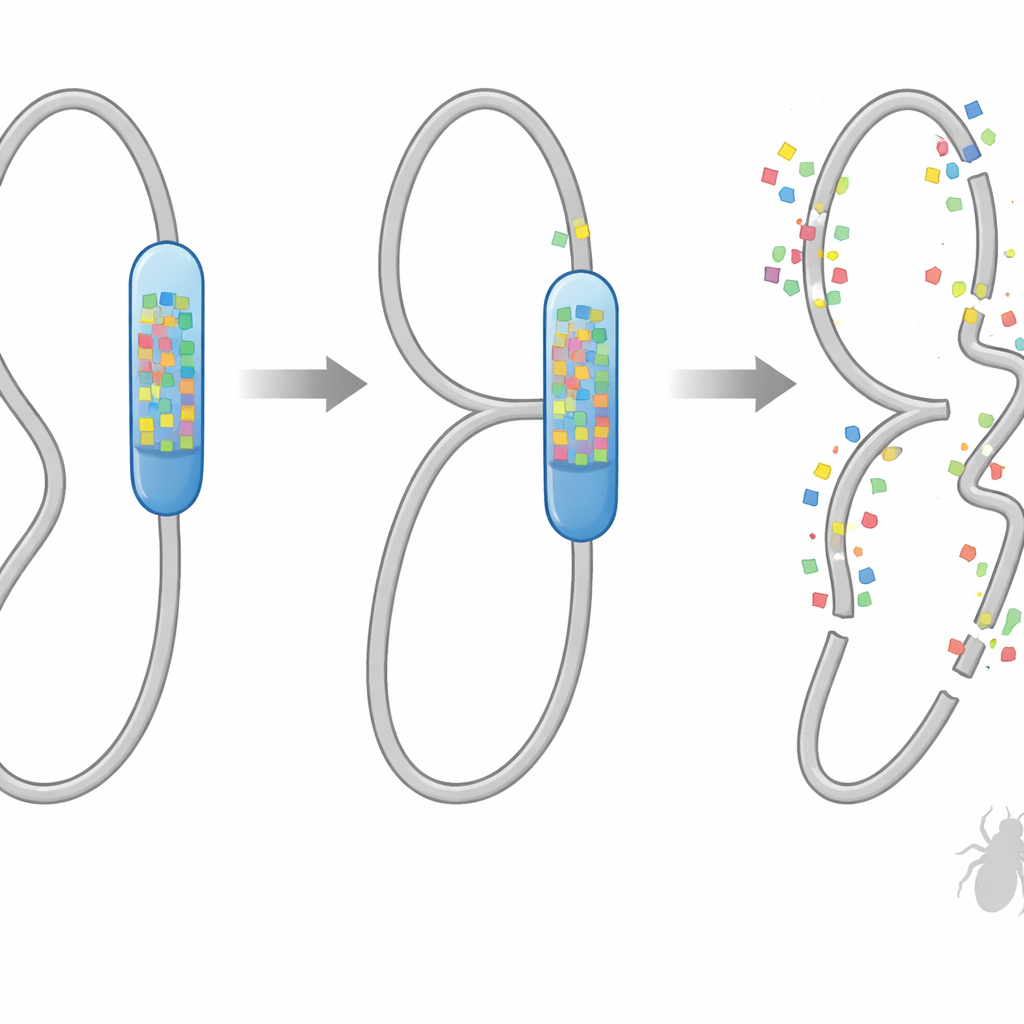
To see whether this was a one‑off oddity or a general rule, the team surveyed 561 Starships from 164 fungal species using a public database. Three‑quarters of these giant elements carried recognizable transposable elements, and in many cases the Starship segments held more mobile DNA than surrounding genomic regions. In over a third of species examined, at least one Starship‑borne element had an identical or near‑identical copy elsewhere in the same genome, indicating very recent movement between Starship and host chromosomes. Even more striking, about one in eight Starships contained elements that were perfect matches to elements on Starships in other species, especially within genera such as Aspergillus, Metarhizium, and Pyricularia. Detailed evolutionary tests in these groups showed that many of these shared elements conflict with the species family tree and are far more similar than expected from ordinary inheritance—classic signatures of horizontal transfer.
What this means for evolution and biocontrol
Taken together, the work paints Starships as major shuttles for mobile DNA in fungi. By carrying active transposable elements across species and then seeding bursts of new insertions, Starships can rapidly rearrange genomes, alter virulence traits, and perhaps even kick‑start the formation of new species that can no longer recombine with their ancestors. For agriculture and biocontrol, this means that fungal agents like Metarhizium can evolve abruptly, sometimes losing desired traits when a Starship docking sets off a genomic chain reaction. More broadly, the study shows that in the microbial world, evolution is not just about slow mutation but also about genes—and whole mobile arsenals—hitching rides on giant DNA starships.
Citation: Griem-Krey, H., de Fraga Sant’Ana, J., Oggenfuss, U. et al. Transposable elements hitchhike on Starships across fungal genomes. Nat Commun 17, 2634 (2026). https://doi.org/10.1038/s41467-026-69410-3
Keywords: transposable elements, Starship elements, fungal genomes, horizontal gene transfer, genome rearrangement