Clear Sky Science · en
Cancer cell-intrinsic inflammasome protein ASC links innate immunity with mitochondrial metabolism in driving pancreatic cancer
Why this research matters
Pancreatic cancer is one of the deadliest cancers, often discovered too late for effective treatment. This study uncovers a hidden “wiring” inside pancreatic tumor cells that links the body’s first-line immune defenses to how these cells make and use energy. By showing that a single immune adaptor protein, called ASC, helps drive tumor growth by rewiring cell metabolism, the work points to a new and very specific target for future therapies in a cancer that badly needs better options. 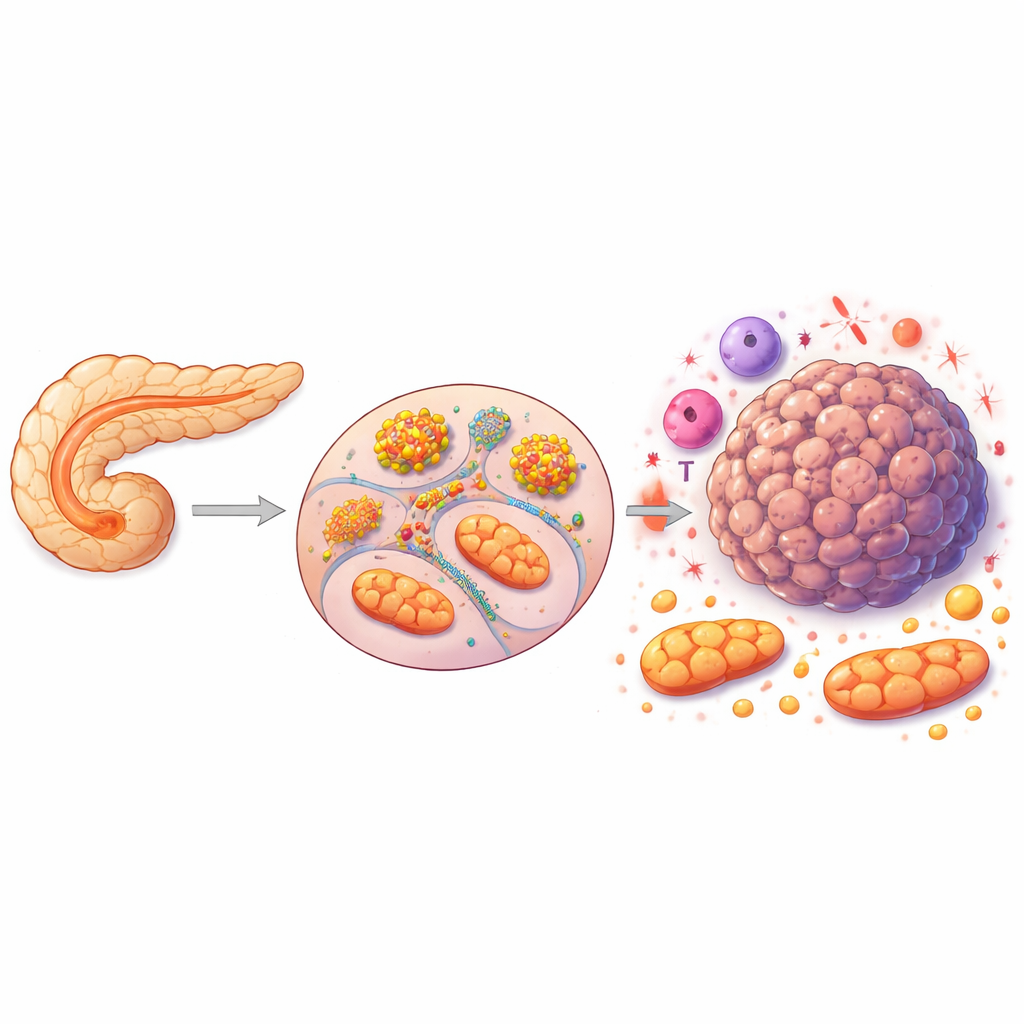
A deadly cancer with few good options
Most pancreatic cancers are of a type called pancreatic ductal adenocarcinoma, which arises from cells lining tiny tubes in the pancreas. These tumors are usually advanced by the time they are found, and current chemotherapy and immunotherapy offer only modest benefits. Scientists know that chronic inflammation and an immune-suppressive tumor environment help pancreatic cancers grow, but the precise molecules that connect disordered immunity to tumor behavior have remained unclear. Identifying such molecules could open the door to treatments that slow the disease by cutting crucial “support lines” inside the cancer itself.
An immune adaptor hiding in tumor cells
The authors focused on ASC, a scaffold protein that normally helps assemble inflammasomes—molecular machines that sense danger and activate inflammatory signals. Analyzing several patient datasets, they found that the gene encoding ASC (PYCARD) is consistently elevated in pancreatic tumors compared with healthy pancreas, across different molecular subtypes of the disease. High ASC levels, and high levels of its partner enzyme Caspase-1 and the cytokine IL-18, were linked with poorer patient survival. Using advanced staining techniques on tumor biopsies, the team showed that ASC and activated Caspase-1 are found mainly inside the cancerous duct cells themselves, forming bright punctate “specks” both within cells and in the surrounding tissue—evidence of active inflammasome complexes. 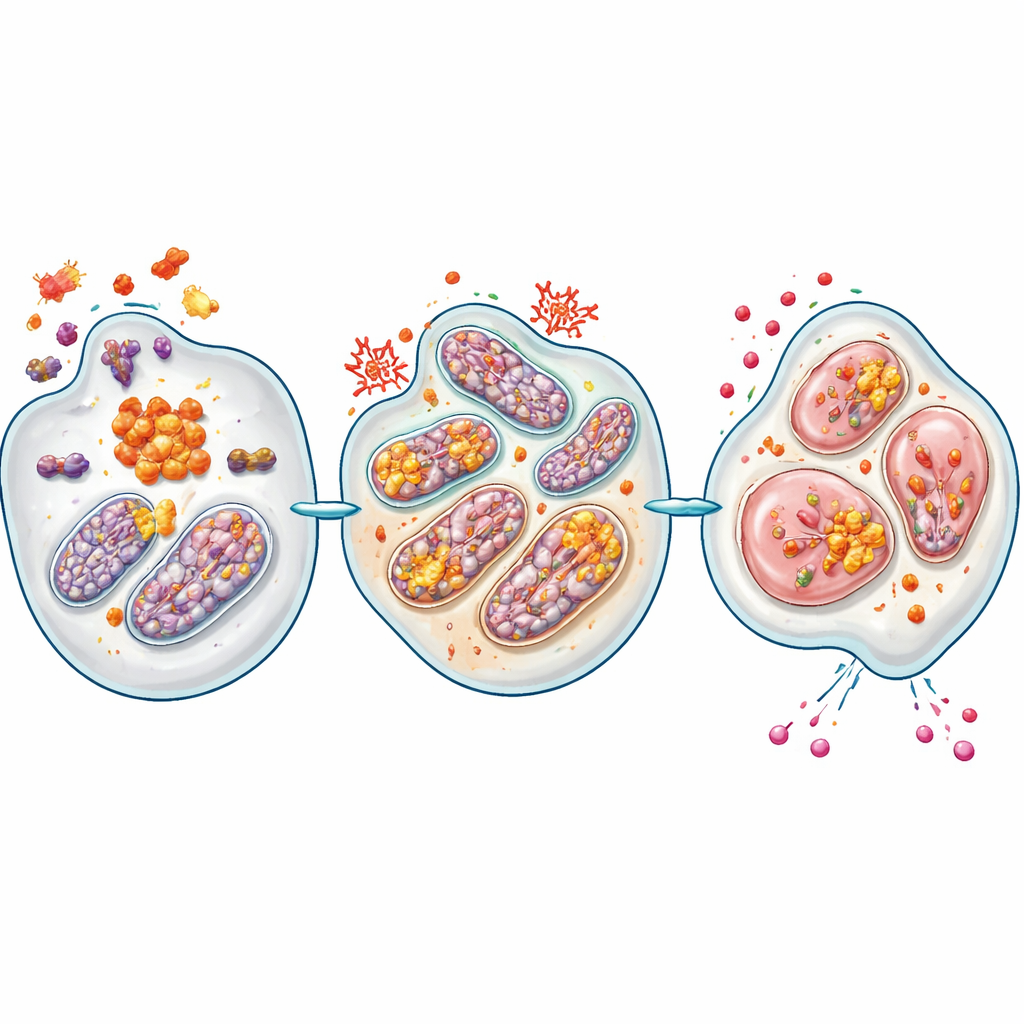
Switching off ASC slows tumor growth
To test whether ASC actually helps cause pancreatic cancer rather than merely accompanying it, the researchers used a well-established mouse model driven by mutant Kras and Trp53 genes, which closely mimics human disease. In these mice, ASC, Caspase-1 and IL-18 were all elevated in the pancreas, and circulating IL-18 rose as lesions advanced. When ASC was deleted throughout the body, the mice developed far smaller pancreases, had many fewer and less aggressive tumors, and showed no liver metastases. Selectively deleting ASC only in the pancreatic duct epithelium produced a strong, though somewhat milder, protective effect, underscoring that ASC inside tumor cells is a major driver. Importantly, blocking ASC’s extracellular “specks” with a specialized nanobody drug also reduced tumor burden and cell proliferation, indicating that ASC acts both inside and outside cells to promote disease.
Rewiring the cancer cell’s power plants
Digging deeper, the team used whole-transcriptome profiling to compare gene activity in normal, tumor-bearing, and ASC-deficient pancreases. In tumor-bearing mice, genes tied to immune activation were switched on, while those involved in mitochondrial respiration and oxidative phosphorylation—the cell’s main energy-producing pathway—were dialed down. ASC loss largely reversed this pattern. Biochemical tests confirmed that key mitochondrial respiratory chain proteins were reduced in tumors but restored when ASC was absent. Tumor-bearing mice had fewer copies of mitochondrial DNA, more oxidative damage, and higher lactate levels, all hallmarks of a shift from oxygen-based energy production to “Warburg-like” aerobic glycolysis. Removing ASC increased mitochondrial DNA copy number and cut both oxidative stress and lactate production.
From mouse models to human cancer cells
To see whether these findings applied directly to human tumors, the authors reduced ASC levels in two human pancreatic cancer cell lines using small interfering RNA. Cells with lowered ASC showed reduced Caspase-1 activation, grew more slowly, formed fewer colonies, and produced less lactate and mitochondrial superoxide. Their mitochondrial genes and DNA copy number rebounded, and their oxygen consumption and spare respiratory capacity increased, indicating a shift back toward healthier mitochondrial respiration. Notably, these ASC-deficient cells became less sensitive to drugs that block glycolysis, consistent with a reduced dependence on this cancer-favoring energy route. Together, these results show that ASC actively steers pancreatic cancer cells toward a high-glycolysis, high-oxidative-stress state that supports rapid growth.
What this means for future treatment
This study reveals ASC as a central “bridge” between innate immunity, chronic inflammation, and the corrupted energy metabolism that fuels pancreatic cancer. Instead of acting only in classic immune cells, ASC inside ductal tumor cells helps assemble inflammasomes that favor production of IL-18, disrupt mitochondrial biogenesis, and push cells toward glycolysis and aggressive growth. In mice, removing ASC genetically or neutralizing its extracellular specks slows disease progression, suggesting that drugs targeting ASC or its inflammasome complexes could complement existing therapies. While questions remain—such as which upstream sensors feed into ASC in this cancer and how best to block IL-18 safely—the work provides a compelling rationale for pursuing ASC as a novel, mechanism-based therapeutic target in pancreatic ductal adenocarcinoma.
Citation: Chey, Y.C.J., Kashgari, B., McLeod, L. et al. Cancer cell-intrinsic inflammasome protein ASC links innate immunity with mitochondrial metabolism in driving pancreatic cancer. Nat Commun 17, 2477 (2026). https://doi.org/10.1038/s41467-026-69398-w
Keywords: pancreatic cancer, inflammasome, mitochondrial metabolism, IL-18, cancer immunology