Clear Sky Science · en
Interleukin-10 expressing B lineage cells in visceral adipose tissue protect against aging-related insulin resistance and extend lifespan
Why belly fat matters as we grow older
As people age, many develop stubborn belly fat and rising blood sugar, increasing the risk of type 2 diabetes and heart disease. Scientists have long blamed this deep “visceral” fat for stirring up chronic, low-level inflammation that slowly wears down the body. This study reveals a surprising twist: hidden inside that same belly fat is a protective army of immune cells that actually fight age-related damage, improve how the body handles sugar, and even help extend lifespan—at least in mice.
A quiet battle inside belly fat
Deep within the fat that wraps around our internal organs lives a bustling community of immune cells. With age, this tissue usually becomes more inflamed, releasing harmful molecules that interfere with how insulin works and push us toward diabetes. The researchers asked a simple but overlooked question: does visceral fat also contain its own built-in defenses against this smoldering inflammation? They focused on a special type of B cell—immune cells usually known for making antibodies—that can release a calming molecule called interleukin-10, or IL-10.
Protective B cells grow with age
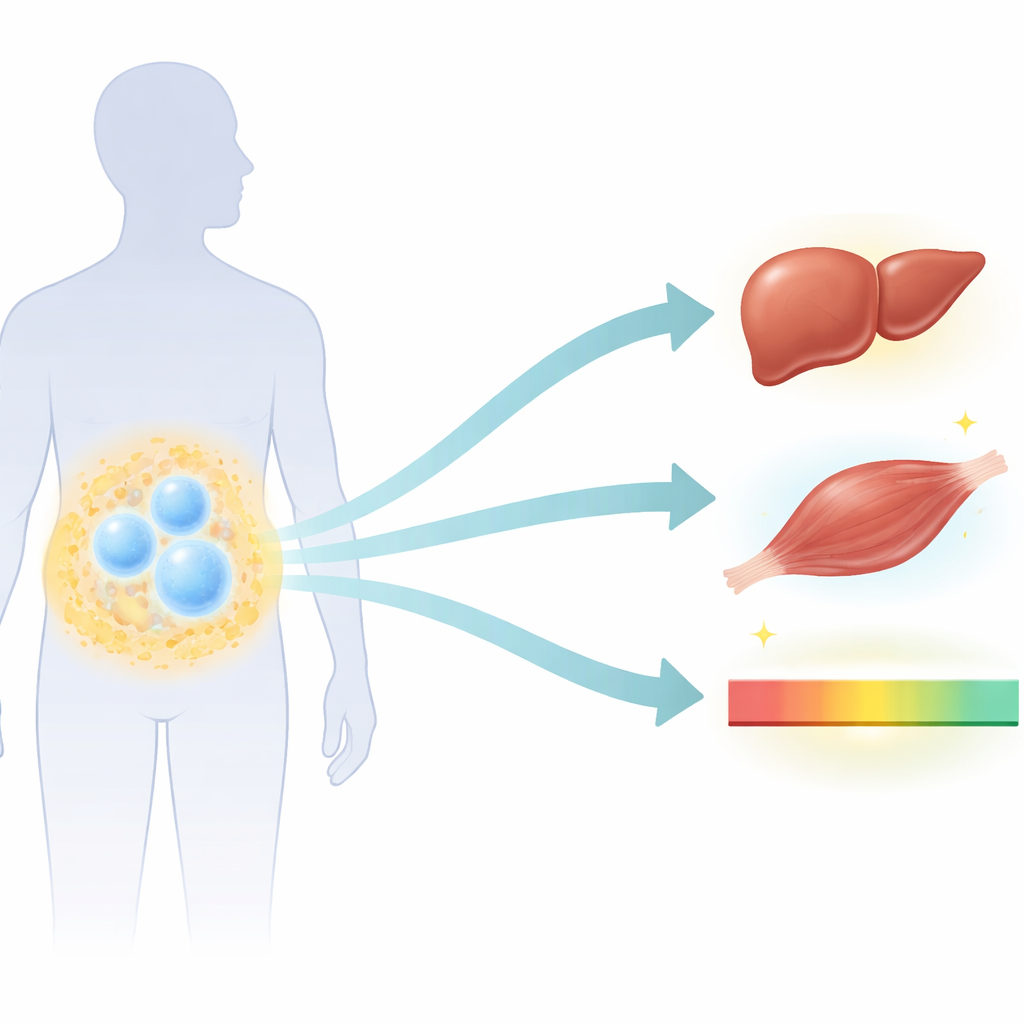
By examining fat samples from both mice and people, the team discovered that IL-10–producing B cells, called B-10 cells, expand dramatically in older visceral fat. In aged mice, these cells increased roughly tenfold compared with young animals, and similar patterns appeared in older adults. In the fat of older individuals, B-10 cells became the main source of IL-10, outpacing other immune cells such as T cells and macrophages. People with more of these B-10 cells in their belly fat tended to have lower blood sugar, better insulin sensitivity, and lower long-term blood sugar markers, suggesting these cells actively help keep metabolism in check.
When protective cells are lost
To test whether B-10 cells truly guard against age-related disease, the researchers engineered mice whose B cells could no longer make IL-10. As these mice grew old, they gained more fat in the abdomen, showed higher levels of inflammatory molecules in their fat and blood, developed stiffer, more fibrotic fat tissue and liver, and became clearly more insulin resistant in gold-standard clamp tests. Their lives were also shorter than those of normal mice. Remarkably, giving these mice monthly transfers of B-10 cells from healthy donors reduced inflammation and scarring in their fat, improved insulin sensitivity, and showed a trend toward longer survival.
How the fat environment boosts these defenders
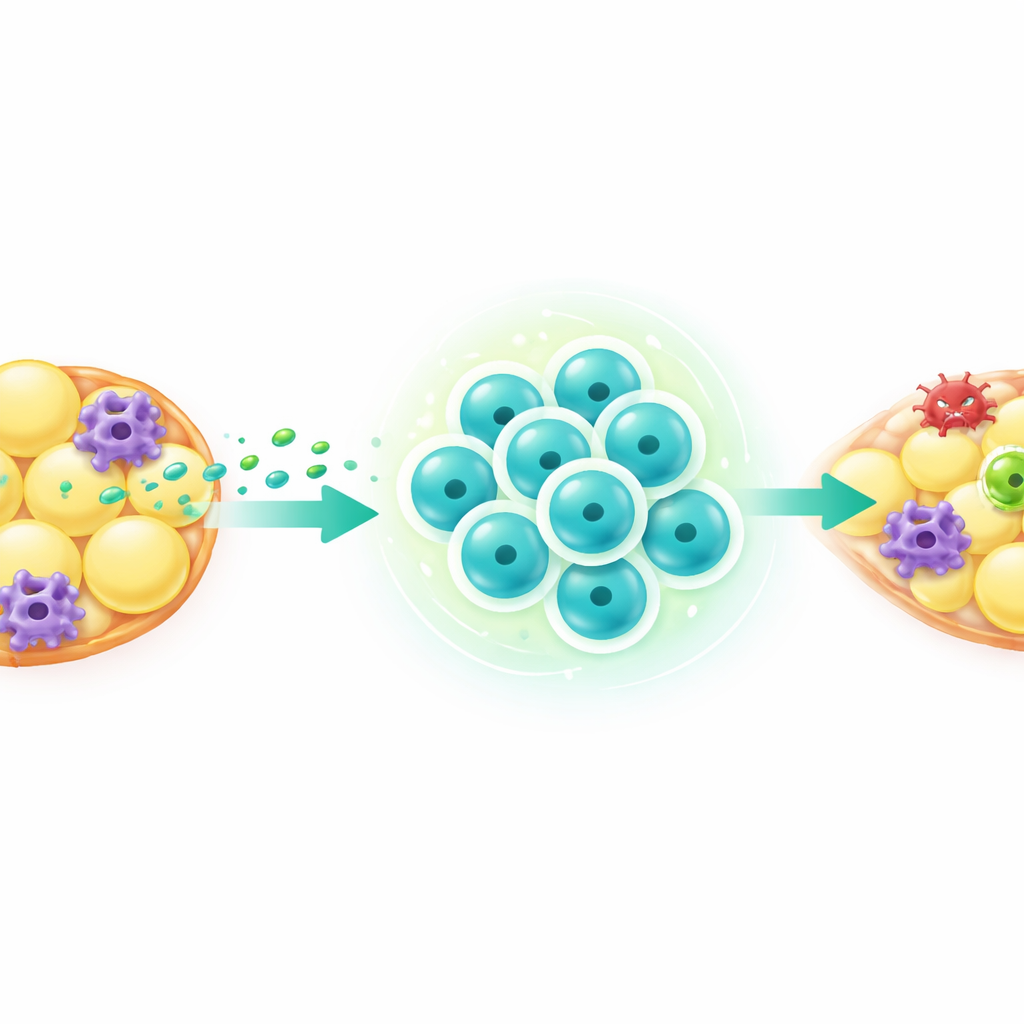
The study then asked why B-10 cells flourish in aged visceral fat instead of fading away. When the scientists moved B cells from young mice into the fat of old mice, those cells started making more IL-10, showing that the aged fat environment itself pushes them toward a protective role. By recreating this environment in lab dishes, the team pinpointed a key protein signal called BAFF, released mainly by fat cells and resident macrophages. BAFF strongly stimulated B-10 cells to multiply and boosted their IL-10 output, whereas blocking BAFF signals erased the growth advantage seen in aged fat.
Tuning a fat–immune circuit to live healthier longer
Finally, the researchers directly altered BAFF levels in the visceral fat of middle-aged mice using a gene-delivery virus. Dialing BAFF down shrank B-10 cell numbers, lowered IL-10, increased inflammation and scarring, worsened insulin resistance, and shortened lifespan. Turning BAFF up did the opposite: more B-10 cells, higher IL-10, less inflammation, better insulin action, and longer life. Together, these findings reveal a built-in protective circuit in belly fat—BAFF signals that grow IL-10–producing B-10 cells, which in turn calm inflammation and safeguard metabolism. For lay readers, the key message is that not all belly fat effects are harmful: within this tissue, the body has its own peacekeeping cells that, if supported or boosted, might one day help people age with healthier blood sugar control and a longer, more robust life.
Citation: Guo, J., Han, X., Qin, Y. et al. Interleukin-10 expressing B lineage cells in visceral adipose tissue protect against aging-related insulin resistance and extend lifespan. Nat Commun 17, 2466 (2026). https://doi.org/10.1038/s41467-026-69371-7
Keywords: aging, visceral fat, insulin resistance, immune cells, inflammation