Clear Sky Science · en
KidneyGenAfrica multi-cohort Genome-wide association study and polygenic prediction of kidney function in 110,000 Africans
Why Kidneys and Genes Matter for Everyone
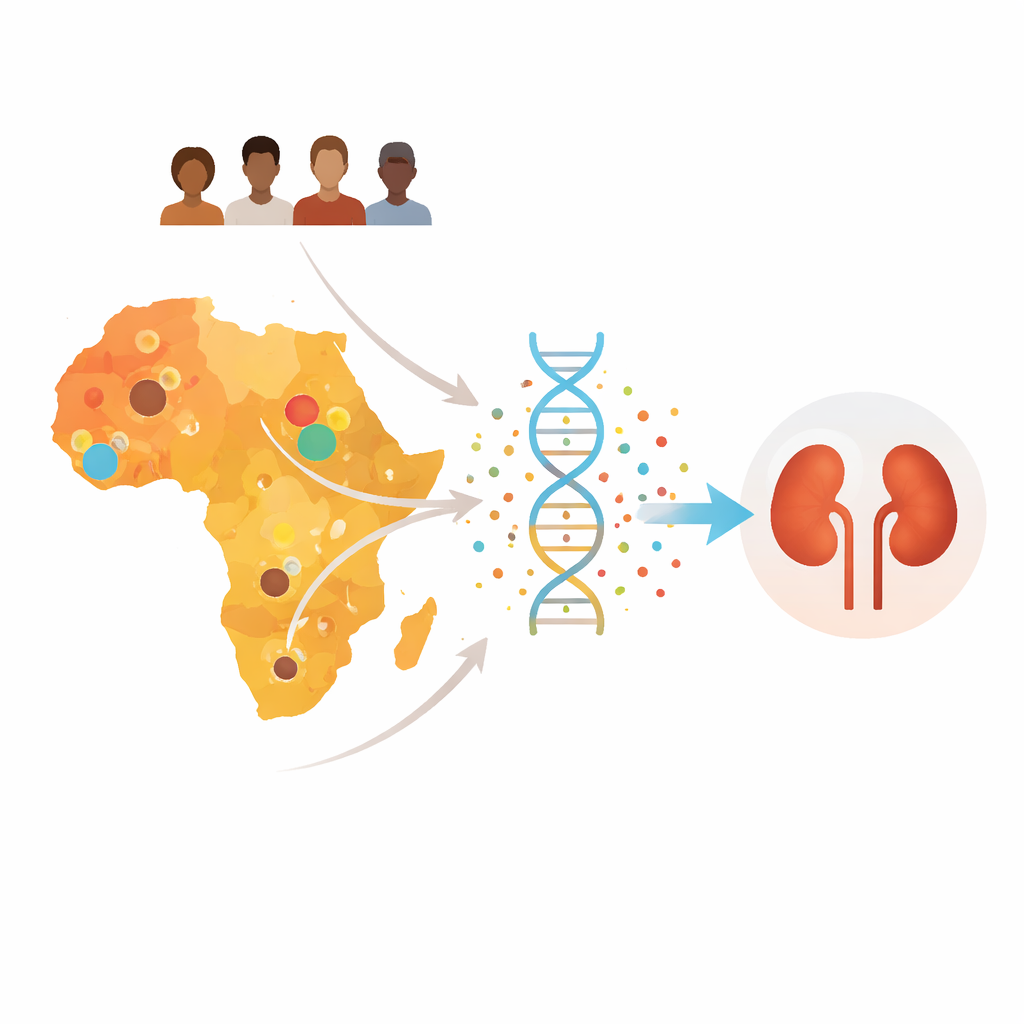
Kidney disease is a quiet but growing global health problem, especially in low- and middle-income countries. People of African ancestry are hit particularly hard, yet most of the genetic research that guides prevention and treatment has focused on Europeans. This study brings much-needed attention to African populations by examining the DNA of more than 110,000 people of African ancestry to understand why kidney function varies, and how genetic tools could better predict who is at risk.
Looking Across Africa and Its Diaspora
The researchers formed KidneyGenAfrica, a collaboration of ten studies from Eastern, Western, and Southern Africa, and combined these with large African-ancestry groups living in the United States and United Kingdom. They focused on estimated glomerular filtration rate (eGFR), a standard measure of how well the kidneys filter blood. By scanning the entire genome, they searched for tiny DNA differences that track with higher or lower kidney function. The study design used a stepwise approach: first analyzing each African region separately, then combining results across the continent, and finally adding data from African-ancestry populations in the diaspora to create a pan-African picture.
New Genetic Clues Unique to Africans
In the regional analyses within Africa, the team discovered four major genetic regions linked to kidney function, including two not previously known. When they broadened the lens to the full pan-African dataset of more than 100,000 people, they identified 19 independent regions, three of which were new to science. Some of these genetic variants are common in African populations but essentially absent in Europeans and East Asians. This means earlier global studies, which were dominated by non-African participants, simply could not see them. Using advanced fine-mapping methods, the researchers narrowed down several regions to single, high-confidence variants, including changes in genes already tied to blood traits and sickle cell disease, emphasizing how closely red blood cells and kidney health can be intertwined.
Genes That Reach Beyond the Kidneys
The team also asked whether kidney-related variants are involved in other aspects of health. A broad scan across many traits showed that several of the same DNA changes influence body weight, blood pressure, diabetes, heart disease, immune cell counts, skin characteristics, and even sleep and mood. This wide reach suggests that some biological pathways connect kidney function with metabolism, the immune system, and lifestyle-related conditions. Genes highlighted by the study were especially active in kidney tissue, but they also pointed toward pathways for handling oxidative stress, hormone regulation, and detoxification—processes that help the body cope with environmental and internal challenges.
Rethinking a Famous Risk Gene
One well-known kidney risk factor in African Americans is a pair of variants in the APOL1 gene, originally favored by evolution because they protect against a deadly infection spread by tsetse flies. This study shows that the same high-risk APOL1 combinations are less common and have weaker effects in many continental African populations than previously seen in African Americans. A clear link with low kidney filtration was found in Eastern Africa, but not as strongly in the other regions studied. The findings suggest that APOL1 is only part of a more complex, region-specific genetic picture shaped by local ancestry, environment, and how kidney disease is defined in different studies.
Why Local Genetic Context Matters for Prediction
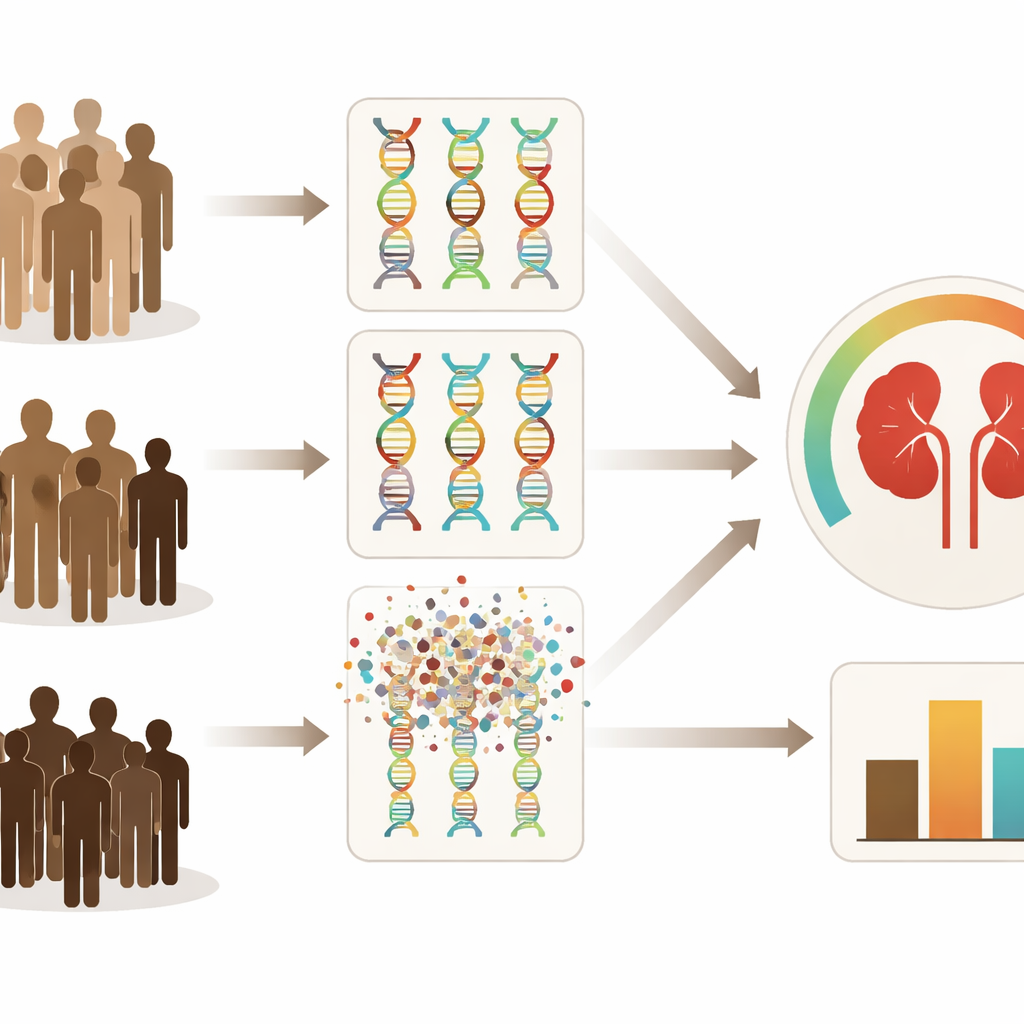
The researchers also tested “polygenic scores,” which combine information from many genetic variants into a single number that estimates a person’s inherited risk. They built different scores using data from separate African regions, from all of Africa combined, from African-ancestry diaspora groups, and from large mixed-ancestry studies. When these scores were used to predict kidney function in a Malawian cohort, the best-performing score came from genetically similar Southern African data, even though that dataset was much smaller than the global ones. This result underlines that similarity in genetic background between the discovery group and the target population can matter more than sheer sample size when building prediction tools.
What This Means for Future Health
Overall, the study shows that kidney function in people of African ancestry is shaped by a rich and varied genetic landscape that cannot be captured by studies in Europeans alone. It uncovers new genetic regions linked to kidney health, clarifies the role of well-known risk genes, and demonstrates that risk prediction works best when it is grounded in local genetic data. For patients and health systems, the message is clear: genomic research must include the full diversity of African populations if we are to build fair and accurate tools to prevent and manage kidney disease worldwide.
Citation: Kamiza, A.B., Chikowore, T., Chen, G. et al. KidneyGenAfrica multi-cohort Genome-wide association study and polygenic prediction of kidney function in 110,000 Africans. Nat Commun 17, 2599 (2026). https://doi.org/10.1038/s41467-026-69367-3
Keywords: kidney disease, African genomics, genetic risk prediction, polygenic scores, chronic kidney disease