Clear Sky Science · en
COVID-19-related inflammation of the placenta impedes fetal development in pregnant hamsters
Why this research matters for families
COVID-19 has been especially worrying for pregnant women, who must think about their own health and that of their unborn child. Doctors have seen that COVID-19 can damage the placenta, the lifeline that supplies a baby with oxygen and nutrients, but it has been hard to study exactly how this happens or how best to prevent it. This study uses pregnant hamsters, which share important features of placental structure with humans, to uncover how coronavirus infection in the mother can stunt fetal growth and how treatments like blood thinners and vaccination can help protect both mother and baby. 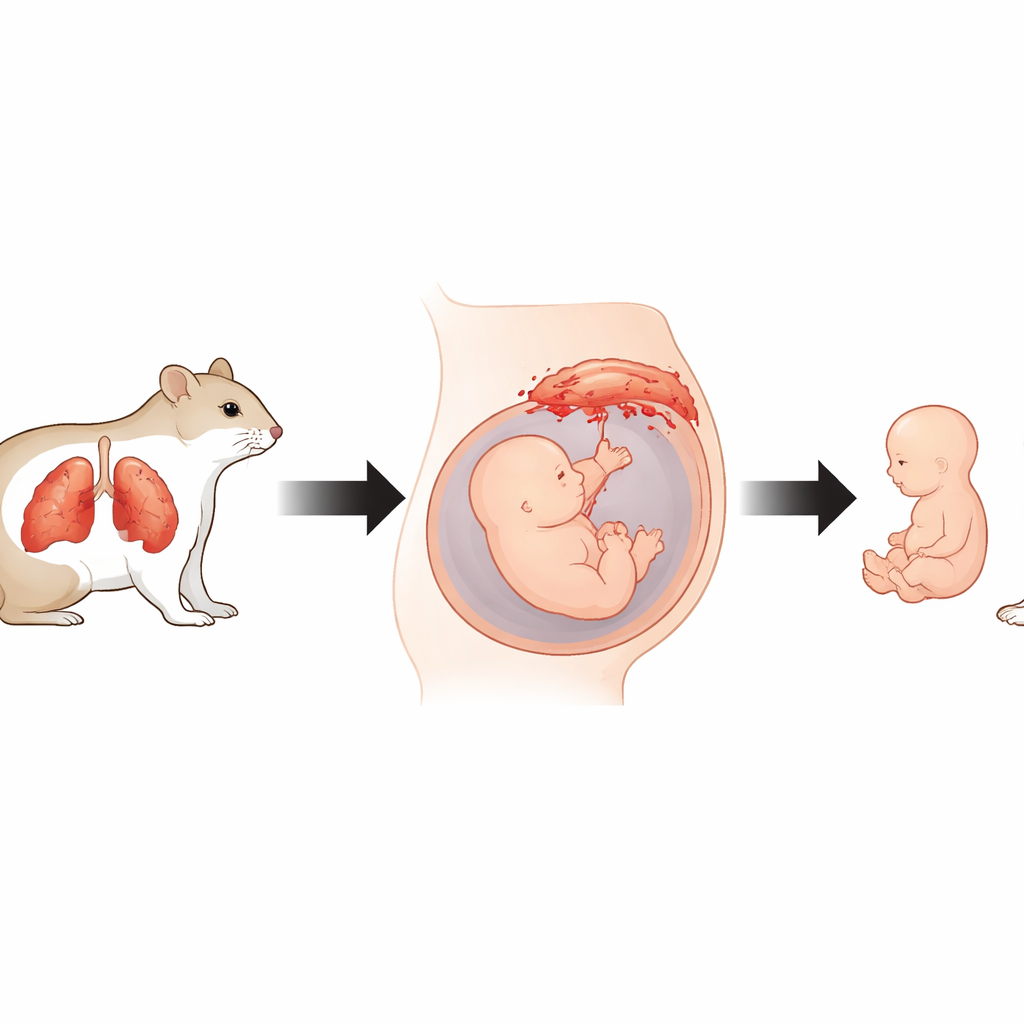
How a lung infection reaches the womb
The researchers infected pregnant Syrian hamsters with a variant of SARS-CoV-2 and followed both the mothers and their pups through pregnancy. The virus behaved much as it does in people: it caused pneumonia-like lung disease and weight loss in the mothers, but the animals generally recovered as the infection subsided. Crucially, the virus almost never crossed into the fetuses themselves. Instead, viral genetic material was found for a short time in many placentas, showing that the mother’s lung infection could reach the organ that supports the unborn pups, even without fully invading fetal tissues.
When infection strikes makes a big difference
To see if timing matters, the team infected mothers at several stages of pregnancy, from just after conception to late gestation. They then delivered the pups by caesarean section shortly before birth and weighed every fetus and placenta. Litter size and the number of lost pregnancies were similar regardless of infection, meaning embryos usually implanted and survived. But when infection occurred around the time the placenta is forming, many pups were born much smaller than normal, a condition known clinically as “small for gestational age.” This growth restriction appeared in both male and female pups and often affected only some siblings within the same litter, hinting that each placenta’s individual response to infection plays a key role.
Placental damage, not direct viral attack, harms the fetus
Microscopic examination of placentas from infected mothers revealed widespread injury. The tissue contained clots, dead patches, and heavy deposits of fibrin, a protein involved in blood clotting, especially in the region where maternal blood flows. There were also signs of ongoing inflammation and stress within the fetal blood vessels. Even after the virus’s genetic traces had vanished, the placentas still showed these scars, along with high activity of immune signaling molecules linked to inflammation and poor blood vessel growth. Statistical analyses confirmed that it was this sustained inflammatory state—rather than the mere presence of virus—that best predicted whether a fetus would be growth-restricted.
How blood thinners and vaccines change the picture
Because COVID-19 is known to disturb blood clotting, the scientists tested whether a commonly used blood thinner, enoxaparin, could improve outcomes. When infected pregnant hamsters received this drug during the peak of infection, their placentas showed fewer clots and less tissue death, and their pups were heavier, without any obvious harm to the mothers or fetuses. In a separate set of experiments, female hamsters were vaccinated with an experimental COVID-19 shot before becoming pregnant. Vaccinated mothers cleared the virus faster, had milder lung disease, and their placentas were far less damaged after infection. Their pups and placentas weighed more than those of unvaccinated, infected controls, particularly when infection struck during the critical window of placental development. 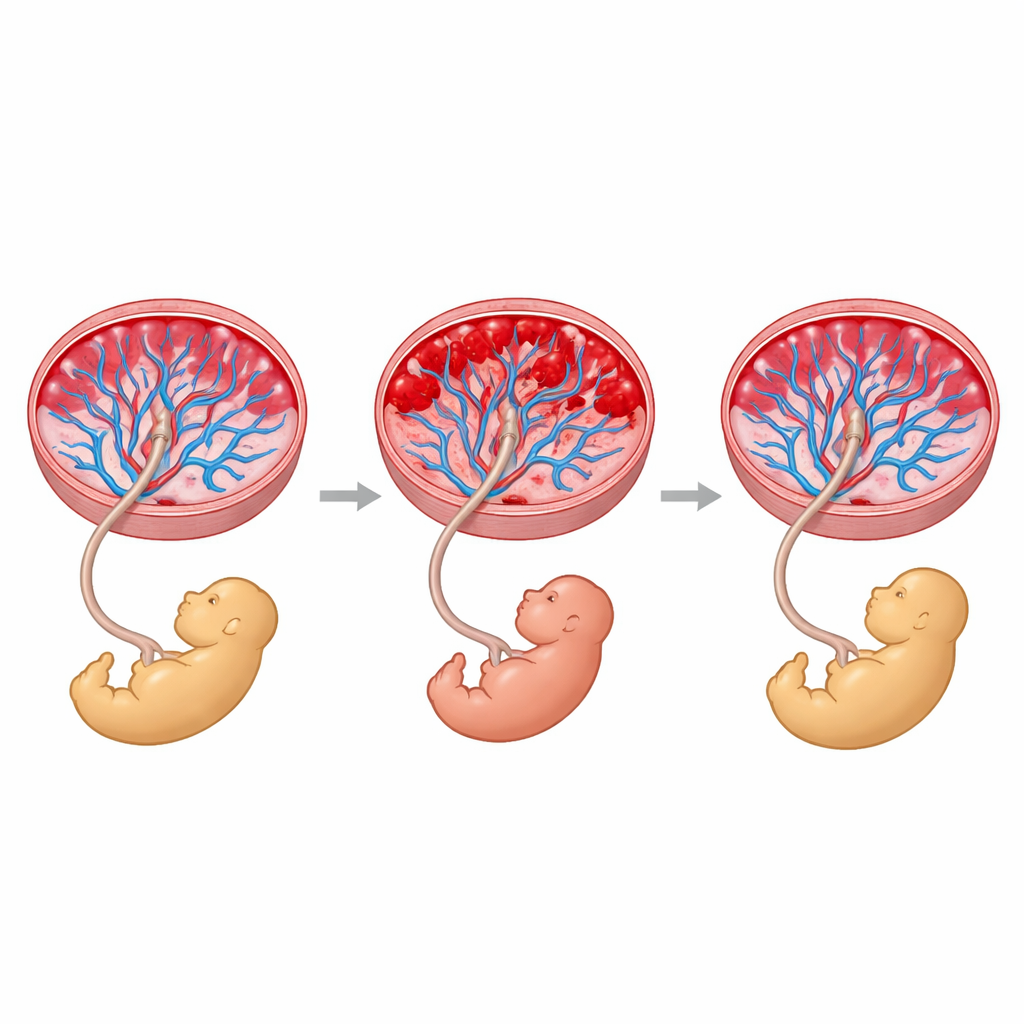
What this means for pregnant people
Taken together, this work paints a clear picture: in this animal model, coronavirus infection in the mother harms fetal growth mainly by inflaming and clogging the placenta, not by directly infecting the baby. That damage can be eased by medicines that keep blood flowing smoothly and largely prevented when the mother is already immune through vaccination. While hamsters are not humans, their pregnancies share enough similarities to suggest that protecting the placenta—through timely COVID-19 vaccination and careful management of clotting problems—may be central to safeguarding fetal growth in people as well.
Citation: Kumpanenko, Y., Maas, E., Degryse, J. et al. COVID-19-related inflammation of the placenta impedes fetal development in pregnant hamsters. Nat Commun 17, 2520 (2026). https://doi.org/10.1038/s41467-026-69360-w
Keywords: COVID-19 and pregnancy, placental inflammation, fetal growth restriction, anticoagulant therapy, maternal vaccination