Clear Sky Science · en
Analysis of the transcriptomic and metabolomic landscape of prostate cancer with different anatomical origins using snFLARE-seq and mxFRIZNGRND
Why this research matters to patients and families
Prostate cancer is the most common cancer in men, but not all prostate tumors behave the same. Where a tumor starts inside the prostate and how it responds to hormone treatment can strongly influence whether the disease comes back or turns aggressive. This study uses two new laboratory techniques on routinely stored hospital tissue to show how tumors from different regions of the prostate differ in their cell types, immune surroundings, and metabolism. These insights may help doctors better predict who needs intensive treatment and reveal new ways to stop cancers from evolving into hard‑to‑treat forms.
Different neighborhoods inside the same gland
The prostate has distinct regions, mainly the peripheral zone and the transition zone. About 70% of prostate cancers arise in the peripheral zone, while roughly a quarter begin in the transition zone. By following more than 400 men who had surgery, the researchers found that tumors limited to the transition zone tended to come back later and less often than those in the peripheral zone. Cancers that spread across both zones were the most worrisome, relapsing sooner and resisting hormone‑lowering therapy more strongly. These clinical patterns, confirmed in East Asian patients, suggest that the tumor’s original "neighborhood" shapes its future behavior.
Reading damaged tissue at single‑cell resolution
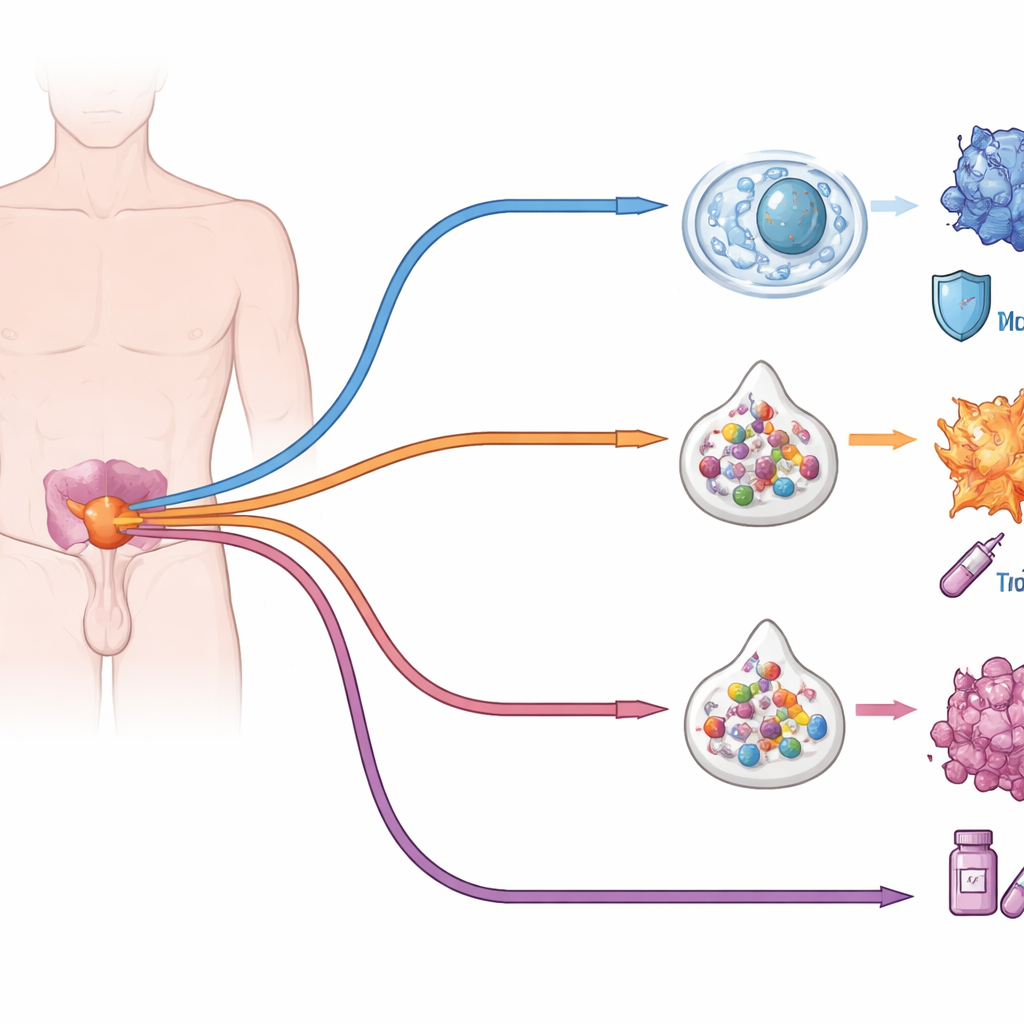
Most hospital pathology samples are preserved as formalin‑fixed, paraffin‑embedded (FFPE) blocks, which are excellent for long‑term storage but hard to analyze at the molecular level. The team created two complementary methods tailored for these samples. The first, called snFLARE‑seq, gently extracts nuclei and captures RNA from individual cells while carefully reversing chemical crosslinks. This allows scientists to measure which genes each cell is using, even years after surgery. The second method, mxFRIZNGRND, uses deep‑freezing, grinding, and optimized solvents to recover both water‑soluble molecules and fats without destroying fragile compounds. Together, these tools reveal both the "messages" inside cells and the small molecules that fuel them.
How tumor cells and their surroundings diverge
Applying snFLARE‑seq to over 100,000 cells from prostate tumors and nearby normal areas, the researchers mapped 13 major cell types, including cancerous epithelial cells, immune cells, and supporting fibroblasts. Peripheral‑zone tumors were enriched in particular epithelial subtypes previously linked to aggressive disease. One subtype known as "club" cells showed strong activation of inflammation‑related IL‑17 signals and heightened sensitivity to male hormones, and its gene signature predicted poorer outcomes in large public cancer databases. After hormone therapy, tumors spanning both zones did not simply look like a mix of peripheral and transition cancers. Instead, their epithelial cells became "polarized": aggressive subtypes became even more dominant, while others nearly vanished, suggesting treatment can reshape the tumor rather than just shrink it.
Immune defenses turned upside down
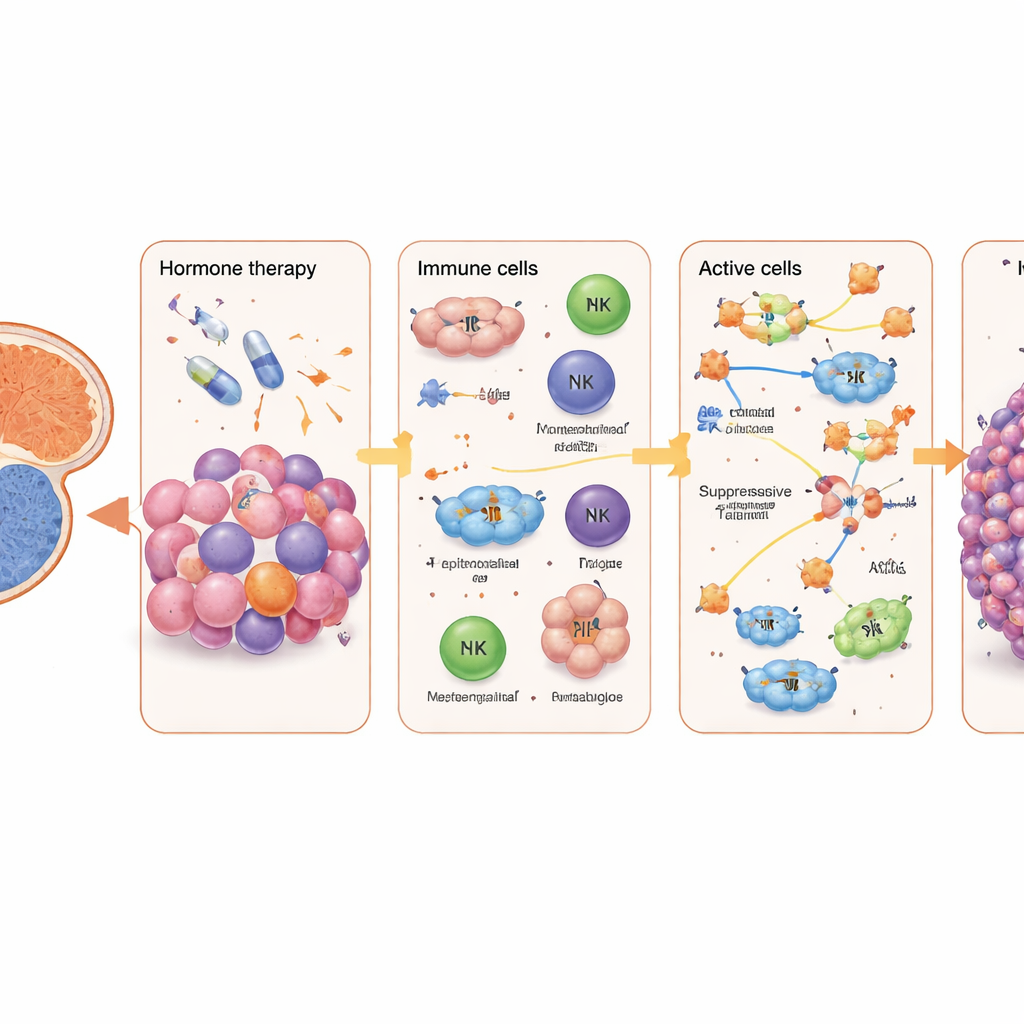
The study also examined how immune cells change across tumor types. In untreated tumors, T cells that remember past threats and killer T cells were common, and the overall immune landscape looked similar between peripheral and transition zones. After hormone therapy in cross‑zone tumors, this balance flipped. Exhausted T cells and regulatory T cells—both known for dampening immune attacks—became predominant, while vigorous effector cells declined. Macrophages and dendritic cells also shifted toward more suppressive, "M2‑like" and poor antigen‑presenting states. Many of these changes were accompanied by heightened activity of the androgen receptor and altered cholesterol metabolism, pointing to a hormone‑driven, metabolically tuned immune shutdown that could limit the benefits of subsequent immunotherapy.
The hidden life of tumor metabolism
Using mxFRIZNGRND, the team profiled more than a thousand lipid species and hundreds of other metabolites in matched tissue slices. Peripheral‑zone cancers showed a surprisingly uniform, low‑activity lipid profile, suggesting a metabolically "dormant" state that might help cells endure stressful treatments. In contrast, tumors spanning both zones after hormone therapy displayed revved‑up pathways that supply building blocks for cell membranes, DNA and RNA, and energy. Key changes included choline being rapidly converted into phosphatidylcholine for new membranes, increased sugar breakdown, and re‑wiring of ceramide and other fat‑based signaling molecules. When these metabolic findings were combined with gene‑activity data and large cancer datasets, four core pathways—choline and phospholipid metabolism, central carbon metabolism, pyrimidine synthesis, and ceramide metabolism—stood out as tightly linked to aggressive disease and poor prognosis.
What this means for future care
For non‑specialists, the main message is that prostate cancer is not one disease but many, shaped by its starting location and by treatments meant to control it. Hormone therapy can unintentionally select for cancer cells with especially strong hormone‑signaling circuits and reconfigure the surrounding immune and support cells in ways that favor relapse. By mining old FFPE samples with snFLARE‑seq and mxFRIZNGRND, researchers can now track these shifts at single‑cell and metabolic levels in real patients, not just in lab models. In the long run, this work may lead to more personalized care: choosing zone‑specific drugs (for example, targeting IL‑17 in peripheral‑zone tumors), adding agents that block key metabolic pathways such as choline or PI3K‑AKT signaling, and designing smarter combinations of hormone and immune therapies that avoid waking dormant cancer cells while preserving the body’s defenses.
Citation: He, D., Hu, H., Xiao, K. et al. Analysis of the transcriptomic and metabolomic landscape of prostate cancer with different anatomical origins using snFLARE-seq and mxFRIZNGRND. Nat Commun 17, 2461 (2026). https://doi.org/10.1038/s41467-026-69347-7
Keywords: prostate cancer heterogeneity, single-cell sequencing, tumor metabolism, hormone therapy resistance, tumor microenvironment