Clear Sky Science · en
Final survival analysis of induction chemotherapy with lobaplatin and fluorouracil versus cisplatin and fluorouracil followed by concurrent chemoradiotherapy in nasopharyngeal carcinoma: a multicenter, randomized, phase 3 trial
Why this study matters for patients
People with nasopharyngeal carcinoma—a cancer that starts behind the nose and above the back of the throat—often receive powerful chemotherapy drugs that can control the disease but also damage hearing and kidneys. For decades, cisplatin has been a mainstay drug, despite its harsh side effects. This large, long-term clinical trial asks a question that matters directly to patients and families: can a newer drug combination built around lobaplatin work just as well against the cancer while being kinder to the body over the span of a decade?
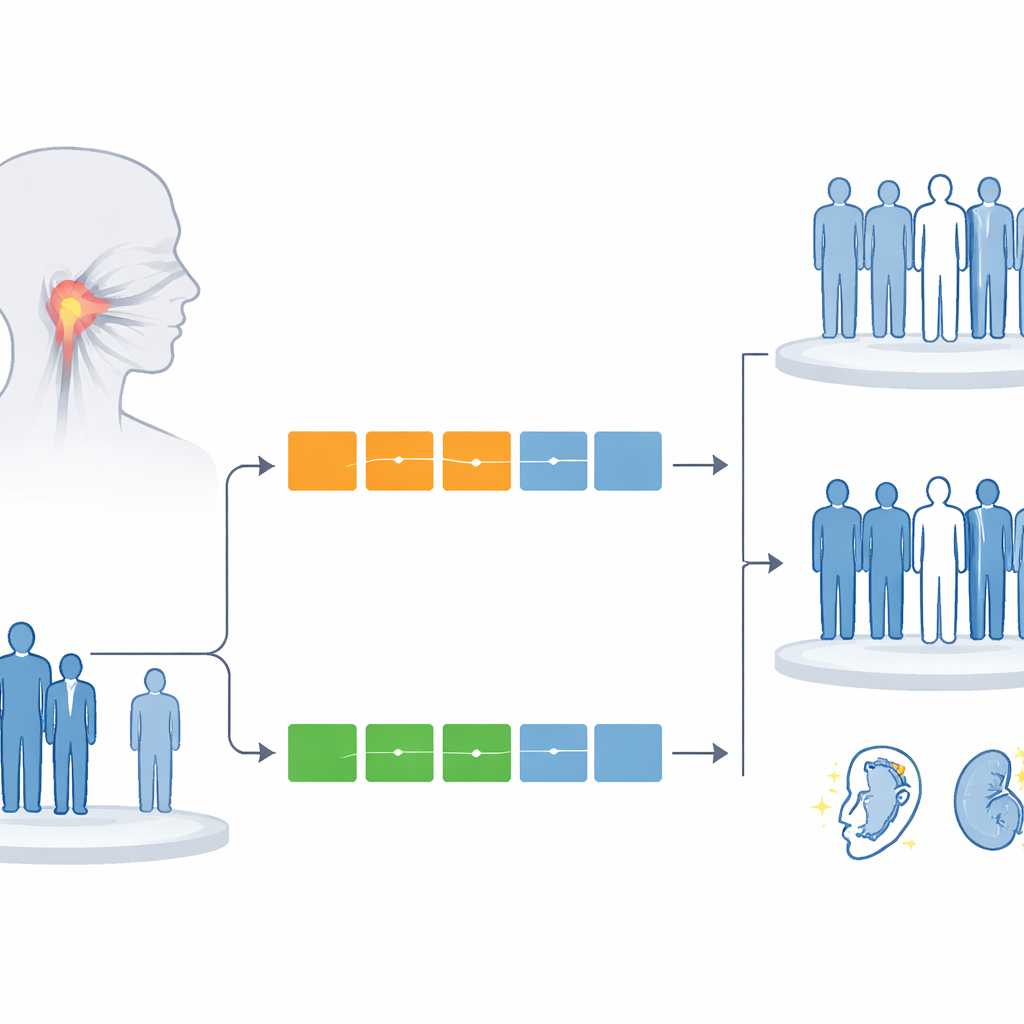
A cancer concentrated in certain regions
Nasopharyngeal carcinoma is relatively rare worldwide but common in Southern China, Southeast Asia, and parts of North Africa. Many patients are diagnosed with disease that has spread to nearby lymph nodes but not yet to distant organs. For these patients, the current standard is a two-step approach: an initial course of chemotherapy (called induction therapy) followed by radiotherapy given together with chemotherapy (concurrent chemoradiotherapy). Cisplatin, paired with the drug fluorouracil, is widely used in both steps. However, cisplatin often causes nausea, nerve damage, hearing loss, and kidney injury, and some patients struggle to complete treatment as planned.
Testing a gentler alternative
The investigators launched a multicenter phase 3 trial in China to compare a lobaplatin-based regimen with the traditional cisplatin-based approach. Over 500 adults with stage III–IVB nasopharyngeal carcinoma were randomly assigned to receive either lobaplatin plus fluorouracil, followed by radiotherapy with lobaplatin, or cisplatin plus fluorouracil, followed by radiotherapy with cisplatin. Randomization and careful central oversight were used to balance important factors such as tumor stage, hospital, and patient fitness between the groups. Earlier five-year data had already suggested that lobaplatin was not worse than cisplatin at controlling the cancer and might cause fewer side effects. The current report extends follow-up to more than ten years to see whether that early promise holds up over the long term.
Ten years of follow-up: cancer control holds steady
After a median of 10.6 years of follow-up, the two treatment strategies produced strikingly similar long-term cancer outcomes. About 71% of patients in both groups were alive without their cancer returning or spreading ten years after starting treatment. Overall survival, control of tumors in the head and neck region, and prevention of distant spread were also nearly identical between the lobaplatin and cisplatin groups. Detailed statistical analyses, including checks across different ages, disease stages, and centers, all supported the same conclusion: lobaplatin-based therapy is not inferior to cisplatin-based therapy in keeping the cancer at bay. The main factor that consistently predicted outcome was how advanced the disease was at diagnosis, rather than which of the two drugs patients received.
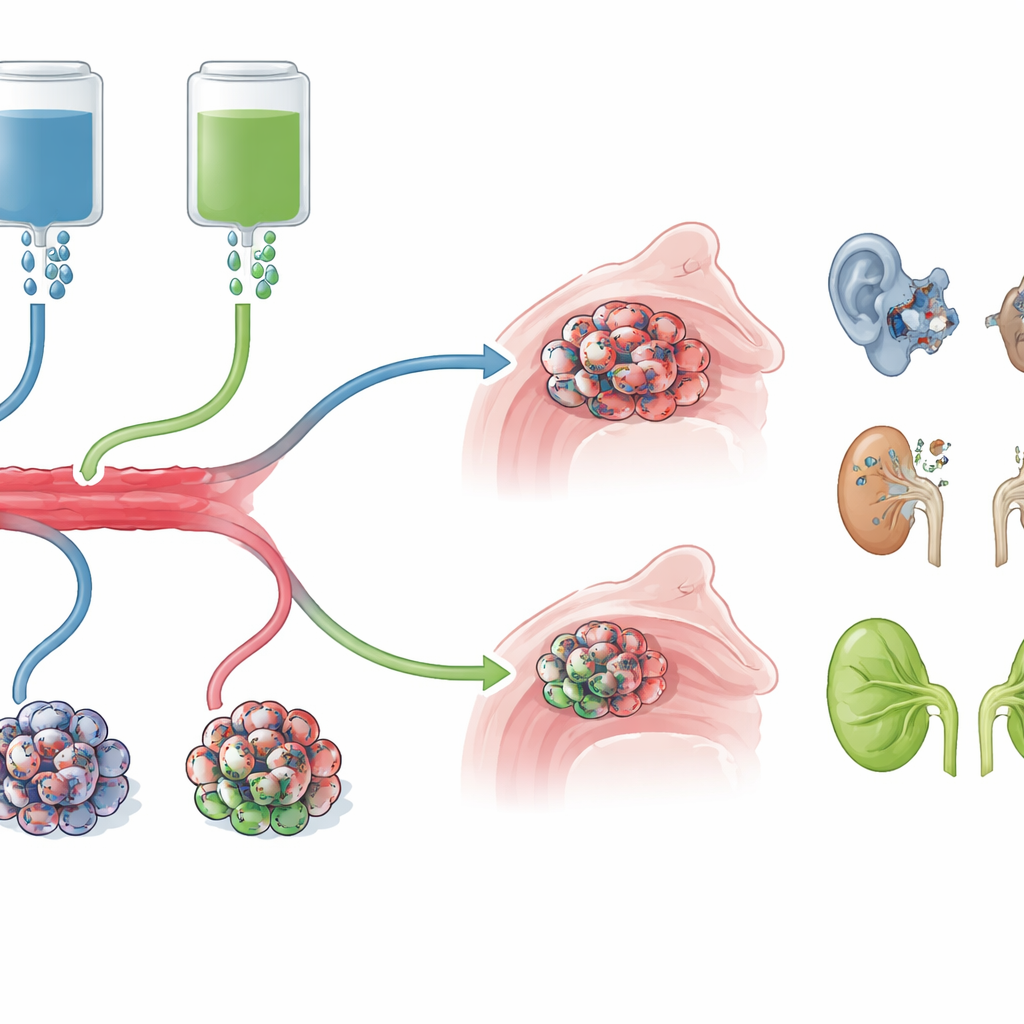
Side effects that emerge years later
Because chemotherapy was combined with high-precision radiotherapy near sensitive structures like the ears and salivary glands, the team also tracked late side effects that can appear months or years after treatment. Dry mouth, ear problems, neck tissue changes, and nerve symptoms were among the most common long-term issues in both groups. Importantly, some milder but bothersome toxicities were more frequent in the cisplatin group: low-grade numbness in the hands and feet, hearing problems or ear inflammation, and kidney damage. More serious kidney injury was also observed more often with cisplatin. No very severe (life-threatening) late complications were recorded in either group, but missing data over such a long follow-up period may have slightly underestimated some effects.
What this means for future care
For people living with nasopharyngeal carcinoma, this study delivers a reassuring message: a lobaplatin-based treatment plan controls the cancer just as effectively as a cisplatin-based plan over ten years, while tending to reduce certain long-term harms, especially to hearing and kidneys. Although the trial mainly involved patients from regions where this cancer is common, and did not formally measure quality of life with detailed questionnaires, the evidence suggests that oncologists now have a credible alternative when cisplatin’s toxicity or practical burden is a concern. In other words, by swapping cisplatin for lobaplatin in a standard combined chemotherapy-and-radiotherapy schedule, doctors can likely preserve the hard-won survival gains for nasopharyngeal carcinoma while easing some of the treatment’s lasting toll on the body.
Citation: Cao, X., Zhou, JY., Huang, HY. et al. Final survival analysis of induction chemotherapy with lobaplatin and fluorouracil versus cisplatin and fluorouracil followed by concurrent chemoradiotherapy in nasopharyngeal carcinoma: a multicenter, randomized, phase 3 trial. Nat Commun 17, 2604 (2026). https://doi.org/10.1038/s41467-026-69315-1
Keywords: nasopharyngeal carcinoma, chemoradiotherapy, lobaplatin, cisplatin toxicity, long-term cancer survival