Clear Sky Science · en
Recombinant zoster vaccine is associated with a reduced risk of dementia
Why protecting the brain matters as we age
Dementia, including Alzheimer’s disease, is one of the most feared conditions of older age. As lifespans lengthen, more families are caring for loved ones who slowly lose memory, judgment, and independence. Scientists are urgently searching for ways not just to treat dementia, but to prevent or delay it. This study explores an unexpected possibility: that a routine vaccine against shingles, a painful rash caused by the chickenpox virus, might also help protect the aging brain.
A common virus with surprising long-term effects
Most people catch the virus that causes chickenpox in childhood. After the rash clears, the virus does not disappear; it hides quietly in nerve cells for decades. Later in life, it can reactivate as shingles, a disease marked by burning nerve pain and a blistering stripe of rash. In recent years, several large studies have hinted that people who get shingles may be more likely to develop dementia, and that vaccination against shingles could reduce this risk. However, those earlier studies had limits, raising questions about whether the apparent benefit was real or just a reflection of the fact that people who choose to get vaccinated are often healthier overall.
Following thousands of older adults over time
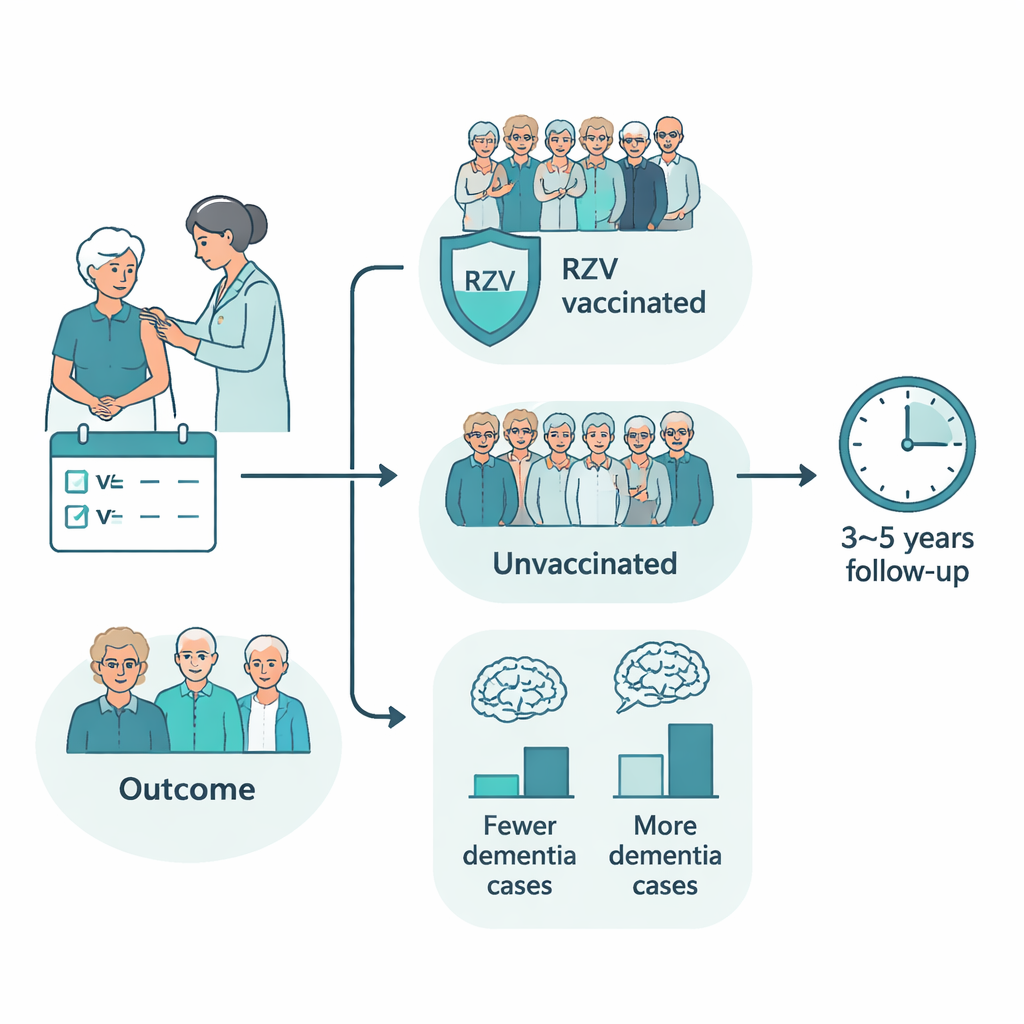
To probe this issue more deeply, researchers examined health records from Kaiser Permanente Southern California, a large integrated health system. They focused on more than 65,000 members aged 65 and older who received the modern shingles shot, a two-dose recombinant zoster vaccine given a few months apart. Each vaccinated person was carefully matched with four similar people who had not yet received the vaccine, based on age, sex, race or ethnicity, and earlier shingles vaccination. None had been diagnosed with dementia at the start. The team then followed these individuals for several years, tracking who later received a dementia diagnosis or a milder condition known as mild cognitive impairment, using diagnosis codes that had been checked by chart review for accuracy.
Fewer dementia diagnoses after the shingles shot
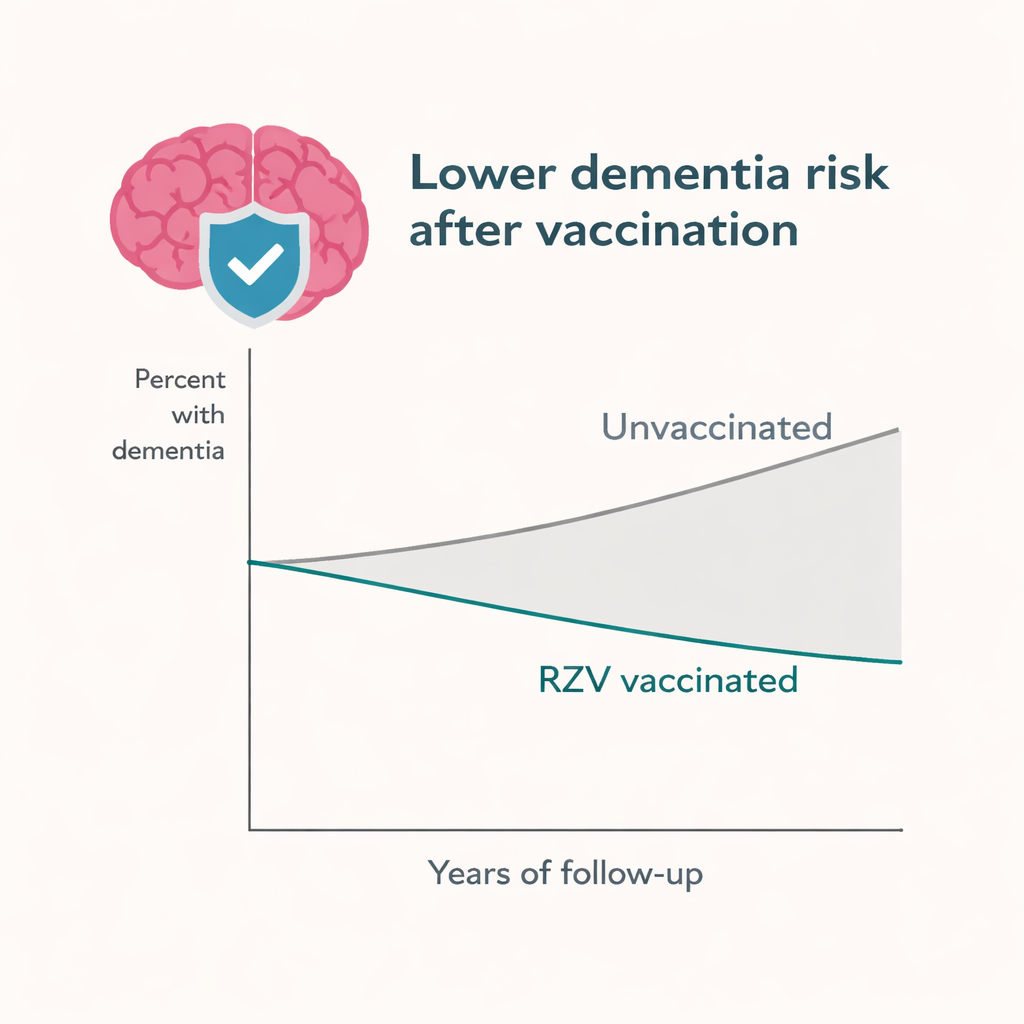
Over an average of about three to four years of follow-up, dementia was diagnosed less often in people who had received both doses of the shingles vaccine. After using statistical methods to balance many health and lifestyle factors recorded in the medical record, vaccinated adults had about half the risk of developing dementia compared with their unvaccinated counterparts. This lower risk appeared across age groups, racial and ethnic groups, and for major dementia types, including Alzheimer’s disease and vascular dementia. Women seemed to benefit slightly more than men. The vaccine was also linked to a modest reduction in new diagnoses of mild cognitive impairment, and in vaccinated people who did later develop dementia, the transition from mild problems to full dementia took a bit longer.
Testing whether healthier people skewed the results
Because people who get recommended vaccines often differ from those who do not, the researchers conducted several additional checks. They compared shingles-vaccinated adults to another group who had received a different routine adult vaccine (for tetanus, diphtheria, and whooping cough). Even against this more health-conscious comparison group, those who received the shingles vaccine still had roughly a one-quarter lower risk of dementia. The team also examined a bundle of unrelated, painful conditions such as wrist fractures and acute abdominal problems. If hidden differences in health-seeking behavior were driving the results, these conditions should also have been far less common in the vaccinated group. Instead, their rates were nearly the same, suggesting that unmeasured bias was unlikely to fully explain the dementia findings.
What this could mean for healthy aging
Although this kind of observational study cannot prove that the shingles vaccine directly prevents dementia, the consistent pattern across many analyses makes a genuine protective effect plausible. One idea is that by preventing flare-ups of the chickenpox virus in nerves and blood vessels, the vaccine reduces long-term inflammation and damage in the brain. Whatever the exact mechanism, these results hint that a shot already recommended for older adults to prevent a painful rash might also help safeguard memory and thinking. If confirmed by further research, shingles vaccination could become an even more important tool in protecting brain health as we age.
Citation: Rayens, E., Sy, L.S., Qian, L. et al. Recombinant zoster vaccine is associated with a reduced risk of dementia. Nat Commun 17, 2056 (2026). https://doi.org/10.1038/s41467-026-69289-0
Keywords: dementia prevention, shingles vaccine, brain health, Alzheimer’s disease, healthy aging