Clear Sky Science · en
A catalogue of early diverged contemporary human genome variation reveals distinct Khoe-San populations
Why this story about our shared roots matters
Most DNA studies that shape modern medicine are based on people of European or limited African ancestry, leaving major gaps in our picture of human diversity and disease. This article explores the genomes of Khoe-San communities in Namibia—some of the earliest-branching lineages in our species—to reveal how human groups are related, how ancient ways of life shaped our biology, and why filling these gaps is essential for fair and accurate medical research.
A closer look at southern Africa’s first peoples
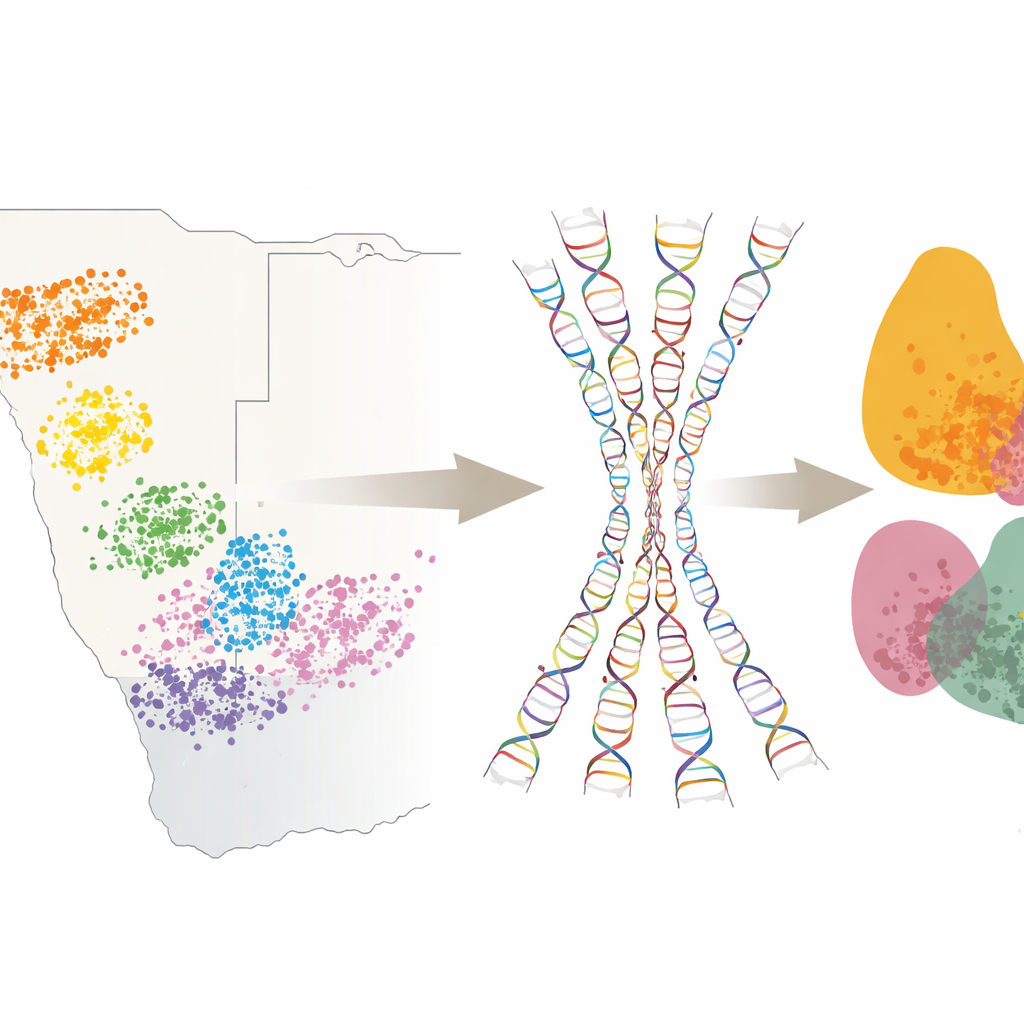
The Khoe-San are Indigenous peoples of southern Africa whose languages famously use click sounds and whose histories include foraging, herding, or a mix of both. The researchers focused on 150 Khoe-San individuals from 11 language and cultural groups spread across Namibia, along with 40 neighboring southern Africans of pastoralist and farmer backgrounds. After long-term community engagement and careful ethics work, they sequenced each participant’s entire genome at high depth, producing a detailed catalogue of more than 30 million genetic variants, from single DNA changes to small insertions, deletions, and mobile genetic elements.
Uncovering hidden branches on the human family tree
By comparing these genomes with existing African and global reference data, the team showed that the Khoe-San are not a single ancient group but at least two distinct forager lineages: San and Damara. San groups, such as the Ju|’hoan, represent one of the deepest splits in all living humans, beginning around 115,000 years ago. Damara foragers, although culturally linked to San and speaking a related Khoekhoe language, form a separate genetic branch that separated more recently, roughly in the last 10,000–15,000 years from other West African–related populations. Sophisticated statistical and tree-building methods confirmed that San and Damara genomes cluster in different parts of the human family tree, despite living in the same broad region today.
Traces of contact, mixing, and changing ways of life
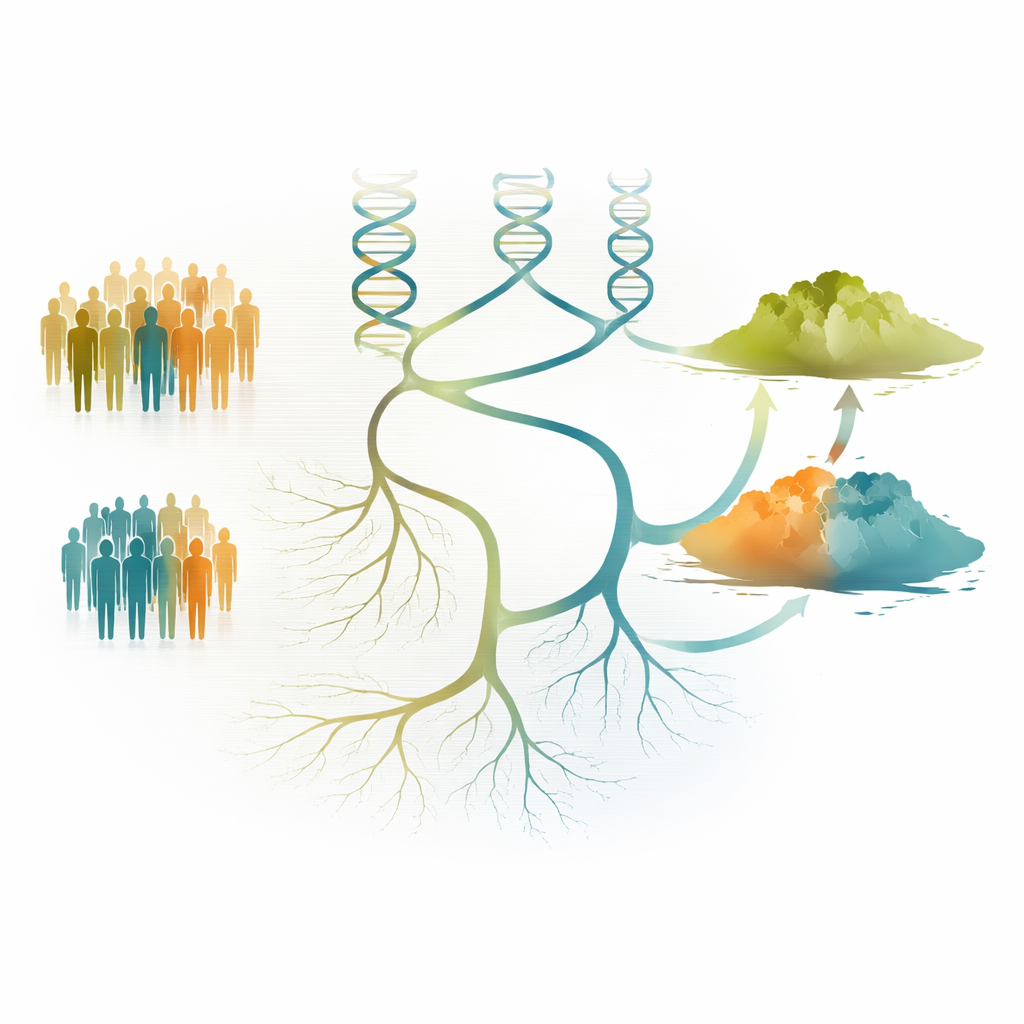
The study also followed the genetic “echoes” of contact between groups. Rare variants shared between individuals and patterns of long DNA segments revealed that San and Damara ancestors exchanged genes within the last two millennia. The Nama, a pastoral community that also speaks a Khoekhoe language, carry clear signals of two distinct waves of ancestry: one from San and one from Damara-like groups. Additional contributions from Bantu-speaking farmers and Europeans in the last few centuries were also detected, matching known historical movements. These patterns show that today’s communities are shaped by both deep-time separations and more recent interactions as peoples adopted herding, farming, and new social ties.
Ancient lifestyles written in our genes
Beyond mapping relationships, the researchers asked how long-term forager lifestyles may have left their mark on biology. They developed a new analysis that reconstructs each person’s protein-coding genes and then scans, amino acid by amino acid, for signs of positive selection—changes favored by natural selection because they improved survival or reproduction. They identified 1,376 genes with strong signals of such selection, including 479 genes whose variants are particularly common in forager groups. Many of these genes relate to how people sense tastes and smells, break down plant toxins, regulate skin pigmentation, or respond to infections and medicines. The work suggests that Khoe-San groups retain many ancestral gene variants that differ from those common in non-African populations, where later migrations and environments reshaped the genome.
Why these findings could change medicine
For a lay reader, the key message is that our species did not emerge from a single uniform African population, and that long-standing forager groups such as the San and Damara preserve unique branches of human diversity. Their genomes contain many variants that are rare or absent in commonly used medical databases, which are dominated by non-African participants. This means that relying on existing references can misclassify harmless variants as dangerous—or miss important risk factors entirely—for people with Khoe-San or related ancestry. By building the largest high-quality Khoe-San genome resource to date, and by pinpointing genes likely shaped by traditional diets and environments, this study lays the groundwork for more accurate, inclusive genetic research and, ultimately, for medical care that better reflects the full spectrum of human history.
Citation: Jaratlerdsiri, W., Soh, P.X.Y., Gong, T. et al. A catalogue of early diverged contemporary human genome variation reveals distinct Khoe-San populations. Nat Commun 17, 2573 (2026). https://doi.org/10.1038/s41467-026-69269-4
Keywords: Khoe-San genomics, human evolution, African genetic diversity, forager populations, precision medicine